








May 29 2026 - 10:00am
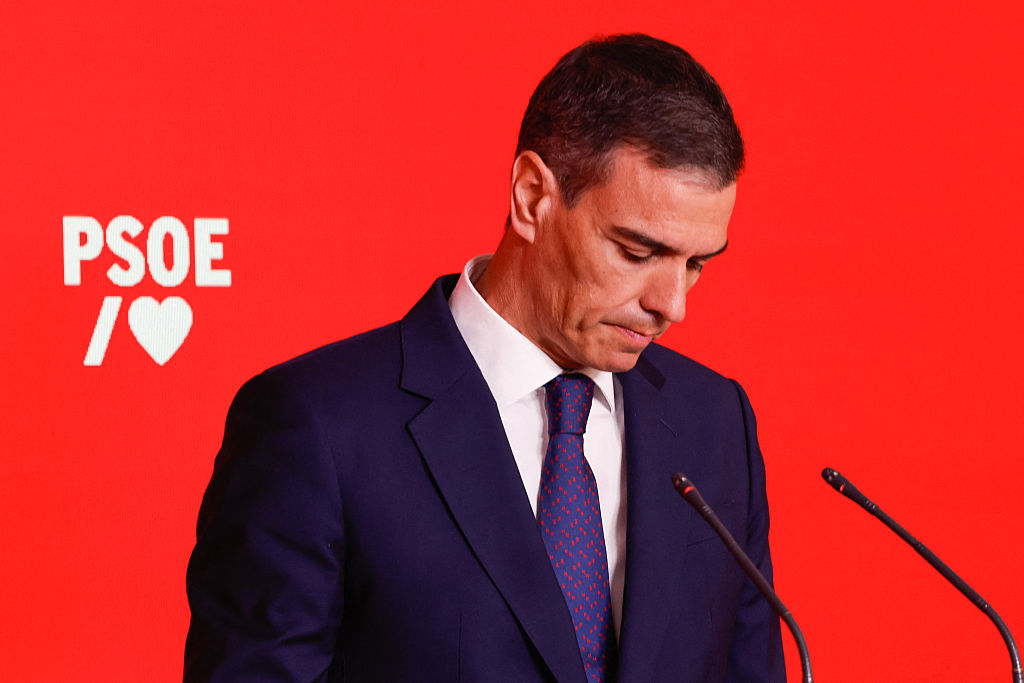
Spain’s Pedro Sánchez is facing the most serious threat to his premiership since he took office in 2018. This week, police entered the headquarters of the governing Socialist Party (PSOE) as part of an investigation into alleged attempts to interfere with judicial proceedings.
Sánchez is a born political survivor and has faced corruption scandals before, repeatedly proving his doubters wrong, but this seems to be his toughest task yet. Investigations now reach into his inner circle, involving his wife, his brother, former senior PSOE officials, and even former Socialist prime minister José Luis Rodríguez Zapatero, who is under investigation in the Plus Ultra case over alleged links to opaque Venezuelan funds.
There is also a China angle. Over the past year, Sánchez has positioned Spain as one of Beijing’s friendlier partners in Europe, even as Huawei’s role in sensitive police and intelligence-related infrastructure has alarmed Brussels and Washington. Spain’s contract with Huawei to manage and store judicial wiretap material already raised national-security concerns. Now, there is reporting on Chinese-linked payments and former Huawei-linked figures with access to the Spanish central government and the Socialist government in Catalonia which puts the issue in a different light.
Nevertheless, in his darkest hour Sánchez could still get away with it. While the Spanish PM has ruled out early elections for now, key members of the party’s inner circle are remaining loyal because the same networks of appointments, contracts and influence now under investigation could eventually implicate or politically damage them, too. Losing power would leave them weaker and exposed, so staying in office no matter what appears to be their only bet.
Sánchez’s coalition partners have even less incentive to bring down the government because the alternative, a PP-Vox government hostile to Spain’s restive peripheries, is far from desirable for them. The Right’s leaders are hardly charismatic standard-bearers, but the real problem runs deeper. Spanish politics has remained broken since Catalonia’s failed secession attempt in 2017 and the crackdown that followed. Sánchez’s initial path to power depended on offering an amnesty to Catalan leaders in exchange for support. The Spanish Right has nothing similar to offer today, while its repeated calls to ban Catalan and Basque nationalist parties has only hardened political divisions.
Thus, unless Sánchez faces a rebellion within the Socialist ranks, a working alternative is unlikely to emerge in Congress. That is why the Prime Minister has enjoyed ample room to navigate successive crises over the years, showing little concern for accountability while proving highly adept at consolidating power and tightening control over social media and the press. This is all despite scandals, nationwide blackouts, a controversial migration policy and fatal train accidents.
In any case, the judicial process could take months or years before producing a final ruling. If Sánchez plays his cards right, his base will likely rally around him and frame the accusations as another smear campaign by the political Right. With a strong base of support among public servants and pensioners, and with EU funds flowing, he will be able to finish his term. That would make Sánchez’s Spain resemble a European version of an Argentine Peronist experiment.
If the Socialist government survives this mounting pile of scandals largely unscathed, it will deepen the impression that Spanish politics has entered an era in which power can withstand almost anything. The lesson drawn in government circles may be that accountability carries few real costs, encouraging the administration to intensify its cultural battles and further concentrate power.
As the dominant force in Spanish politics for the last half-century and a key architect of the post-Franco order, the Socialist Party occupies a unique political position. Sánchez’s opponents may therefore become increasingly disenchanted not merely with the government, but with the political system itself. Through their current entrenchment, the Socialists are effectively testing the system’s capacity to deliver political change. Many will then come to see the party’s eventual defeat as possible only through a broader rupture with the existing regime.
Miquel Vila is a political and geopolitical risk consultant focusing on industrial strategy, critical infrastructure and global supply chains.
 miquelvilam
Join the discussion
Join like minded readers that support our journalism by becoming a paid subscriber
To join the discussion in the comments, become a paid subscriber.
Join like minded readers that support our journalism, read unlimited articles and enjoy other subscriber-only benefits.
Subscribe