




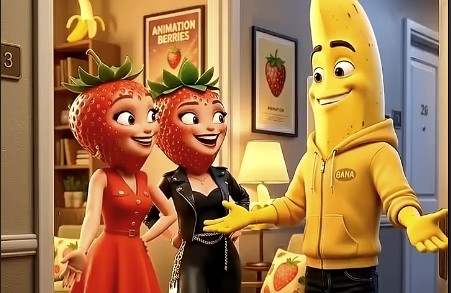
A recent genre of AI slop: anthropomorphic fruit. (TikTok)





Strawberina and her husband Banannito are expecting. The baby is born, but — shock horror: it’s a zucchini. Banannito breaks down in tears as Strawberina’s twisted affair with the scheming Zuchinito is exposed.
We live in bizarre times. For all of the tech industry promises that AI will unlock an age of abundance and innovation, it seems that so far, its greatest achievement is the mass proliferation of AI-slop anthropomorphic fruit TikTok micro-soap operas, which have gained billions of views in just a few months. An infinite tide of AI-generated video is torching our retinas and our souls. Is this it? Is this really the future of culture? An endless torrent of AI slop, engineered by an invisible Slopbeast.
Most agree we should reject the Slopbeast. Humanity is built for greater things than amusing itself to death in TikTok pleasure palaces. However, few agree on how we move forward. The difficulty is that changing culture requires changing norms. Yet, if we have no sense of what should replace our current norms, then the task feels impossible. At both the individual and collective levels, few have any idea what humans ought to be beyond pleasure-seeking machines.
But AI did not create the Slopbeast, it merely fed it. As Mark Fisher wrote, we are living through “the slow cancellation of the future,” and amid this pessimism, a toxic nostalgia has become entrenched. The process was already well underway when Fisher was writing in the early 2000s, evident in endless Hollywood reboots, the “retromania” turn in music, the constant band reunions, the upcycling of fashion trends. This zombie culture was intensified by recommender algorithms that trend towards what pleases (or simply does not offend) the most people possible.
It has reached its apotheosis with large-language models which, short of unleashing new forms of cultural production, simply remix the detritus of the past. Our techno-industrial system has created mass audiences and vast production capacity, owned by investors who are increasingly incentivized to favor low-risk rent-seeking and margin expansion over innovation. As Jon Askonas argues: “The incentives for investors skew more every year towards the marketing, exploitation, and further development (aided by deepfake technology) of the old over the discovery of the new.”
In other words, cultural stagnation and the slop machine are the by-products of extreme market efficiency. And so, the dopamine-inducing delights of a Las Vegas casino have become the organizing logic of the economy. Hence the slide into what Fisher calls “depressive hedonia”, a hollow existence where we compulsively chase cheap digital thrills not to feel good, but simply to numb ourselves. Our economic model feeds this cycle of distraction, entirely blinding us to the question of how we forge the future.
What, then, is to be done?
A spiritual war is brewing over the future of our culture in the age of AI. Two loosely connected factions have taken shape: I call them the Arcadians and the Prometheans.
The Arcadians believe humanity can free itself from the meaninglessness of the slop by recovering a sense of rootedness from the past. They take their name from Arcas, the son of Zeus who taught his people to weave, bake, and farm. He embodies the pastoral ideal of a life defined not by conquering nature, but by deep rootedness within it. Arcadians take many forms: digital detoxers swapping smartphones for dumbphones; trad-wives baking sourdough to reject the girlboss grind; the tradcath movement; vitalists consuming raw milk and offal to escape industrial food; and RETVRN aesthetes posting images of classical architecture on X. Among the privileged, this manifests as Bopeas — or bohemian peasants trading doomscrolling for doomstrolling, retreating into nature, Waldorf schools, and the revival of heritage rituals.
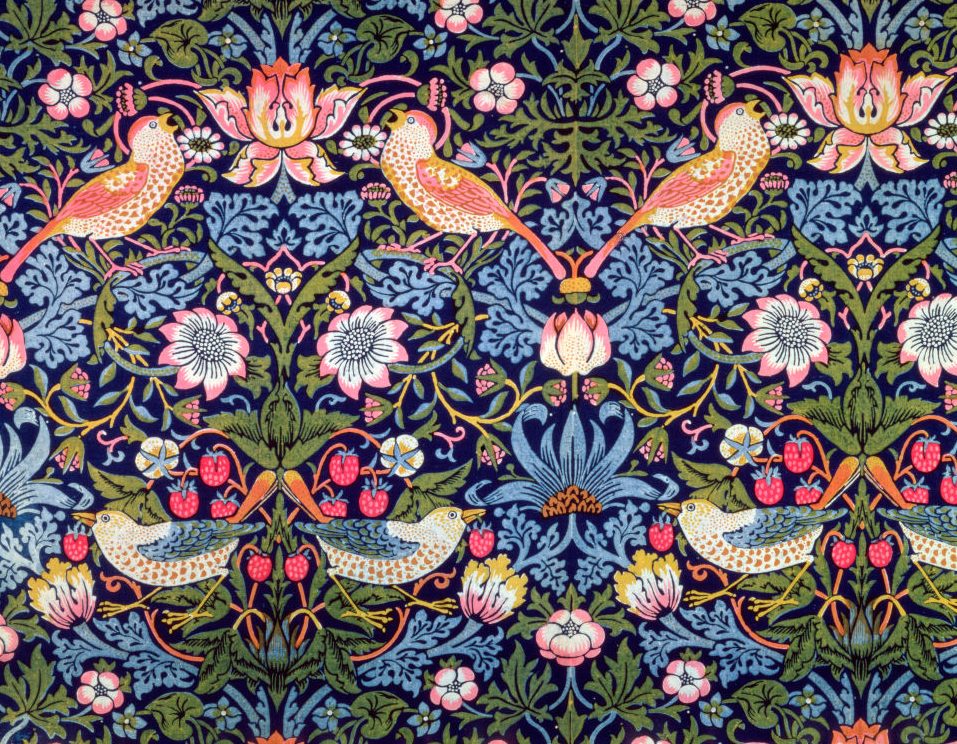
While the Arcadians’ politics often vary wildly, they share a hunger for community and rootedness. Taking their cues from everyone from Jean Jacques Rousseau and Henry David Thoreau to William Morris and Martin Heidegger (and even Ted Kaczynski), the Arcadians believe the war against digital ephemera requires embracing friction and things that are “real”. To the Arcadians, the idea of craft has gained a magical reputation as the antidote to the algorithm. Whether it is the tangible crust of sourdough, the ink of a real pen on paper, or the labor of a woodworker, they look to craft as a source of stability. If slop is easy to create, consume, and forget, craft is the opposite.
Now, many Arcadians have some good ideas. They are entirely correct that we ought to slow down and tune into the material world. There is profound wisdom lost to the efficiency of technological society, recovering some roots is essential.
Yet, as a political and cultural strategy, the Arcadian retreat is doomed to fail. Without some vast hidden fortune funding the lifestyle, or a genuine reduction in living standards, it is either financially inaccessible or a lot less aspirational than it looks on the screen. Further, the Arcadian appeal to some nebulous idea of “authenticity” can easily lead them to fetishize a pastiche of the past that never existed and no longer makes sense. People who learn from the wisdom of the past do not seek to live there. Aspiring to all live like chic bizarro Amish may ward off the slop for some, but it is unscalable. If we want to save the world, we cannot just retreat to the woods. We need a vision that is as powerful as the technology we face.
This brings us to the Prometheans. Named for the Titan who stole fire from the gods, they embody the industrial ideal of using power and technology to transcend our limitations. The Prometheans agree with the Arcadians: the slop must stop. Yet rather than retreat to nature, they believe we must seize the means of computation. They want to capture the raw power of AI, nuclear energy, and heavy industry to deliver a new era of civilizational dynamism.
The obvious avatars of the movement are the modern oligarchs: Elon Musk with his visions of interstellar colonization; Peter Thiel and his dream of using Palantir to fuse the digital and real-world infrastructure; Jeff Bezos with his Project Prometheus AI Lab; and one crypto entrepreneur’s mission to build a 305ft Great Colossus of Prometheus on Alcatraz. But the energy spans the political spectrum. On the right, it animates the so-called Effective Accelerationist (e/acc) movement as well as Marc Andreessen’s “American Dynamism” defense tech fund and his Techno-Optimist Manifesto (inspired by the Italian Futurist, Filippo Marinetti). The Yuppiefuturists also live here.
However, there are Prometheans of the left, too. Prometheanism fuels the emerging Abundance/YIMBY axis — progressives like Ezra Klein who argue we must aggressively deregulate and build our way to post-scarcity. Uniting them all is a hunger for agency. There was a strain of this thinking in Aaron Bastani’s decade-old vision of Fully Automated Luxury Communism, too. While the Arcadians crave rootedness in the past, the Prometheans demand mastery over the future.
The Promethean worldview is most fiercely articulated in Palantir co-founder Alexander Karp and Nicholas Zamiska’s manifesto, The Technological Republic. Karp mourns the collapse of Western ambition, lamenting an engineering elite trapped in a “thin utilitarianism” — building addictive social media and delivery apps instead of solving the hard problems of civilization. He argues for a new alliance between the state and software industry to reboot the West.
Yet, beyond energy abundance, fully automated industry, and unstoppable militaries, the Prometheans lack a vision of culture. The more trad ones say we can choose to re-engage in Western traditions. The progressives focus more on growing the pie to distribute goods. But what should this future look and feel like? Why are we doing all this? Do we want energy abundance, dark factories, and robot militaries, just so we can go back to mindless slop consumption?
Even Karp, unusual in Silicon Valley for his philosophy PhD from Goethe University, acknowledges the problem.
“Other nations, including many of our geopolitical adversaries, understand the power of affirming shared cultural traditions, mythologies and values in organizing the efforts of a people. They are far less shy than we are about acknowledging the human need for communal experience. The cultivation of an overly muscular and unthoughtful nationalism has risks, but the rejection of any form of life in common does as well. The reconstruction of a technological republic in the United States and elsewhere will require a re-embrace of collective experience, of shared purpose and identity, of civic rituals that are capable of binding us together.”
Nevertheless, this nod to shared culture lacks bite. Re-embracing a Western canon of shared texts, values, traditions, and rituals is easier said than done. Without reopening the endless debate of what constitutes “canon”, the real problem is that the social ecosystems and infrastructure that once enabled a canon to shape minds have been scrambled.
As Tanner Greer has argued, the technologists of earlier industrial revolutions were animated by more than a love of money and a reading list. In the United States, industrialists “demanded coordinated action across economic, political, social, and cultural fronts.” To cultivate the flame of their revolutionary cultures, industrialists built institutions that rooted wealth and expertise in a shared national project: from Protestant civic culture and Union League clubs to elite schools, Ivy League colleges, and engineering societies that forged a techno-national elite.
Despite its aristocratic flavor of hierarchy, Britain followed a similar pattern. Its industrialists built both ambitious firms and moral worlds. Henry Tate, the literal sugar daddy industrialist, transformed wealth into culture, founding the Tate Gallery in 1897 to elevate cultural enrichment and taste. Meanwhile textile magnate Titus Salt’s Saltaire and chocolate king Henry Cadbury’s Bournville represented an attempt to build healthy, flourishing communities around the principles of self-advancement. We may laugh at such high-handed visions — or suspect the motives of those who advanced them — but still. Can you imagine a contemporary tech founder proposing anything remotely similar?
In focusing on power alone, Prometheans risk falling into the same trap as Arcadians: cosplaying the past with no sense of the deep interrelation of cultural, politics, and techno-industrial progress. What matters is not rebuilding the institutions of yesterday but decoding what functions culture must serve in the future, and how ideas from the past can be revitalized, reimagined, or forged anew within institutions capable of sustaining them.
Reindustrialization is meaningless without an optimistic and popular future to build towards. A pure worship of computation and power offers, at best, a sterile utopia, and at worst, a narrow Nietzschean framework that prizes brute strength above all else. We need economic and technological dynamism — but we also need soul.
Perhaps this is where the Arcadians have something valuable to contribute. If the Prometheans wish to destroy the slop machine by building a harder, better physical world, maybe the Arcadians can enchant it. But where do we find the binding myths and practices to forge a cultural foundation for the Age of AI? How do we reconnect with our roots while unleashing dynamism?
Currently, the marketplace of ideas is highly theoretical. Andrew Bennett’s Sovereign Albion project seeks to revive a shared cultural framework rooted in deep British folklore, while also pursuing AI sovereignty and energy abundance. Meanwhile, various strains of Anglofuturism promote an archeo-futurist dream of small modular reactors, village cricket, and thatched roofs.
But for now, much of this remains trapped in the realm of ideas. Vibes are not enough; we must make the word flesh. Ideas may change the world, but to make meaning, they need to be seen and touched.
The Victorian polymath John Ruskin understood this better than anyone. For Ruskin, buildings were not merely structures but physical manifestations of moral philosophies. In The Stones of Venice, he argued that architecture reveals the inner life of a civilization: its ideas of the good life, its hierarchies, its sense of beauty. Ruskin defended Gothic revival architecture, arguing that rather than being twee and nostalgic, it was a rebellion against the efficiency-obsessed culture of Victorian industrial capitalism. Gothic revivalism, by contrast, embodied human imperfection, craftsmanship, and dignity.
Contemporary culture is similarly obsessed with optimization. But where Victorian industrialism produced the factory town, today’s forces are globalization and high-tech capitalism. Soulless neo-modernist towers of glass and steel stand as monuments to a placeless world optimized for capital and mobility over roots. Ruskin diagnosed the spiritual cost of industrial modernity, but reviving Gothic today could never fully answer the problem once steel, concrete, globalization, and high-tech culture reshaped the world. The deeper question remains: how can a civilization become modern without becoming placeless?
Written over four decades ago, architectural critic Kenneth Frampton’s seminal 1983 essay, Towards a Critical Regionalism, offers a path through the Arcadia-Prometheus maze. Drawing on the French philosopher Paul Ricœur, Frampton highlighted the defining cultural tension of our time: “How to become modern and to return to sources; how to revive an old, dormant civilization and take part in universal civilization.” Frampton offered a blueprint for navigating this exact tension. He argued that we must fiercely reject both the sterile, placeless monoculture of globalized modernism and the sentimental, kitsch cosplay of historical nostalgia. Instead, we must harness the universal power of modern engineering and technology, while remaining rooted in the local topography, climate, light, and tectonic traditions of its specific place. It is a demand to use the machine to honor the local.
Today, this philosophy inspires some of the most compelling architecture in Britain. We see it in Witherford Watson Mann’s Stirling Prize-winning work at Astley Castle, where ancient, ruined masonry is seamlessly fused with ultra-modern glass, timber, and brickwork. We see it in Niall McLaughlin’s New Library at Magdalene College, Cambridge, which marries modern environmental engineering with centuries-old structural timber traditions, seamlessly blending in next to the neo-classical Pepys Library, its considerably older brother. Both blend technological and material innovation with the deep wisdom of heritage, culture, and aesthetics.
This dynamic fusion need not be limited to architecture. Several maverick technologists and makers around the world are rallying around an emerging new approach to design, aesthetics, and manufacturing that brings the Arcadian spirit of heritage craft together with the cutting edge of Promethean technology, fusing the best insights and capabilities of both to develop things that are not only useful and beautiful, but scalable. Their work falls into four paradigms of what I call “artisanal intelligence”: resurrecting lost styles, augmenting struggling crafts, pushing aesthetic frontiers, and scaling the genius of craft into entirely new domains.
Some are reviving dormant aesthetics for a mass audience. Not Quite Past uses generative AI to design personalized delftware and chinoiserie-inspired ceramics, digitally printed in Stoke-on-Trent, Britain’s pottery heartlands, making a dying aesthetic once reserved for the wealthy accessible to all.
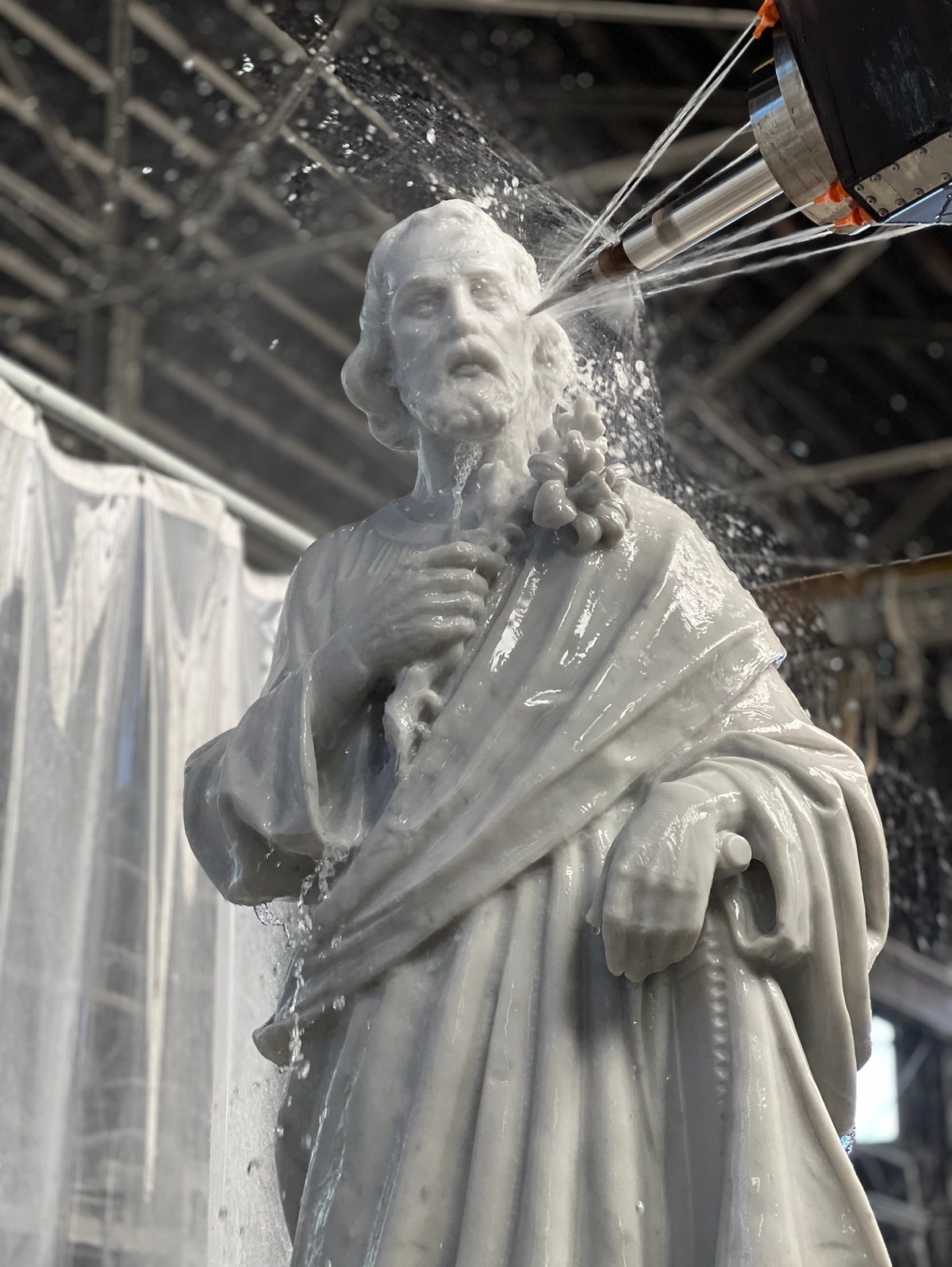
Others use technology to augment crafts on the brink of extinction. Monumental Labs pairs CNC-milling robots with stonemasons to produce ornate statues and facades, absorbing the apprentice toil that is no longer sustainable. Meanwhile Sony has trained AI on centuries of Japanese archives to generate new, structurally complex kimono weaves for master artisans to execute.
Others push aesthetic frontiers altogether unreachable by just hand. At Shanghai’s Chi-Se gallery, Archi-Union programmed robotic arms to salvage and re-lay recycled bricks with inhuman precision, generating a fluid, undulating façade whose curves draw on the ornamental tradition of jali brickwork, a form that could never have been achieved by conventional masonry.
Finally there are those that are transcending traditional craft logics and aesthetics by unlocking their deeper logic and pushing them into entirely new domains. Petit Pli merges the ancient geometry of origami with advanced materials science to create children’s garments that grow alongside the child.
This virtuous fusion of heritage craft and cutting-edge technology is more than an aesthetic choice — it is a path to a glorious, techno-crafted future. A future with a soul, even. Empowering craftsman-technologists to unleash this artisanal intelligence to build the magical products, processes, and industries of tomorrow is essential. Indeed, the digital age itself was born from the workshop: the modern computer would not exist without the Jacquard loom, where the ancient craft of textile weaving birthed the concept of programmable punched cards. What other world-changing innovations might we unlock by bringing the invisible wisdom of master craft to the bleeding edge of the technological frontier?
Today, however, the tech elite defaults to a deracinated, placeless approach to design and innovation, while traditional makers remain deeply skeptical of the machine. These two worlds need not be at war. As Askonas argues, the machine has no innate tradition — it must be given one. Following Simone Weil, Askonas argues the future relies on an act of enracinement, or intentional re-rooting — refracting innovation through active participation in a community that preserves ancestral treasures to anchor our placeless technologies in local, material culture.
A vision of how this might look in a British context is found in historian Alexander Langland’s 2017 book Cræft: An Inquiry Into the Origins and True Meaning of Traditional Crafts. Examining King Alfred the Great’s ninth-century translation of Boethius’s The Consolation of Philosophy, Langlands notes that cræft — the forefather of today’s “craft” — rarely meant simply “handmade.” Rather, in contexts ranging from statecraft to navigation, cræft referred to the virtuous application of power, skill, and knowledge to forge excellence. As Langlands writes, Alfred used it to translate the Latin concept of virtus into an Anglo-Saxon context. Cræft blended moral excellence, power, and capability into “an almost undefinable sense of knowledge, wisdom, and resourcefulness.” It was not simply the physical labor of hands — but a profound, embodied coordination of the hand, eye, and mind, representing a state where physical execution and deep intellectual ingenuity are at one.
This older, deeper definition of cræft is what we must recover in the age of AI. “In handicrafts and manufacture, the workman makes use of a tool,” Marx argued in Das Kapital, “in the factory, the machine makes use of him.”
In previous Industrial Revolutions, the factory liquidated the cræft of the weaver and the smith, replacing the dynamism of what David Pye calls the “workmanship of risk” with a “workmanship of certainty,” where inputs and outcomes were entirely predetermined. In a mature industrial society, whether producing a chair or a SaaS tool, certainty is baked into the system. The human exists simply to ensure the machine does not jam.
While AI, as the ultimate machine of prediction, could be the apotheosis of this logic, it cannot replace the hazardous magic of genuine creativity. Such work is more than pattern recognition and regurgitation, but an exercise in is restraint, deep storied insight, and cræft.
To catalyze this, we need maker-technologists to embrace a new vision of the workmanship of risk — where the CNC mill, 3D printer, and AI-powered software handle the tedious toil to unleash deeper creative work. We already see this in Monumental Labs’ delegation of rough cuts to robots. Meanwhile, facing a shortage of apprentices, luthiers are turning to CNC mills to raise their ambition, making kooky new types of stringed instruments that were previously too risky to attempt. It is in this bold synthesis of artificial and artisanal intelligence that the future of humane, cultural excellence lies.
Where do we go from here? The opportunity is vast, but action is more limited. If we want to tame the Slopbeast and root our future technologies, we must refuse to be trapped cosplaying in Arcadia, nor should we blindly worship the brute power of Prometheus. Rather than succumb to the AI fruit slop, the builders of the future must unleash the spirit of artisanal intelligence and breathe meaning into the machine. It’s time to cræft.
Louis Elton is a cultural researcher and strategist based in London. He writes on his Substack, Nation of Artisans. He is also the founder of the British Cræft Prize.
 LouisElton96