




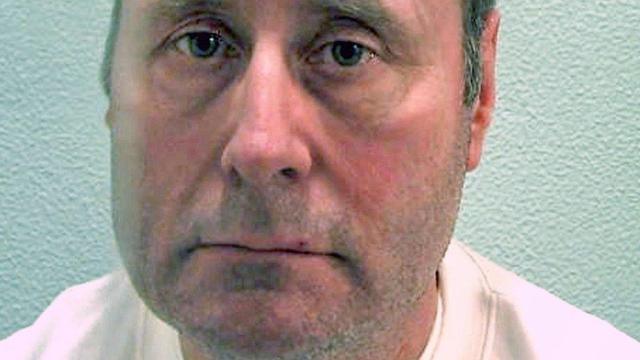
John Worboys. (Met Police)





Back in 2018, Harriet Wistrich declared that John Worboys’ victims were “failed by the justice system”. Watch Believe Me, a new drama about the so-called “Black Cab Rapist”, and it’s hard to disagree. Centered on “Layla” and “Sarah”, a pair of survivors, the ITV series shockingly evokes not only Worboys’ crimes — the casual druggings, the brutal rapes — but also the callous indifference of the men meant to stop him. From failing to link different cases, to suggesting that one survivor had “got herself raped”, the Metropolitan Police failed to stop Worboys as he attacked perhaps 100 women.
In the end, Wistrich, director of the Centre for Women’s Justice (CWJ), helped bring the Met to account. Alongside a barrister called Philippa Kaufman, she advised Layla and Sarah as they brought legal action against the Met, setting the precedent that officers must take rape seriously. Yet if Worboys remains in jail, again partly thanks to Wistrich’s efforts, it’s also clear that police across London and beyond still struggle to take sexual violence seriously — leaving a repeat of the Worboys case ominously likely.
Worboys’ crime spree ended in 2008, when he was charged with drugging and raping several women over a six-month period. In truth, though, he may have been targeting women since at least the early 2000s, including Carrie Johnson, the wife of the former prime minister. His strategy was disturbingly simple. Armed with a “rape kit” containing drugs, alcohol, plastic cups and a vibrator, the cabbie waited for women as they emerged, often drunk, from Central London bars. Claiming to have won the lottery, he offered his victims champagne laced with drugs.
If that’s shocking enough, Believe Me is almost more disturbing for the aftermath. Beyond a plethora of basic investigative failures — only looking at cases in isolation; mishandling toxicology reports; not taking victim statements — that’s starkly clear in police attitudes towards Layla and Sarah. At one point, Layla is asked if she was the “kind of girl” to wear red nail varnish, while officers questioning Sarah seem most concerned by the small amount of cocaine she’d taken the night she was raped.
I encountered similar stories talking to other survivors. As an officer blithely told more than one woman: “What sort of idiot would accept a drink from a cabbie?” Such attitudes stretch back decades. In early 2003, following the passage of a law banning the defense in rape cases from bringing up the sexual histories of alleged victims, I sat in on various trials to check if the new rules were being applied. Yet during breaks outside the courtroom, I witnessed shocking behavior from officers, with so-called “sex crime specialists” joking about victims’ underwear or else claiming that “good looking” defendants “didn’t need to rape”.
With attitudes like that swirling about, it’s little wonder so many of the Worboys victims I met blamed themselves for what happened, with one heartbreakingly confessing that her inability to be believed made her feel responsible for the cabbie’s subsequent crimes.
And on the terror went. In 2007, for instance, a 19-year-old student reported having been picked up by a cabbie, before being offered a drink. She later woke up covered in bruises, and her underwear were missing. This time, police even followed up on her report and arrested Worboys. But he managed to convince them that the victim was lying, claiming she’d made drunken advances towards him, kissing him when she left his cab.
Such blasé attitudes hardly emerged in a vacuum. If the police misogyny is one factor here, so too is the reputation of the London cabbie. After all, they’ve long been seen as the archetypal old-school gentlemen, quick to help and utterly trustworthy. And if the Met are certainly blameworthy for mindlessly indulging these ideas, other corners of official London played on stereotypes too.
In 2005, Ken Livingstone, the city’s then-mayor, launched a public awareness campaign against unlicensed minicabs. Dubbed “Know What You’re Getting Into”, the initiative aimed to fight sexual assaults among “bogus” drivers, encouraging young women to take black cabs instead. In theory, that’s fair enough. Yet quite apart from the scheme’s problematic framing — while featuring an image of a woman crying for help, nothing was said about rapists themselves — the grim irony of such a campaign as Worboys ran wild is hard to stomach.
Finally, though, the penny dropped. In February 2008, Worboys was arrested again — and this time a search of his taxi and home found both his rape kit and a notebook filled with potential alibis.
Once this latest arrest was made public, and following a public appeal by the Met, many more victims came forward. By the time Worboys’ trial began in early 2009, officers had received allegations from 83 women, though the Crown Prosecution Service focused on charges relating to just 14. In April 2009, Worboys was sentenced to an open-ended sentence with a minimum term of eight years.
If, however, Worboys was finally behind bars, justice had hardly been served — as Harriet Wistrich understood. I must declare an interest here. Wistrich, vividly portrayed by Philippa Dunne in Believe Me, is my partner. Yet that shouldn’t take away from her grit and dedication, especially given what she helped achieve later.
In February 2018, Layla and Sarah took the Met to court, arguing that under Article 3 of the Human Rights Act, the police had a legal duty to investigate rape and other serious crimes. Later that year, almost a decade after Worboys was first found guilty, the Supreme Court ruled in the victims’ favor, with Wistrich and Kaufman by their side.
For all its horror, then, Believe Me also offers a glimmer of hope for women and girls. Yet that still leaves another question: has anything truly changed for victims and the institutions meant to serve them? Quite aside from the Supreme Court’s judgment, the answer must surely be “yes”. In 2021, to give one example, the National Police Chiefs’ Council launched Operation Soteria. Backed by academic experts, it prioritizes case-building and investigating the alleged perpetrators of sexual violence — rather than victims.
Yet even here, Wistrich warns that the gap between theory and practice remains wide. “It is not uniformly rolled out in terms of training and resourcing with appropriately qualified police officers,” she says, “so we still see poor investigations.”
Today, meanwhile, similar police failures continue to be exposed, something true from Al Fayed to Epstein. Published in 2023, for its part, the Casey Report found the Metropolitan Police to be institutionally racist, misogynistic, and homophobic, stating that the force was “broken” and describing a culture of denial as well as “blindness, arrogance, and prejudice”.
The case brought by CWJ at the Supreme Court has, at least, made it possible for women to sue police for shoddy investigations — but officers, and indeed the entire criminal justice system, should instead focus on protecting women in the first instance. It’s surely telling, here, that the writer behind Believe Me soon plans another project: exploring the rape and murder of Sarah Everard by a serving Met officer.
One more question. Could the catastrophic failures of the Worboys case happen again? Wistrich says she has “no confidence” that they couldn’t. Current figures suggest as much. Of all the rapes reported to police — likely to be the tip of the iceberg in terms of the actual number — just under 3% result in a conviction. Unless 97% of women are liars, armies of rapists are freed to ruin more lives. When will we believe?
Julie Bindel is an investigative journalist, author, and feminist campaigner. Her latest book is Lesbians: Where are we now? She also writes on Substack.
 bindelj