








May 26 2026 - 7:00am
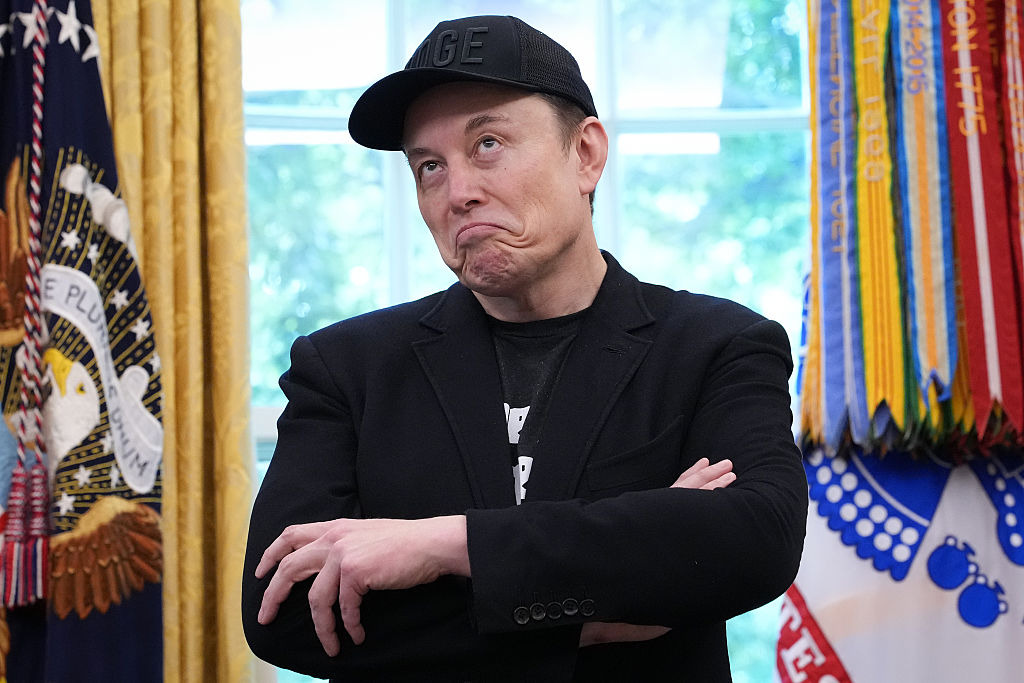
“I don’t fall out with anybody,” Nigel Farage once said. “They fall out with me.” The pattern has served him well enough so far: usually, he comes out on top. Who now remembers Ukip founder Alan Sked, or Brexit Party founder Catherine Blaiklock? Now, however, Farage is locked in a struggle which might prove more difficult to win. The weekend marked the revival of the Reform UK leader’s spat with Elon Musk, after the tech billionaire reiterated his support for Rupert Lowe’s Restore Britain. The Reform UK leader responded by suggesting Musk was “splitting the Right”.
It was one thing to have to deal with Lowe and Ben Habib when they appeared to the world as petty, disgruntled nobodies. It is quite another to deal with a fully-fledged political party, polling at 7% in the crucial Makerfield by-election, which has the backing of the world’s richest man.
The Farage–Musk spat has been rumbling on now for more than a year. In late 2024, it looked like Musk might donate a large sum to Reform, and the party’s opponents prepared accordingly. Keir Starmer moved to ban foreign political donations; Kemi Badenoch called upon her party’s backers to raise an equivalent amount; Ed Davey demagogued against Musk, suggesting even that his tweets warranted criminal sanction. However, their fears of a Musk-backed Reform never materialized. The X owner ultimately thought that Farage “doesn’t have what it takes”; Farage claims that Musk made his donation subject to conditions which he could not, in good conscience, accept. The bad blood has now only got worse. Musk has thrown his weight behind Reform’s new Right-wing challenger, which may have significant political repercussions.
Losing in Makerfield — two-thirds Leave, 97% white – would take the wind out of Reform’s sails. The party might try to pin such a loss and its consequences on Musk and Lowe; in fact, it might even help Reform distance itself from Musk, who remains unpopular in Britain. But a Restore spoiler effect in Makerfield would still do little to alleviate the impression that Farage’s tendency to fall out with people, or for people to fall out with him, is a serious liability. Likewise, it would suggest that Reform’s grip on the Right — even if the Conservative Party’s decline is terminal — is far from guaranteed.
If Restore does have a strong presence on the ground in Makerfield, that owes something to its strong presence in the online sphere. By denigrating Farage and promoting Lowe, Musk is a big part of this. It’s a good example of how he has brought about a sharp lurch to the Right on X, which is naturally to Restore’s benefit. Some of the most dogged pro-Restore accounts would never have been allowed on ancien régime Twitter.
The radical Right on this corner of social media has become fanatically anti-Farage, perceiving him as soft and accusing him of being part of the “uniparty” he likes to rail against. They may even — here, in any case, is a reasonable inference to draw from their activity in Makerfield — think Farage is worse than Andy Burnham. There is a natural tendency on social media of political one-upmanship, of people prizing ideological purity above all; on the Right, this now seems to mean repudiating Farage. If Burnham wins in Makerfield, he might therefore have Elon Musk to thank.

Join the discussion
Join like minded readers that support our journalism by becoming a paid subscriber
To join the discussion in the comments, become a paid subscriber.
Join like minded readers that support our journalism, read unlimited articles and enjoy other subscriber-only benefits.
Subscribe