




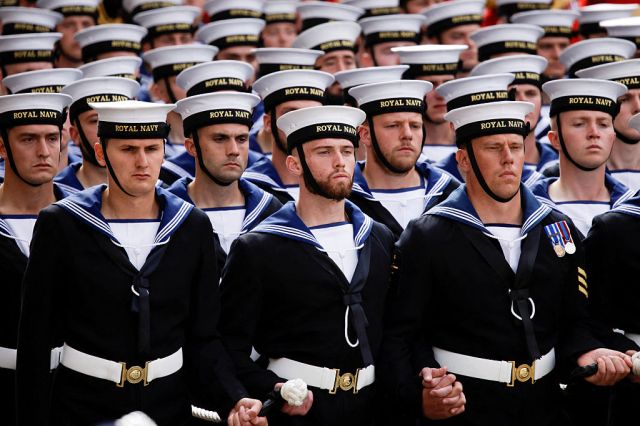
'In an era when soldiers were often despised, or even feared, sailors were not.' (Alkis Konstantinidis/Pool/AFP/Getty)





I do not think there has ever been a naval dictatorship. Hungary’s Admiral Horthy, though a sort of dictator, lacked an actual navy, or even any sea, by the time he came to power. So he doesn’t count. Why might this be? Seamen tend to be wary of authority, unless it is wisely exercised. For they know a bad captain is more likely to kill them than to kill the enemy. And while warships may in theory be used to overawe civilian uprisings, this can only work in seaports and is rather hard to do even there. Winston Churchill parked the cruiser HMS Antrim in the Mersey in 1911, during a violent transport strike. The great ship lurked menacingly, but her guns remained silent. Ashore, by contrast, mounted soldiers opened fire on rioting crowds and killed two men.
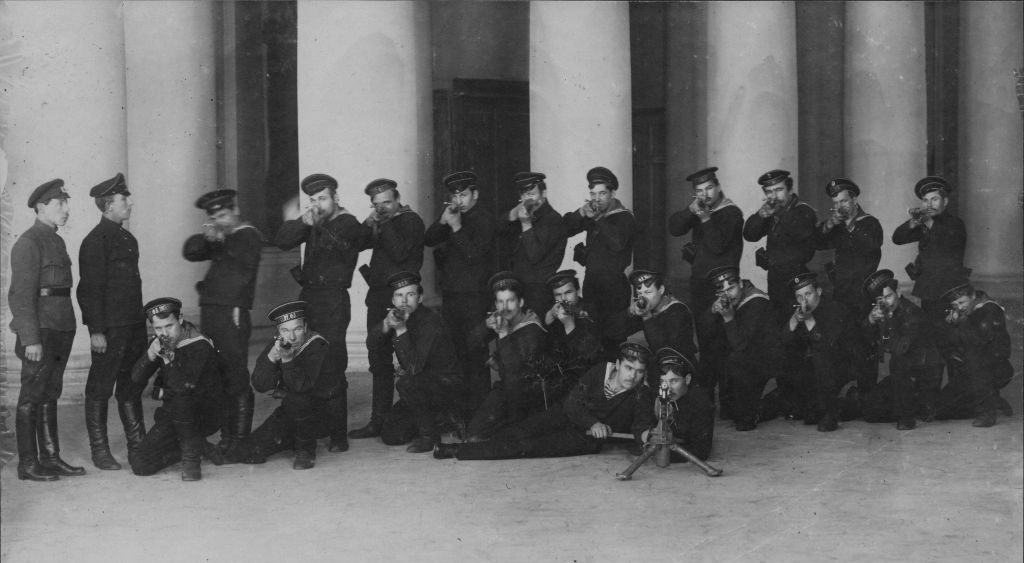
The same Winston Churchill, always longing for a fight, and in love with Dreadnoughts, was probably involved in the crazy decision to send two giant battleships, HMS Barham and HMS Ramillies, to the same estuary during the General Strike of 1926. Again, they never actually did anything. Merseysiders are, I would guess, quite proud at having been taken so seriously, though there is no evidence that the tactic made any difference. One has to wonder what would have happened if their ships’ companies had been ordered to open fire on Liverpool. I guess it would have gone badly for whoever gave the order. The famous Kronstadt sailors, who helped out in Lenin and Trotsky’s Petrograd putsch of 1917, may have been fooled by the Bolsheviks at the start. But they rebelled against them in 1921 when they found out what Lenin was really like. And it was to Trotsky’s lasting shame and disgrace that he massacred them that March.
Our own Royal Navy is famous for its mutinies, in HMS Bounty in 1789, at Spithead and the Nore in 1797, and most recently at Invergordon in 1931. It is a curious organization, its hammocks once filled by the cruel Press Gangs kidnapping innocent men and forcing them to sea and possible death, its discipline for many years enforced by the cruel cat o’ nine tails and the occasional shooting of an admiral to encourage the others. But it stood between us and the world, without trying to take over the state, and it was very beautiful, and many of us loved it. In London and the big seaport cities, bluejackets in their Edwardian uniforms were still a common sight in my childhood. They were reassuring, not overbearing. Since 1901, when horses failed at the task, Navy men have pulled the gun carriage on which Royal coffins (and Churchill’s) have rested at state funerals, an extraordinarily moving sight. These were our defenders, upon whom, as Charles II’s Articles of War first proclaimed, “under the Good Providence of God, the safety, honor and welfare of this realm do chiefly depend.”
In an era when soldiers were often despised, or even feared, sailors were not. Think of Kipling’s 1890 poem “Tommy”, intended to change the drunken delinquent reputation of Queen Victoria’s redcoats:
For it’s “Tommy this, an’ Tommy that, an’ Chuck him out, the brute!”
But it’s “Saviour of ‘is country” when the guns begin to shoot.
In George Orwell’s perfect novel Coming Up for Air, Edwardian civilians are appalled when a young man signs up for the Army: “‘Well now! Listed for a soldier! Just think of it! A fine young fellow like that!’ It just shocked them. Listening for a soldier, in their eyes, was the exact equivalent of a girl’s going on the streets.”
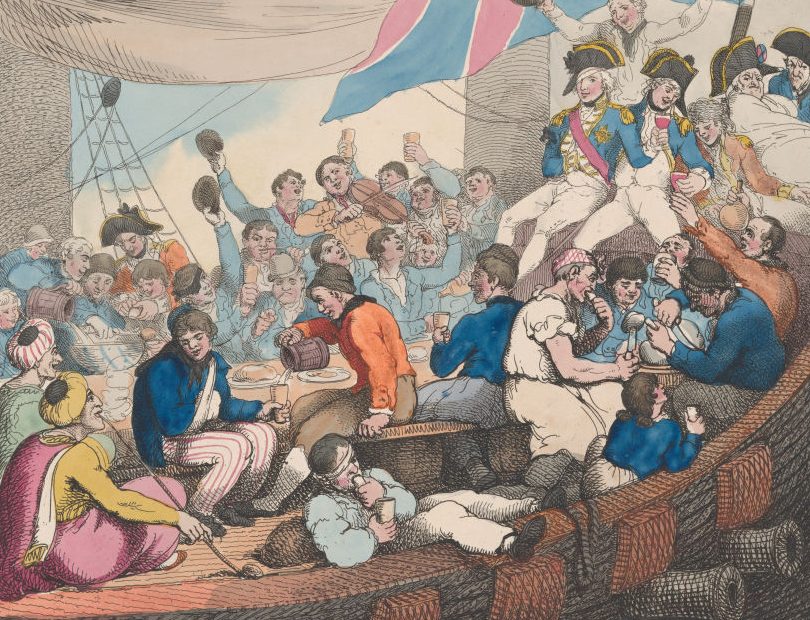
But sailors, possibly because they were at sea so much, were idealized as “hearts of oak” manning the wooden walls (and later the steel walls) of England. And the same was true for officers, credited above all with the great victory at Trafalgar in 1805, which secured national safety and prosperity for the rest of that century. They had a reputation for taciturnity and bluffness, which never does anyone any harm, and they often lived up to it. The fictional Jack Aubrey, in Patrick O’Brian’s witty and clever books about the Napoleonic wars, is a perfect rendering of this type. They tell terrible jokes. They don’t say much, just “Kiss me, Hardy” (Nelson as he died); “There seems to be something wrong with our bloody ships today, Chatfield” (Beatty at Jutland, as British warships repeatedly blew up under German fire); and “Continue to engage the enemy” (Warburton-Lee at Narvik, dying on his bridge after smashing up Hitler’s destroyer fleet and so making a cross-Channel invasion impossible).
And so the word “Navy” had, for many years, a useful commercial magic if you were selling something a bit manly and bluff, such as Navy Cut tobacco and Navy Rum, or even Senior Service cigarettes. But it did not have the yelling, martinet character of the Army. I have never yet seen a naval officer’s uniform that fits properly, and when sailors are marched aboard their ships (does this still happen?), the drill is far from pernickety. Close contact with the Navy — both my parents were in it, and so were most of their friends, some of my schoolteachers and many of the parents of my schoolfellows — revealed a dry, faintly sarcastic view of the outside world which had never been to sea. Even my mother, an ocean-going snob who would die of shame if she heard me use the word “toilet”, had mastered the sarcasm of the fleet. More than once I jumped with surprise when I heard her icily remarking about some inadequate if feeble attempt at recompense. “Well, that’s damned nice of him”, she’d say, which, for a Fifties married middle-class woman in a respectable suburb, was going it a bit.
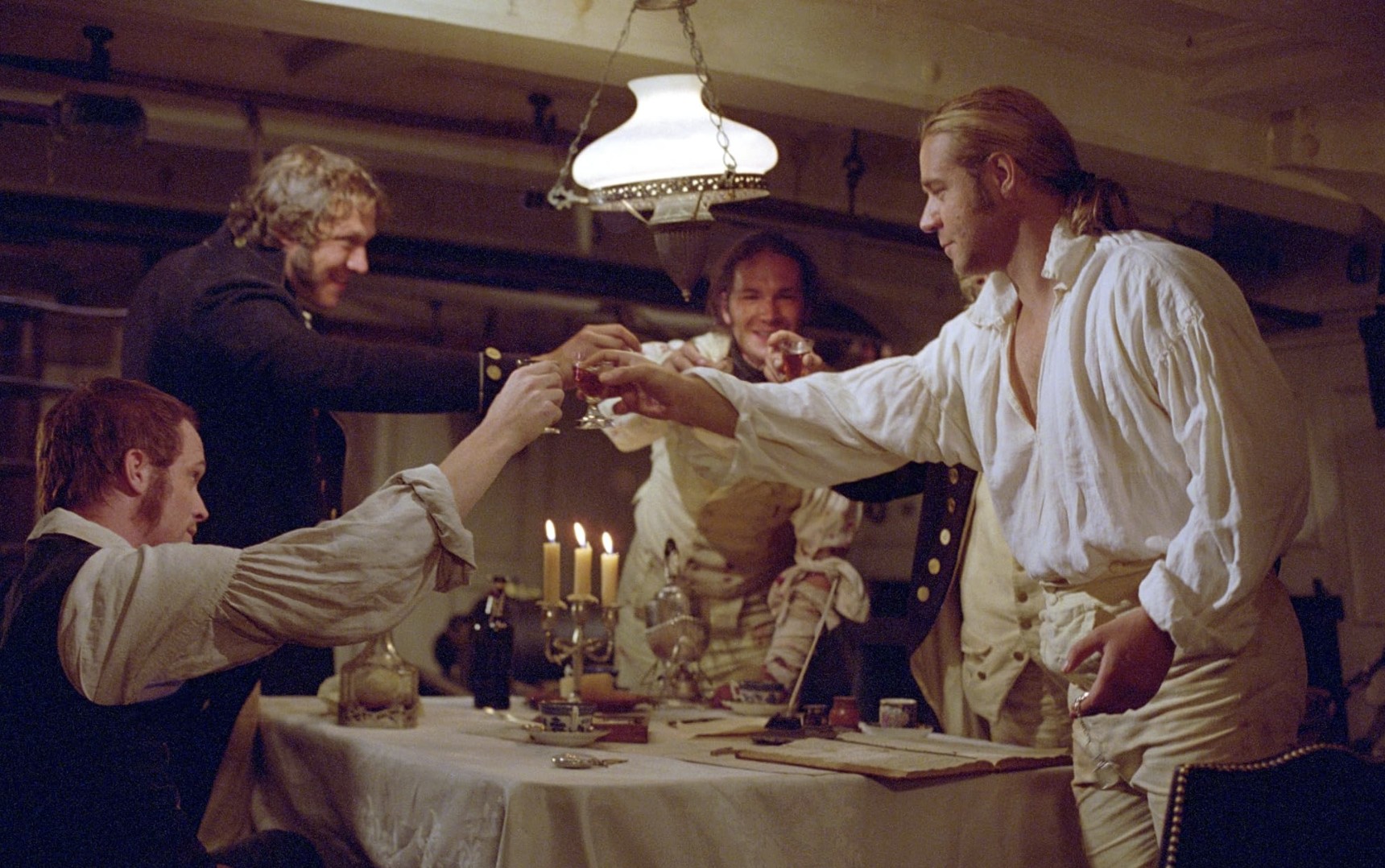
This reputation was kept alive just a little longer by two films. The first, The Cruel Sea, is one of the best movies ever made and shows, among other things, how the spirit of the Navy, stretching back through centuries, embraces and takes hold of ordinary men and turns them into something very nearly heroic. The other, In Which We Serve, features a speech by Celia Johnson, playing a naval wife, and explains the privations of this role. It can reliably reduce me to tears, and not just because of the way she says “sloop”, so upper-middle-class that nobody could get away with it nowadays. During one scene, at a 1939 Christmas dinner, she is wearing a small brooch, in a shape worn by my mother and known to her as the “Crown of Neptune”.
Few will ever notice this, but the little shiny badge betokened membership of a secret society. It was a sign to other such navy wives of a great unknown sisterhood, familiar with the grim features of married quarters and rented lodgings in glum seaports or remote colonial stations, the endless disruption of life by emergencies and distant postings, the miserable pay, and the infuriating tussle with their great permanent love rivals: their husbands’ ships. In Which We Serve also features the glorious Navy Prayer, one of the Church of England’s “Forms of Prayer to Be Used At Sea”, written when the Navy was recognized as an indispensable part of the nation. It is a plea for a safe return from danger, and opens with the words, “O Eternal Lord God, who alone spreadest out the heavens, and rulest the raging of the sea, who hast compassed the waters with bounds until day and night come to an end…”
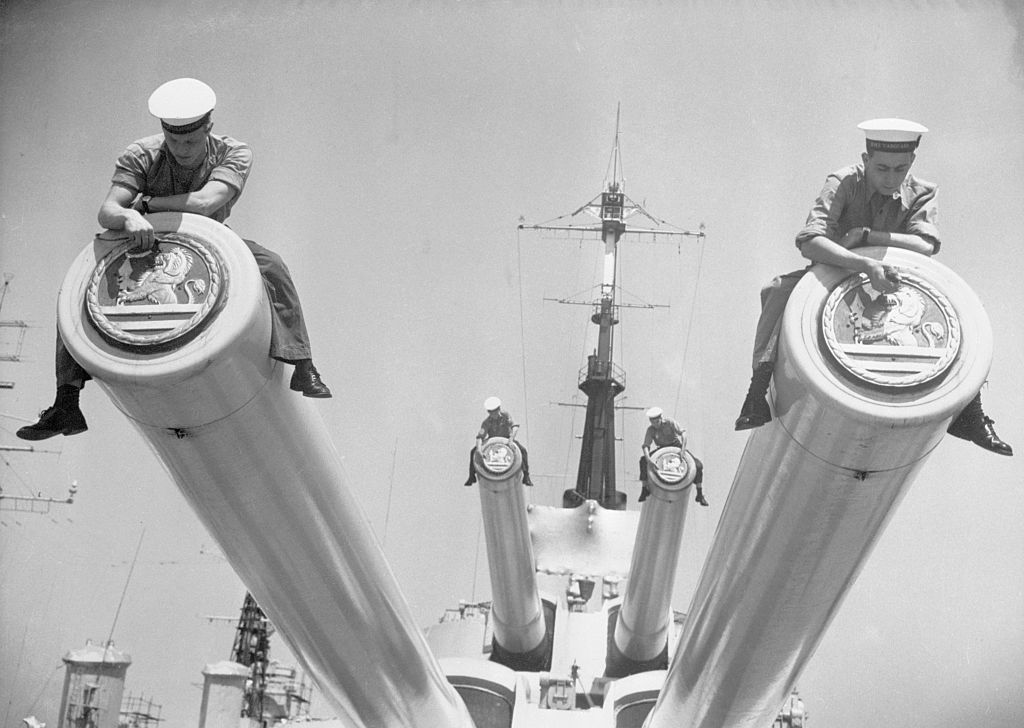
And this is one of the beauties of the Navy which once endeared it to so many. For it was beautiful. Great warships, which we no longer possess, are beautiful, as such engines of destruction should probably not be. The boxy, enclosed modern vessels of today’s piddling navies lack this magic, as do the two giant car parks we call aircraft carriers. But in the early Sixties, I couldn’t get from my home in the village of Alverstoke to Portsmouth without crossing the harbor by ferry, under the immense 15-inch guns of the last British battleship, HMS Vanguard. There is something uplifting and thrilling about great guns, and the swooping lines of the ship itself, 814 feet long, that expressed power as few other works of man can do. It made our hearts swell a bit, to know we possessed such an instrument. And many hearts, including my own, have shriveled, as that lovely fleet has melted away.
Of course, all this is also wrapped in England’s deep love of the sea. One sign of this can be found in Arthur Ransome’s books about children sailing in the Lake District. It is now impossible to imagine the hold these stories had on hundreds of thousands of English childhoods, lived far from the shore. Michael Frayn, who grew up in the Surrey suburbs, has confessed that he read them over and over again, and tried to write one of his own. Eventually, the children in the series escape from their lake and actually go to sea, in reality and in fantasy. Towards the end of Peter Duck, one of the strangest of these remarkable novels, the children sing their way up the Channel to the words of the sea shanty “Spanish Ladies”, a favorite of my naval father, marking the ancient landmarks known to homecoming Englishmen since the time of Grenville and Hawkins:
And the First land we made, it is called the Dodman,
Next Rame Head off Plymouth, Start, Portland and Wight;
And we sailed by Beachy,
By Fairlight and Dungeness,
Until we brought to by the South Foreland Light.
Those who still savor the “inshore waters” part of the Shipping Forecast, as I do, were probably brought up in a maritime Britain, where there was still a bit of salt in everything and the sea was a friend and fortification, not, as it seems now, a door left wide open. Modern Britain is now so turned away from the sea that it brings to mind a passage in C.S.Lewis’s Prince Caspian, one of the Narnia books. The new rulers of Narnia fear the sea and what might come over it, and have deliberately allowed thick woods to grow along the coast. Lewis, who also grew up in more naval days, though he lived far from the sea, understood, like any British person of his time, that the ocean is a source of power and inspiration and a great highway to the world and all that is in it. But only if you have a Navy.
Peter Hitchens is a columnist for The Mail on Sunday and author of A Revolution Betrayed.
 ClarkeMicah