








April 15 2026 - 7:00am
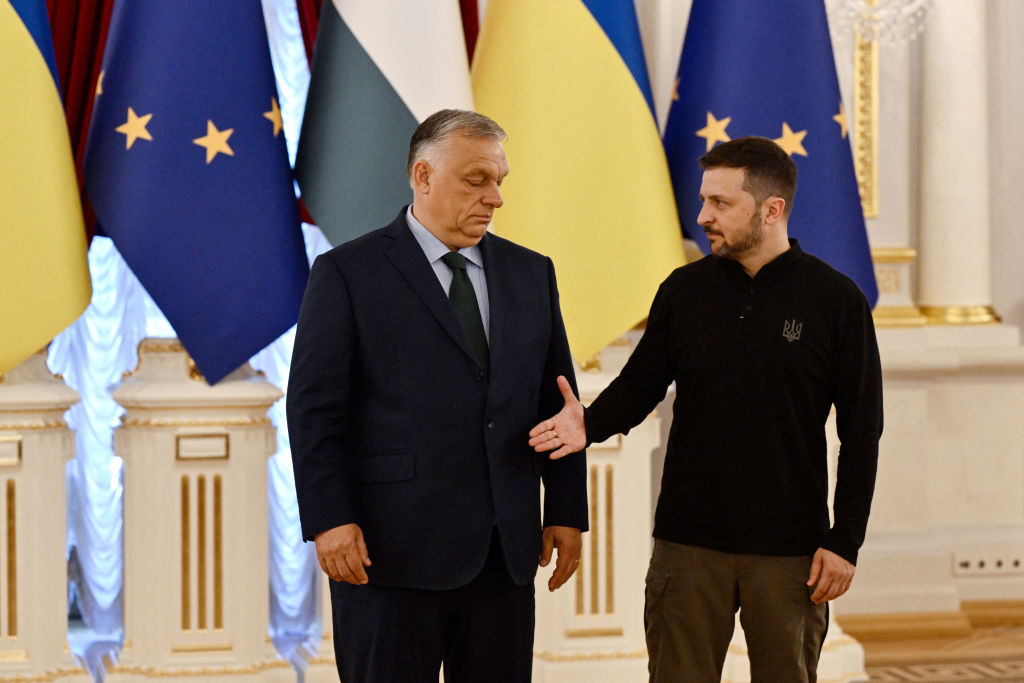
Viktor Orbán’s defeat in this week’s Hungarian elections provoked demonstrations of joy not only on the streets of Budapest but, one suspects, in the corridors of power in Kyiv. Ukrainian President Volodymyr Zelensky was quick to offer his congratulations, and they are likely to have been both genuine and heartfelt.
But while Zelensky may be relieved to see the back of Orbán, Hungary is not going to turn into a staunch ally of its eastern neighbor overnight. Incoming prime minister Péter Magyar has already indicated a stance that, while not as hawkish as Orbán’s, will hardly put Hungary in line with leaders in Brussels.
On the one hand, the fall of Orbán offers Ukraine significant cause for celebration. The outgoing prime minister had been a persistent thorn in Zelensky’s side, whether blocking aid to Kyiv, selecting Russian energy over alternative sources, or even seizing Ukrainian state bank personnel and cash. Relations between Kyiv and Budapest reached such a nadir that Zelensky was this year ticked off by the European Union for making what were perceived to be threats to Orbán’s life. Magyar’s victory eliminates a longstanding nemesis for Zelensky, handily via democratic means rather than assassination.
Magyar’s arrival initially seems to augur well for Kyiv in other respects. The incoming PM signaled that his government will drop Hungary’s opposition to a €90 billion EU loan to Ukraine, offering the country’s economy some much-needed respite. Besides denouncing the incumbent government’s sharing of confidential EU information with Moscow as “treason”, the new Hungarian leader stressed that he would not phone Vladimir Putin and that Moscow should “end this war”.
Yet invoking anti-Russia sentiment is an easy play on the campaign trail, especially when it offers a convenient line of attack against a rival. Hating Russia is also not the same as loving Ukraine. Magyar has already announced that Hungary will not contribute towards financing the loan to Ukraine and is refusing to support fast-tracked EU accession for Kyiv. His desire to see the war end stems from a hope that sanctions on Moscow can then be lifted “immediately” and Europe can purchase cheap Russian energy.
There is little electoral reason for Magyar to budge. Having made hostility to Ukraine the centerpiece of his campaign, Orbán successfully secured 37.8% of the vote. A 2025 survey found Hungarians regard Ukraine as almost as great a threat as they do Russia. Meanwhile, polling in the run-up to the elections showed that only 26% of Hungarians back financial assistance to Ukraine and 56% do not want Kyiv in the EU. While some of that feeling may be the result of Orbán-spun narratives, those take time to unravel. Ukraine-skeptic voters are likely to remain a significant and vocal constituency, even after the change of government.
Ultimately, no amount of Kremlin-bashing will shift the fundamental balance of power between the two countries. In 2021, Budapest signed a 15-year contract for Russian natural gas, with nearly half its electricity coming from a power plant dependent on Russian fuel. Moscow will not abandon efforts to manipulate Budapest simply because it lost a dependable ally in Orbán. Russia will likely resort to more coercive measures based on leveraging Hungary’s energy dependence. Note Kremlin spokesman Dmitri Peskov’s pointed reminder this week of “joint projects requiring ongoing collaboration” and Magyar’s own commitment to “pragmatic” relations.
While some in Brussels will be celebrating, the picture is only slightly rosier now. Orbán was a genuine obstacle to aiding Ukraine and a source of disunity within the EU. But he was also a useful scapegoat, his departure no longer letting Europe blame its own inaction on one man. Without him, the spotlight will shine more harshly on other tensions and splits, not least the condemnation provoked by Belgian Prime Minister Bart de Wever’s call for relations with Russia to be normalized in return for energy. Awkwardly, a thirst for Putin’s oil unites Magyar and de Wever, setting up the conditions for an alliance which would ultimately serve the Kremlin’s interests.
Though Orbán’s exit may seem like a win for Ukraine, the enduring realities of a Hungary wary of Kyiv and dependent on Russian energy mean any policy shift could be far more limited than Zelensky hopes. His congratulations were no doubt sincere, but the celebrations may not last long.

Join the discussion
Join like minded readers that support our journalism by becoming a paid subscriber
To join the discussion in the comments, become a paid subscriber.
Join like minded readers that support our journalism, read unlimited articles and enjoy other subscriber-only benefits.
Subscribe