




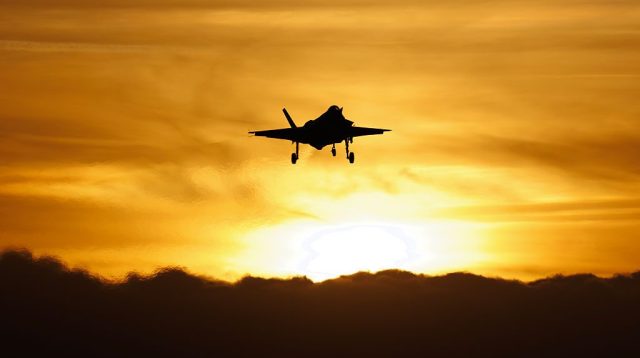
Still the gold standard? (Dan Kitwood/Getty)





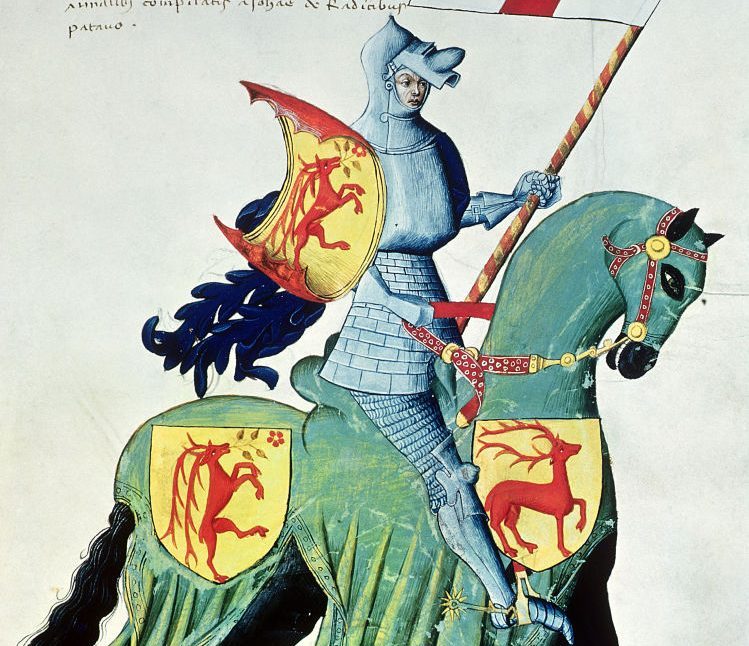
In 1420, the mightiest military force in all of Christendom rode to war. The death of Czech reformist preacher Jan Hus, an early precursor to Martin Luther, had sparked a religious revolt in the lands of Bohemia. Masses of Czech peasants grabbed their pitchforks, forming armed bands that promised to defend their faith and their homeland. To call these people suicidal would have been an understatement: they were now at war not merely against the Holy Roman Empire, but against Christendom itself. As the Emperor Sigismund gathered his forces, Pope Martin V asked every Christian knight to fight the heretics. From England to Poland, heavily armored horsemen, the gold standard of medieval power, heeded the call — even as the Czechs themselves were first left wielding farm tools.
History is the mass grave of foolhardy peasant rebels who crumble the moment they meet serious military power. Yet the Czechs were lucky. For as it turned out, they started their revolt at the same moment as one of the most key pivot points in European history. Almost by accident, the Czechs would become the first people on the continent to successfully use gunpowder weapons. Once they did, the underlying math of military strength changed quickly and forever. The European knight, though he tried to cling on, would spend the rest of his days sliding into irrelevance.
Six centuries later, a similar scene is playing out before our eyes. The United States, long used to proclaiming itself the greatest military power mankind has ever seen, just rode out to crush the Islamic Republic of Iran. Almost everyone expected this war to be a quick affair too, for more or less the same reasons as the knights did in 1420. In our age, it is the professional pilot, flying a $100 million fighter, who represents the gold standard of military accounting. In this regard, Iran is just a modern version of Bohemia. Having been sanctioned into the ground for 40 years, with almost no international allies, Iran could never hope to field much of an air force even if it wanted to. By dint of necessity and desperation, Iran’s weapons in this war are cheap and mass-produced, mostly made domestically. Yet they still bite; over the weekend, the country’s “non-existent” defenses shot down an American jet, triggering a huge rescue operation and even more losses.
America still has 11 aircraft carriers, and Iran has zero; all the reports indicate that the Trump administration initially expected the fighting to be over in days, if not hours. Yet as we begin the second month of this quick and easy three-day war, with fresh reports that the world economy is about to crash down on our ears, it might just be time to ask if we’re not living through another pivot point in history.
Despite their superficial differences, after all, the American pilot and the German knight are very much the same kind of creature. They both inhabit a hallowed place within their respective militaries; they both consume an extreme amount of resources; and they are both the central figures in a huge project of cultural and military myth-making. It’s therefore useful to understand the history that produced the modern hero-pilot and the equally heroic medieval knight, and the way in which military history tends to shift from favoring big and costly weapons to cheap and mass-produced ones.
Before Europe had its medieval knights, it had the Roman Empire. Institutionally, Rome never cared all that much for cavalry, which it often sourced from its allies or auxiliaries. Instead, the foundation of its might lay in the legionnaire, a heavy infantryman wearing standardized and mass-produced equipment. Rome’s greatest strength was that it was both big and organized, and so had the power to bring an almost infinite number of well-trained, well-armed men to bear. An individual Gaul or Briton might have been a better warrior than the Roman legionnaire, but the legionnaire was always a better soldier.
When the Roman Empire collapsed, Europe decentralized. Tax bases shrunk; state capacity degraded; large armies became impossible to field. It was this new reality that produced the knight. Over time, Europe’s new lords realized that a cheap and effective source of military power, in lieu of a state strong enough to train and equip armies on its own, was simply to offer land and tax benefits in exchange for soldiers. Frälse, the old Swedish term for the nobility, loosely translates into those who are exempt: by offering the king a certain number of mounted cavalry in times of war, families attained the right to avoid taxes and other obligations.
The early-medieval nobility of Europe were therefore essentially military contractors. Over time, they grew into a discrete social class, with their own political interests. And just like any other social class, the knights were supremely interested in making sure their position was never truly challenged. Their arms and armor were extremely expensive — a well-made suit of plate in 15th-century England cost almost three years of an archer’s wages — and their warhorses were too. Altogether, then, it often took the labor of whole villages to support a single knight. And, to be fair, the knight was very effective in combat, just as long as he wasn’t put up against an organized, well-trained enemy sporting effective weapons. Given the economic and political limitations of early medieval Europe, he almost never was.
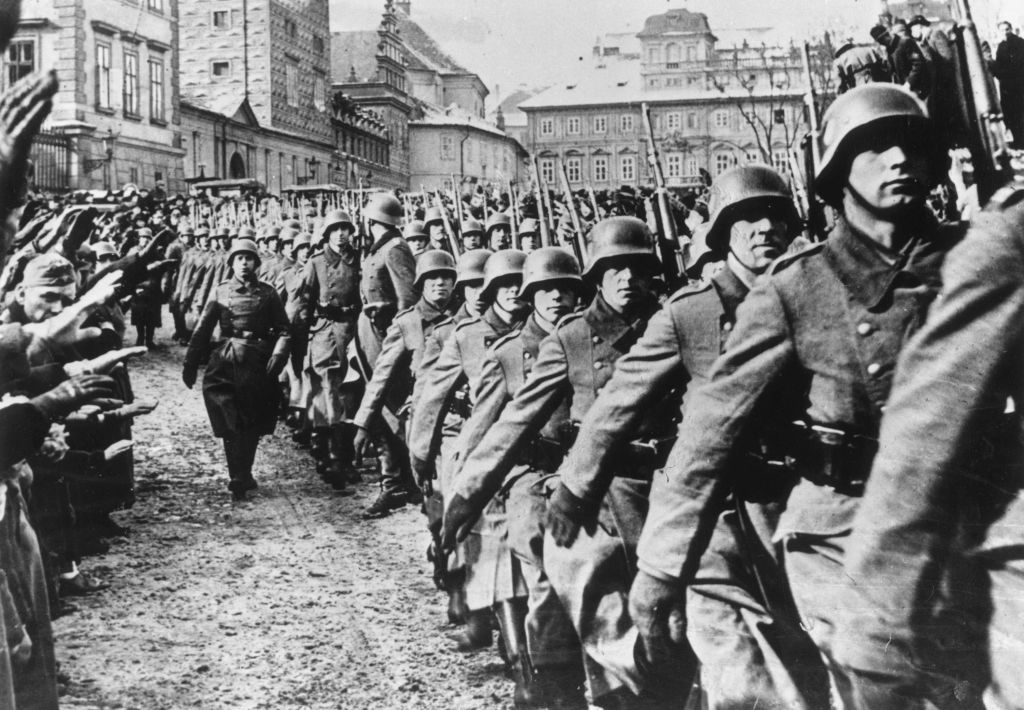
The contemporary American pilot flying missions against Iran, by contrast, is the product of a somewhat different collapse. Air power did not exist before the First World War, and only hit its stride from 1939. But despite the hype, both world wars were still infantry wars. The three million Germans who invaded the USSR in 1941 were mostly organized in infantry divisions, relying partly on horses for their logistics. During both world wars, states equipped millions or even tens of millions of soldiers. The Americans, the Soviets, and the Germans; they all fought like the Romans once did, relying on their mass and scale and standardization.
This kind of mass warfare is gone, and it will not return in our lifetimes. The US Army in 2026 sits at approximately 450,000 active-duty personnel, which is only slightly more than the number of deaths that same army sustained from Pearl Harbor to Hiroshima.
For many reasons — not least the challenges of instituting a draft during a time of political fragmentation — America, alongside pretty much every other industrialized country, has undergone a collapse in its ability to field mass armies. That’s shadowed by an even more dramatic collapse in their ability to produce weapons and ammunition at scale, as Western countries have deindustrialized and moved production abroad. It is in this era that the idea of the military has come to completely revolve around airplanes and air power. The rise of the American pilot has coincided with the collapse of its infantry.
As this military shift has happened, our culture has shifted too. Where the industrialized West once thought and acted like the Romans, venerating the ideal of the dutiful soldier, our culture is now increasingly geared toward the cult of the warrior, where victory is achieved by noble and heroic individuals. For a Napoleon or a von Moltke, the height of military accomplishment was the faceless infantryman. In today’s culture, the ideal is Tom Cruise in Top Gun, or a burly member of Delta Force. Perhaps the most iconic example of this shift is Pete Hegseth, the self-styled “Secretary of War”, who embodies a kind of hyper-aggressive machismo completely out of step with the institutional Pentagon. The older generals are dour soldiers, but Hegseth seems to view himself more like an epic Norse warrior, and even has the tats to prove it.
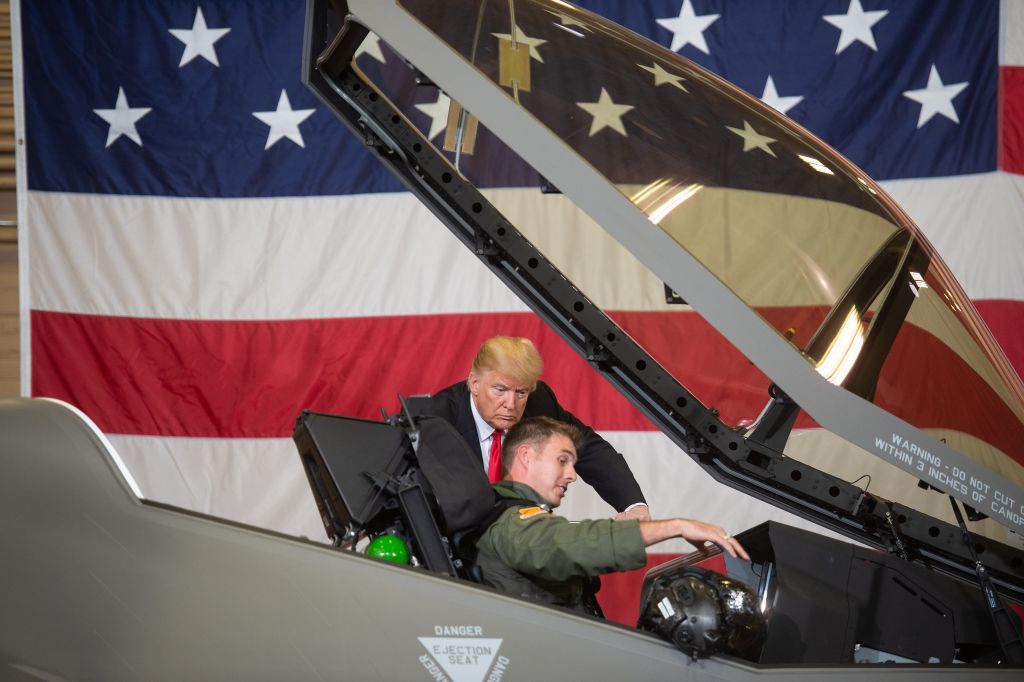
And just as medieval warriors had their armor and horses, so too do pilots have their steeds in the sky. The cost of a modern fighter jet is easily north of $100 million, but with out-of-control inflation across America’s decaying military industrial complex, that figure is constantly rising. Besides, the sticker price pales compared with the enormous cost of keeping planes operational and effective. It takes hundreds of people to enable a single pilot: an US aircraft carrier requires some 3,000 crewmen just to operate the ship, and an additional 2,500 to enable an air wing of 50-to-70 planes. But many more are engaged in fixing and supporting planes stateside, including the contractors who don’t show up in the numbers.
Just like the medieval knight, the American pilot is nearly invincible as long as he isn’t put up against an organized, well-trained, and well-armed enemy. In Vietnam, this turned out to be quite the problem. But after that bitter experience, America made a point to only pick fights with the likes of Panama, Grenada, and the Taliban. Moreover, at the time when US planes were truly at the cutting edge of military technology — that is, 50 years ago — computers were still in their infancy, long-range rocketry was inaccurate and expensive, and modern drones and satellite imagery were still a way off.
In those days, the weapons needed to destroy a fighter jet on the tarmac from hundreds of miles away were orders of magnitude more expensive, putting them well outside the range of poorer countries or terrorist groups. As mass warfare collapsed, meanwhile, conflict crept toward becoming a game for a tiny cadre of military elites. And though mechanized infantry and armored brigades were heavily involved in the Gulf wars, it is the pilots and the airpower that are remembered today. They have become mythological heroes, and their reputation today is that of an elite and unbeatable force. But as the knights in Bohemia learned to their costs, such reputations do not last forever.
As it happens, the Czechs in 1420 turned to gunpowder out of sheer desperation. Gunpowder wasn’t exactly new in Europe, but the slow and unwieldy nature of early firearms meant they were rarely used, and only then in specific situations. But gunpowder also had significant advantages. For one, it took almost no training to learn how to use a gunpowder weapon. For another, the damage they inflicted came from the chemical energy stored in the powder itself, meaning even women and children could use them effectively, punching through plate armor with ease. Early handguns were essentially just metal tubes at the end of a stick, meanwhile, making them cheap and easy to produce. Once the Czechs figured out reliable tactics that could compensate for the drawbacks of early guns — such as the very long reload time — the cream of Christian knighthood stopped being such a threat. Soon enough, the Bohemians would defeat several crusades against their homeland.
Today, the miniaturization of electronics is having the same revolutionary effect that gunpowder once did. The technology that allows you to stream movies on your iPhone can also be used to provide extremely accurate terminal guidance to an inexpensive suicide drone; strap a grenade to a Chinese toy drone and it becomes a nightmarish anti-infantry weapon. In the Seventies, the ability to precisely target American airbases from the air was something out of reach for many states. Today, an Iranian Shahed-136 can be bought at a significantly lower price than a 2026 Honda Accord, allowing any middle-class family to theoretically afford top-shelf precision airpower. Just recently, one such drone was used to totally destroy an American E-3 sentry aircraft on the runway, a plane that America doesn’t produce anymore but cost hundreds of millions of dollars when it did. One of Iran’s primary air-defense missiles is the very innovative 358 missile, rumored to be especially cheap owing to its use of off-the-shelf electronics.
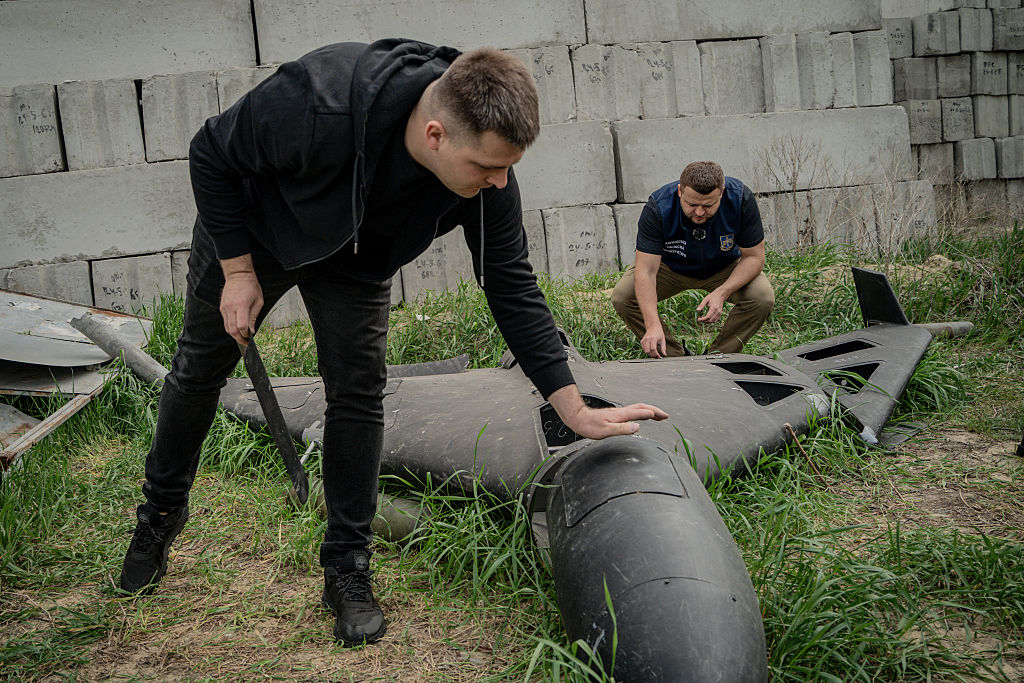
Ballistic missiles are, of course, rather more expensive, and probably out of the reach of most private citizens. Yet they are still cheap enough to present a massive problem for American military planners. All the while, the same challenges that long afflicted America’s small-arms manufacturing sector are now impacting its fighter planes. For instance, the Air Force recently looted an aging KC-135 from the junkyard, and may now bring it back into service. This specific machine was delivered to the Air Force back in 1959, meaning it technically qualifies for social security. Hardly ideal: but American airpower is now so expensive that even America struggles to afford it.
In the collective imagination of the West, the American pilot remains a warrior-knight par excellence, capable of charging into a battle and defeating dozens of enemies on his own. In the much grubbier reality of today’s war, the American pilot is now flying an aircraft that might be 30, 40, or even 50 years old. He is up against an enemy armed with weapons designed in the 2010s and the 2020s, often leveraging technologies that didn’t even exist 10 or 15 years ago. Meanwhile, America’s pilots operate on a military doctrine that the Pentagon itself concedes is outdated and ill-suited for an age of cheap precision weaponry.
All this is now causing panic in Washington, as well as a curious form of cultural schizophrenia. Officially, America’s pilot-knights are flying into battle and utterly crushing their enemies. Iran now has no formal military, apart from the parts that are still blocking the Strait of Hormuz. Their missiles and drones are almost all gone, apart from the ones which aren’t, which is why American satellite companies are being asked to stop offering pictures of the damage they’re not inflicting. Most stunningly of all, the Iranians have been left with absolutely no functional air defenses — apart from those that just shot down several American aircraft.
That brings us to the most interesting part of the war so far: the recent felling of an American F-15 over the skies of western Iran, and the vast rescue mission that followed. The stranded airman was saved, but the operation still resulted in the destruction of perhaps half-a-dozen American aircraft in total, making it the worst day for the Air Force since Vietnam. In the official narrative, however, this was all a stunning success, full of pluck and heroism; President Trump called it “one of the most daring search and rescue operations in US history”. What country, other than America, could pull off something like that?
In a sense, the details of the story are beside the point. What matters is just that: the story. That this operation was both hugely costly and advanced no strategic goals is almost certainly true, but it is also irrelevant to how America now thinks of itself. This was once a society of soldiers; now it has become a society of warriors, and its entire self-image increasingly subsists on these kinds of tales.
But how long can they last? Once people stop believing in knightly prowess and valor, once they no longer think that the bold few can vanquish the peasants, whether they’re armed with guns or IEDs or Shaheds, their entire reason for existing disappears. And if people wake up one day and wonder why they’re paying hundreds of millions of dollars to train and support some hotshot pilot, when an ugly plastic drone running on a motorcycle engine can do the same job a quarter as well at a millionth of the cost, the American military will stop being the world’s most powerful military. Instead, it will become a sad and ridiculous anachronism.
That day has already arrived in many parts of the world, as more and more military planners watch what’s happening in Iran and Ukraine. But it has not yet arrived in America. And that is why there’s a blackout on satellite images, why the military is so cagey about reporting on casualty numbers, and why America’s increasingly limited resources are being spent on flashy rescue operations that achieve very little in the way of strategic objectives, even if they do look very cool. That is why the very last stockpiles of long-range, standoff weaponry have to be brought over from Asia to fight against an enemy that has already been defeated. It is why Americans are being told they will have to embrace a round of truly vicious austerity, as the most powerful military in the world gobbles up another $500 billion to support a war it is in fact handily winning with its eyes closed.
As this war that was theoretically won in the first 48 hours grinds on and on and on, America’s self-proclaimed Secretary of War has come under increasing criticism for his conduct. With his crusader tattoos, and his erratic behavior — asking God for “overwhelming violence” to smite “those who deserve no mercy” — there are those who wonder whether Hegseth is really fit for the job. But who other than him, with his big Jerusalem cross and the even bigger chip on his shoulder, is a better fit for this next pivot point in history? Who else but he could lead the very finest knights that all Christendom has to offer, out on their final, glorious charge?