








April 16 2026 - 7:00am
Even if the Iran war ends today, and the blockade of the Strait of Hormuz is lifted, the damage to global oil and gas markets will be lasting.
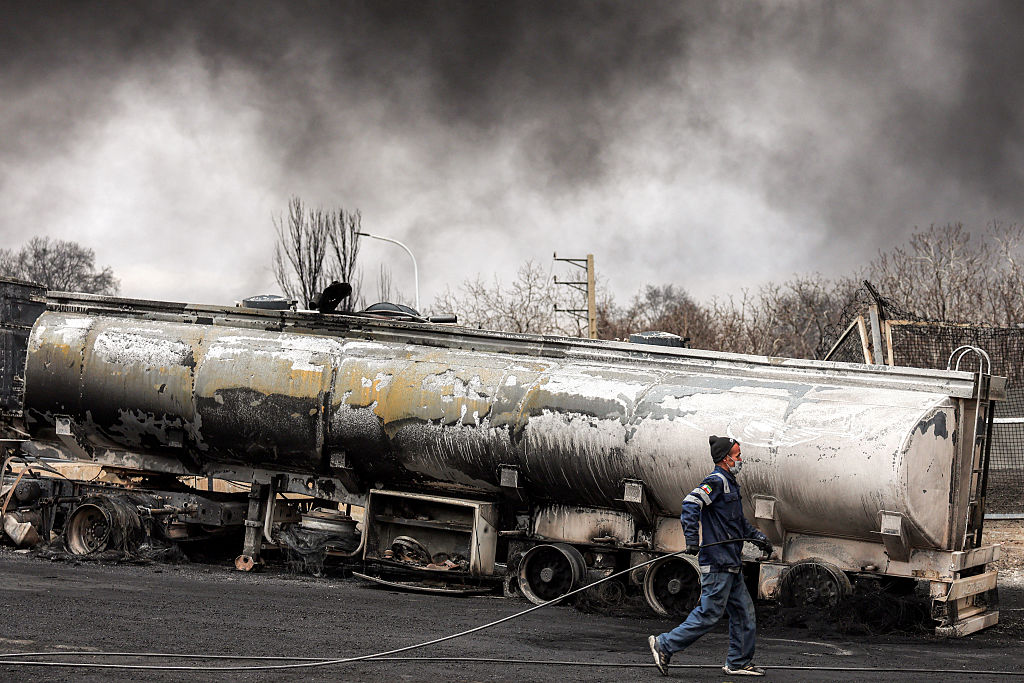
Opec reported this week that its members produced 27% less oil in March than in the previous month, from 28.8 million barrels per day down to 20.8 million — the largest recorded month-on-month decrease. In large part that is due to Iranian strikes on other oil infrastructure across the Gulf, though nowhere more so than at Qatar’s Ras Laffan gas export complex — the largest such hub in the world. QatarEnergy announced last month that Iranian strikes on Ras Laffan had damaged around 17% of its liquefied natural gas (LNG) production, and could take between three and five years to repair. As a result, global LNG markets will be short 3.5% of their expected supply throughout that time.
In light of this damage, it’s no guarantee that Gulf production will come back online swiftly. What’s more, we may not see the the Strait reopen any time soon. A deal acceptable to the US and Iran remains out of reach, and Trump has already upended the negotiating table, first last June and then again this February. Even if believers in the “Trump Always Chickens Out” (TACO) theory are proven correct, what Washington is willing to accept and what Israel will allow differs greatly.
There are also clear differences in opinion among the Gulf states, though they would all be highly unlikely to seek to extend the war without Washington. Nevertheless, a scenario in which they take differing approaches to any potential deal could affect both supply and demand for their production and exports.
Besides, a quick return to the $60-70 average price range witnessed in the year before the war is unlikely. Markets would have to reflect the risk of a potential deal collapse, noting that it could have further devastating impacts on supply. Iran has already demonstrated it can target Saudi Arabia’s East-West pipeline or bring the Houthis into disrupting Saudi exports via the Red Sea, which would rupture what has so far been the biggest mitigating influence on the scale of the supply shock resulting from the Strait’s closure.
The only certainty at this point is more uncertainty, and markets will price that risk accordingly. The disruption over the past six weeks alone is already forcing a reconfiguration of trading networks and destroying pockets of demand, particularly in gas, where Asia has shown it can pivot quickly.
Some of that shock will feed into downstream inflation, especially in products like plastics that rely on oil and gas inputs, as supply chains are rerouted. Pre-war expectations of substantial UK and European rate cuts this year are therefore unlikely to re-emerge. Over the longer term, supply shocks from the conflict are likely to produce a classic bullwhip effect across multiple markets, amplifying volatility in procurement and inventory planning and leaving a longer tail in the global economy. There may even be renewed backing for LNG export capacity as a hedge against future disruption, risking fresh oversupply once facilities such as Ras Laffan are fully restored.
Whether the decision to launch the war against Iran was a misjudgment remains to be seen. But increased volatility, clearly, is here to stay.
Join the discussion
Join like minded readers that support our journalism by becoming a paid subscriber
To join the discussion in the comments, become a paid subscriber.
Join like minded readers that support our journalism, read unlimited articles and enjoy other subscriber-only benefits.
Subscribe