








April 30 2026 - 3:30pm
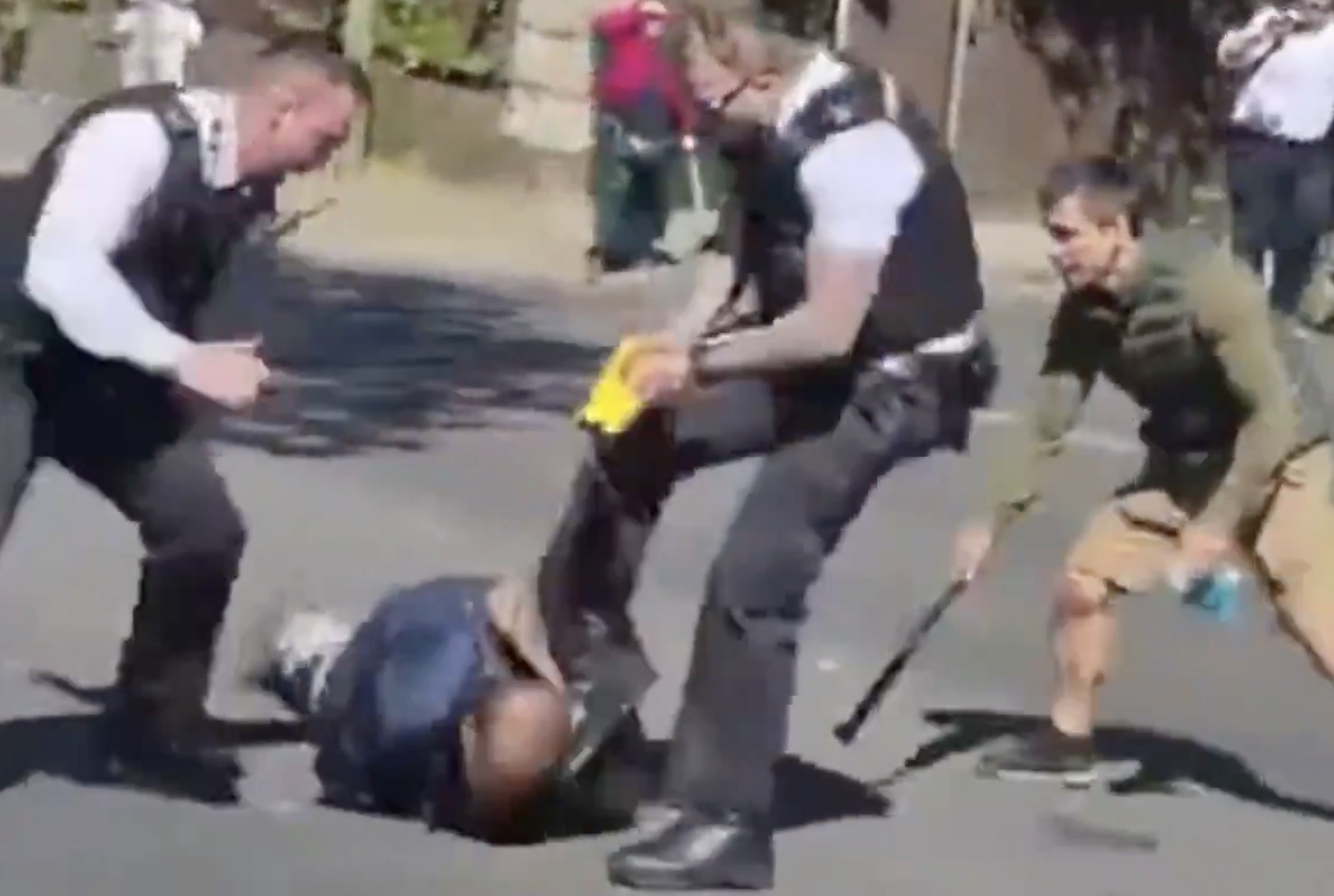
Yesterday the world discovered that, in certain circumstances, British police officers can lawfully kick a suspect in the head. Officers, assisted by a passerby, arrested a 45-year-old man suspected of stabbing two Jews in Golders Green in north London, prompting skirmishes on social media.
Criticism centered on the proportionality of repeatedly kicking the suspect, named this afternoon as Essa Suleiman, in the back of the head in an effort to subdue him. Officers are acutely aware of media perception and wear body cameras, and the footage shows that Suleiman was still holding his knife when the police started kicking him. Predictably, Green Party leader Zack Polanski reshared a post on X accusing police of “repeatedly and violently kicking a mentally ill man in the head when he was already incapacitated by taser”. Yes, the arrest looked ugly. Violence, police officers argue, usually does.
In the hours after the incident, the Metropolitan Police Service’s official X account posted that “our brave officers confronted a man they believed to be a terrorist, who refused to show his hands, who was violent, and who continued to pose a clear threat.” It added: “This took true courage.”
For the Met to support officers using such robust force, and so quickly, is unusual. UK police forces have a reputation for throwing officers under buses. The case of PC Lorne Castle in Dorset, for instance, saw the officer dismissed for using “disrespectful” language to a knife-carrying suspect. It is telling that, regarding the Golders Green attack, the Met has come out swinging. Does this signal a possible sea change within the police, both in its media operations and its attitude to the use of force?
It should be acknowledged that police face a genuinely challenging media environment, especially in fast-moving terrorist incidents. On the one hand, as recently happened during protests in Epsom, bad-faith actors will quickly seek to weaponize an information vacuum. On the other, officers face operational and legal restraints on what they can and cannot reveal.
Striking this balance is an area in which senior officers have been found wanting, as in the aftermath of the Southport stabbings in 2024. The UK’s independent counterterrorism legislation reviewer, Jonathan Hall KC, made a number of recommendations after the subsequent disturbances, advocating increased transparency. It would appear the Met has now taken note.
Then there’s the official line on officers’ use of force. Video footage shows two constables repeatedly kicking Suleiman in the head. Although the officers’ actions may well have been proportionate, the legitimacy of such tactics is usually decided after the event, or occasionally even in court. Risk-averse senior officers tend to be wary of commenting on early accounts, both for fear of subsequently being proven wrong and not to inflame “community tensions”. In this case, however, such caution was dismissed. This might well have been due to Suleiman, predictably, being known to Prevent.
The Met, despite dedicating additional resources to Jewish areas, has struggled to contain what is clearly a concerted campaign of violence and intimidation. Since the October 7 attacks in 2023, the force has been subjected to criticism for tolerating lawbreaking by pro-Palestinian activists. As the chickens about which many onlookers warned came home to roost, a flustered-looking Commissioner found himself heckled in Golders Green by angry members of the Jewish community. For all its fine words, the Met has undoubtedly been found wanting in countering Islamist-inspired hate toward Jews. This, as much as officer morale, will have informed its media strategy.
Police, evidently, have chosen to weather the inevitable pro-Palestinian activist backlash. Yet, with next week’s local elections looming, Gaza will feature as a key issue among London’s Muslim communities. No doubt the capital’s Mayor, Sadiq Khan, will have to expend political capital managing the fallout from the Golders Green affair, not to mention Commissioner Mark Rowley’s newfound enthusiasm for robust policing.
Yesterday’s incident demonstrates, among other things, how a kick in the head can have national and even international repercussions. The early signs are, perhaps encouragingly, that the Met seems to have taken note.
Join the discussion
Join like minded readers that support our journalism by becoming a paid subscriber
To join the discussion in the comments, become a paid subscriber.
Join like minded readers that support our journalism, read unlimited articles and enjoy other subscriber-only benefits.
Subscribe