








April 25 2026 - 6:30pm
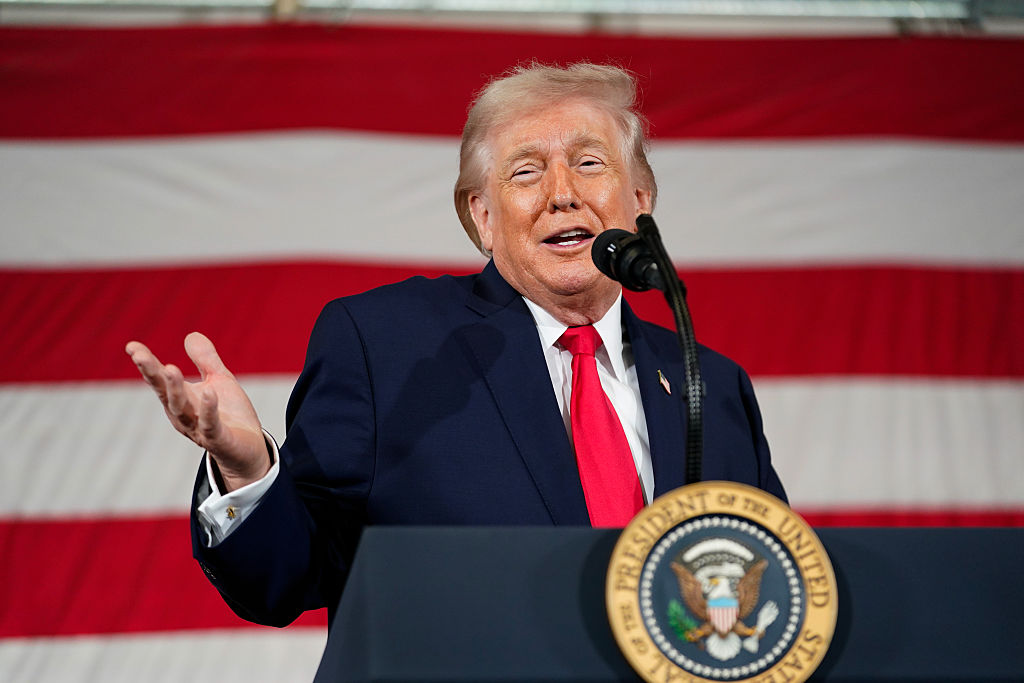
“If at first you don’t succeed, try again,” said the sagacious W.C. Fields. “Then quit. There’s no use being a damn fool about it.” The Democratic Party has an ideal opportunity to put Fields’ wisdom to the test should they regain the House in November — and to fight the temptation, currently turning into a tidal wave in the party, to impeach Trump.
It is certainly true that there is public support for an impeachment drive. A Strength in Numbers poll conducted this month found that 55% of Americans favor impeachment compared to 37% who oppose it. Even 21% of Trump’s own 2024 voters favor impeachment. Those numbers put “Trump in the neighborhood of the numbers Richard Nixon saw at the peak of the Watergate scandal in August 1974,” according to pollster G. Elliott Morris.
But we have already seen this movie. Twice. In the 2019 impeachment over abuse of power, the Senate acquitted on largely party-line votes, while Trump’s approval rating rose by roughly six points over the course of the proceedings. After the January 6 riots and a subsequent vote for impeachment by the House, the Republican-controlled Senate was similarly unmoved, with the number of votes in the upper house falling well short of the threshold for removal. Even in the wake of the events at the Capitol and Joe Biden’s electoral victory, public polling remained divided on impeachment. Why would a third time be any different?
More sober-minded Democrats know this. “We’ve already seen this twice,” said Rep. Brad Schneider to Axios. “Unless you’re going to get a two-thirds majority in the Senate… the president will not be removed from office.” So, even in the best possible case where the Democrats win in November and impeachment clears the House, the whole endeavor will at best be a distraction.
The latest round of impeachment articles center on the President’s “usurp[ation] of the congressional war power”, with Trump carrying out belligerent acts in Iran and Venezuela. That line of attack is calibrated to exploit a fissure within the Republican coalition, with MAGA figures from Tucker Carlson to JD Vance wrong-footed by Trump’s pivot to military aggression abroad. But even if an impeachment along those lines earns the support of disaffected America Firsters, the impeachment proceedings will never clear a two-thirds majority of the Republican-held Senate. Nor would those charges meet the threshold for “high crimes and misdemeanors” specified in Article II Section 4 of the Constitution.
There are two considerations that might rationally support impeachment. One is if there really is a favorable shift in poll numbers that can help carry the Democrats through to victory in 2028. And the other is more psychological — just a desire to fight Trump and to go on the offensive whenever possible. Those might seem compelling if not for the wisdom of W.C. Fields. For the truth is that impeachment lost its novelty as a political tool after 1998. Efforts to break Trump in any other way than through elections — whether the criminal prosecutions when he was out of office or the two impeachments — smack of “lawfare” and underhanded efforts to subvert the will of the people.
Impeachment was always a constitutional backstop, not a routine instrument of governance. The framers designed it to be rare — and when Congress has reached for it, in 1868 and 1998, it has often backfired, with voters resenting legislative overreach. If Democrats pursue it again, they risk reinforcing that pattern.
Legalism and lawfare are poor substitutes for political contestation. If Democrats want to defeat Trump and MAGA, they can do it at the ballot box in 2028. Further impeachment efforts would only deepen the party’s reputation for elitism and legalistic politicking.
Join the discussion
Join like minded readers that support our journalism by becoming a paid subscriber
To join the discussion in the comments, become a paid subscriber.
Join like minded readers that support our journalism, read unlimited articles and enjoy other subscriber-only benefits.
Subscribe