




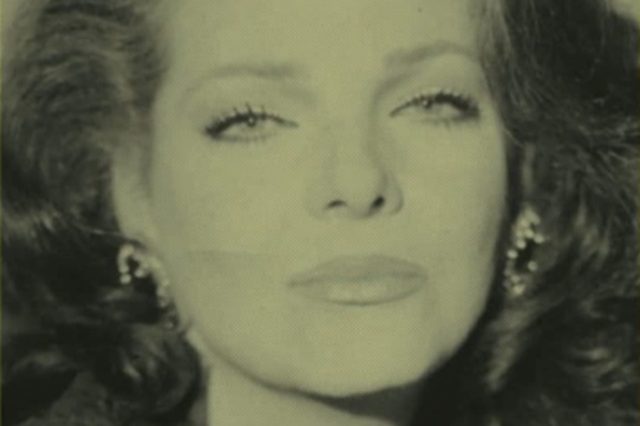
McLean was fast-tracked into surgery.





The issue of transgender regret is finally gaining some traction. It was first brought to public attention by the case of Keira Bell, who was given puberty blockers and cross-sex hormones as a teenager and subsequently believed that staff at the (now closed) Tavistock Gender Identity Development Service should have challenged her more than they did. Since then, others have also spoken out, including Sinead Watson, who was similarly encouraged to transition in her early twenties following trauma from a serious sexual assault, and Ritchie Herron, a young gay man who was groomed online into believing he was a trans woman and had full genital surgery.
But the pioneer in this field is Claudia McLean, who has always regretted undergoing sex change surgery — though by the time it became possible to voice such regrets in the public arena, she felt she had no choice but to remain living as a woman. McLean’s recent memoir, Rejected, lays bare the violence, abuse and cruelty she faced growing up as a “quite effeminate, gay boy” in one of Glasgow’s roughest neighborhoods.
Born in the late Fifties, that boy was abused both at home, by a sadistic father, and at school, “because I was always different”. In the book, McLean describes one particularly horrific assault by his drunken father on his mother when he was eight years old. McLean managed to escape the house and called the police from a phone box. Charged with attempted murder and cruelty to a child, his father was sent to prison in 1966. The memoir lays it out in bleak terms:
“There was no police station, they kept trying to build one and it kept being burned down. My testimony was crucial in getting my father convicted, but when I was about 13 years old, he was released, and putting it around town that he would track me down and shoot me. Then he would shoot my mother. He was capable of this. We lived in fear, and then one day having asked my mother to meet him, and getting drunker and drunker, he hung himself in the school I went to. And I have to live with that for the rest of my life. I never had a chance to know what he was like, and I deeply regret that. There must’ve been more to him.”
The bullying McLean was exposed to at school was relentless, and the only good male role model available was a grandfather who was not violent. Nevertheless, he made it to adulthood, albeit traumatized and vulnerable. “I became a hairdresser, loved singing in the choir, got away from the violent bullies, and then I met Richard, the love of my life.”
McLean soon moved in with Richard, who looked like a “a cross between Jesus Christ and George Best”. However, Richard, who would have intermittent affairs with women, insisted he was heterosexual — and therefore, that McLean must be a woman. “I was pressurized into transitioning, and it was so easy to do so, once I ended up at the psychiatrist.” That psychiatrist asked, “if I liked playing with dolls as a child, and then told me because I passed very well as a woman, I was suitable for the surgery”.
“I was diagnosed in 45 minutes, I’ve already been taking hormones, and I was fast tracked into surgery which I paid for myself, all my own money, because I thought it was wrong to get it done on the NHS.” McLean was prescribed irreversible cross-sex hormones at the age of 26, and underwent full genital reconstruction surgery two years later in 1986.
Her regret about transitioning came instantly. She describes waking up after the genital surgery and sobbing. “I was in a rush to get it done before he left me, and met somebody before I had the surgery, but a year later he left me anyway.”
As a rule, I do not use she/her pronouns when referring to trans-identified men, but I make an exception for McLean. We have been friends since the moment we met — and I had no reason, back in those pre-gender-war days, not to accord her this courtesy. I always knew her story, and she always accepted that she was not in fact a “real” woman. Pronouns just didn’t seem as important as they do today.
On the push for self-identification in the UK, McLean tells me in an interview: “Those men desperately wish to access women’s spaces, which makes it dangerous for those women and girls. That’s a fact.”
McLean is also aware of how the “overreach” of extreme trans activism has ended up doing “regular trans people” a disservice. “Men who do not pass and have not had the surgery or hormones are demanding access to women-only spaces; we are all under scrutiny and our rights are in danger of disappearing.”
I first met McLean shortly after she had sought legal advice on making a formal complaint about how police officers had handled her report of a serious sexual assault in September 1995. She had been the victim of an attempted rape, but when she reported it, police undermined and ridiculed her because she was transgender. I had not expected her to also reveal that she regretted her sex change.
When McLean publicly expressed regret about her transition in 2003, she faced terrible consequences from the so-called “trans community”. The “leaders” despised her in particular for having revealed this regret to a sworn enemy — me. Weeks after my interview with her was published, I wrote a column in the Guardian that resulted in a major outcry from the newly-established trans rights movement. This was in the year the Gender Recognition Act became law, allowing trans-identified people to apply for a Gender Recognition Certificate.
Although individuals had spoken out against botched and ineffective surgery prior to 2003, there had been no public discussion about regret. McLean was the first to go public.
In 2007, McLean then took a courageous step in supporting complaints against Russell Reid, the psychiatrist who had first diagnosed her as suffering from “gender dysphoria”. At that time, the publicity around the case meant that regrets were firmly on the agenda — but the backlash against them was fierce.
That same year, during a Radio 4 debate show, Hecklers, recorded in front of a live audience, McLean spoke up:
“My name is Claudia McLean. I am the person who was recommended for surgery after 45 minutes. That happened in 1986, and I have lived a long time to regret it. I have lived a life apart, honestly, since this had happened, and I think that that woman over there, called Julie Bindel, is a valuable, wonderful voice in the wilderness.”
“At no time did I say to that psychiatrist, ‘I feel like a woman’. How would I know what a woman feels like? How would I know that?”
“For everyone here who is trans and happy, I say bravo. God bless you all. And I’m glad that that’s how it is for you. Alas, it was not for me.”
Most of those in the audience were trans activists; some were gender clinicians. But that event sealed McLean’s fate; from then on, she was fully ostracized.
A couple of years later, I invited her to a screening of Regretters, a film about two Swedish men who regretted transitioning. The panel discussion after the screening was led by trans activists, but McLean spoke out again, saying she wished she had been encouraged and supported to live as a gay man. She was dismissed, patronized and belittled. “It was suggested I was mentally ill.”
Events such as the very first conference on detransitioning, in 2019, and the Keira Bell case against the Tavistock the following year, introduced the term to the public conversation, bringing the notion of “transgender regret” into the mainstream. McLean falls into the gap between two camps: those who have detransitioned (and are celebrated by those of us appalled by the very notion of sex change) and trans activists who insist that only a tiny — and therefore insignificant — minority ever regret transitioning. For McLean, detransitioning has never been an option. “The surgery was too radical, and I have lived as Claudia, as a woman, for 40 years now. How could I possibly go back?”
Michael Kerr is a detransitioner who understands McLean’s position. He is a 33-year-old gay man who has just announced the launch of the UK’s first support service for those detransitioning. He lived as Caitlin for seven years — though he removed himself from the waiting list for surgery and stopped taking his medication in time to save his male genitalia. He says he was caught up in a social contagion following the trauma of being raped as a young man. As a gender-nonconforming gay man, he was told that because he liked “stereotypically female things” he should transition — an uncannily similar rationale to that of McLean’s psychiatrist all those years ago.
No wonder Kerr sees the similarity between his own experiences and those of McLean. “There’s a mirror image of a lot of the things that I experienced,” he says. “It is similar to how I got my diagnosis. I was what we would know as a genderbender, as gender nonconforming. I experimented with high heels and makeup and certain types of clothing, that was then seen as part of the diagnosis. That was then seen as me exhibiting signs that I wanted to become a woman, because this ideology is rooted within homophobia.”
Kerr says he would love to hear from McLean, despite her not having detransitioned, because McLean regrets the surgery and rejects the ideology. “It comes to a point where you’ve gone so far into the treatment that there’s no coming back from it. But I would still like to offer support and show understanding.” He adds: “If the medics had a comprehensive history of Claudia’s life, they would have seen the childhood trauma. They should never have been prescribed any form of medication. The only treatment that they should have offered is therapy.”
***
Betrayed: A Memoir by Claudia McLean is published by Oxfordfolio Press.
Julie Bindel is an investigative journalist, author, and feminist campaigner. Her latest book is Lesbians: Where are we now? She also writes on Substack.
 bindelj