








April 3 2026 - 10:00am
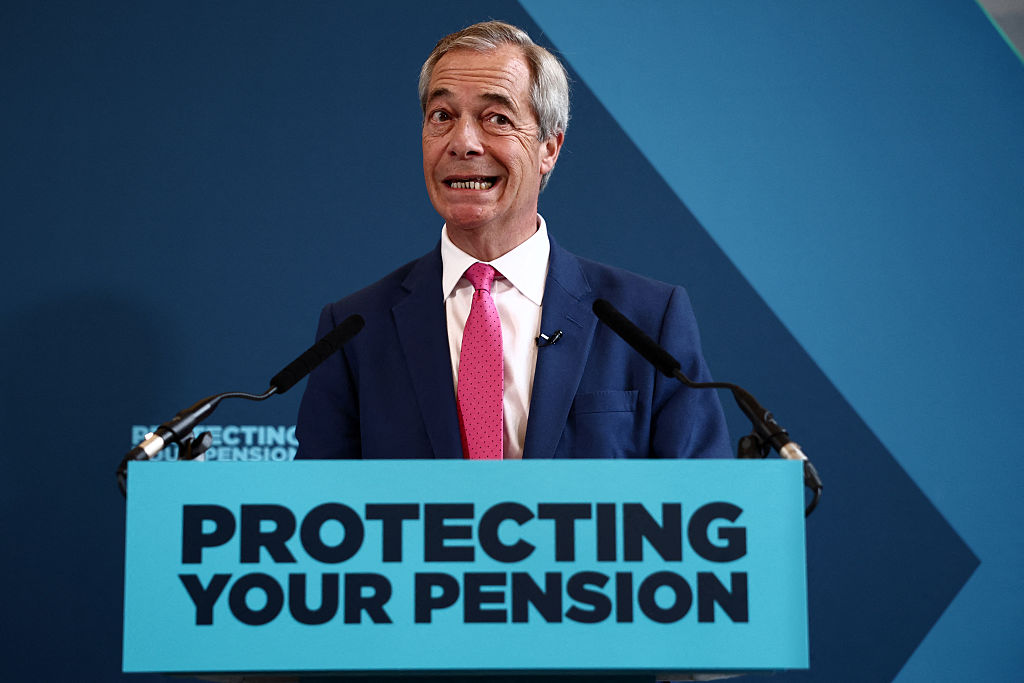
The worst message a party can send is not living up to its name. When the Conservatives failed to conserve and Labour betrayed the working class, disaster followed. That should have been a warning to Reform UK, but with his big policy announcement this week, Nigel Farage has committed his party to the status quo.
Farage promised that a Reform government would maintain the triple lock, the guarantee that the state pension rises each year with average earnings, inflation, or by 2.5% — whichever is highest. This is bad news. According to the Institute for Fiscal Studies, the overall effect since 2010 has been to increase the state pension at a faster rate than the growth in average earnings. This unearned pensioner bonus is now costing the country £12 billion every year — a cost that mostly falls on the shoulders of working-age taxpayers.
The graying of the population means that the burden can only get heavier. As recently as last November, Farage’s deputy Richard Tice felt able to question the triple lock, describing it as part of the “difficult conversations” the country needs to have about its economic future. In February, Farage himself suggested the policy was “up for debate”.
But the debate is clearly over. A blatantly unsustainable policy introduced by the Tories when David Cameron was prime minister and George Osborne was chancellor is now to be protected at all costs by a party calling itself “Reform”.
Note that Farage is willing to make tough decisions when it comes to the working-age population. He’s just promised “the biggest cut to the benefits bill ever seen” and, late last year, he abandoned Reform’s previous platform of tax cuts galore. Why, then, are pensioners to be exempted from Reform’s commitment to fiscal responsibility?
Farage’s own explanation is disingenuous in the extreme. The people to whom pensions are being paid “are those who have actually worked and paid into the system”, he claimed. As he must know, the state pension is not contributory — it is paid out of current Government revenue. That is generated from an overall tax burden that is higher now than it has been for decades. It will also fall upon a working-age population that has to cope with spiraling student loan repayments and sky-high housing costs. For Farage to imply that pensioners deserve their special treatment because they have made a greater contribution is to twist the truth to breaking point.
But, of course, this has nothing to do with fairness, or financial responsibility, and everything to do with who votes for Reform. Unlike the main populist parties in France or Germany, Reform’s support is heavily skewed to older voters and comparatively marginal among the youngest sections of the electorate.
What’s more, the party is still locked in a life-and-death struggle with the Tories — whose own pandering to pensioners has left them with a similarly-aged voter base. However, unlike the Tories, Reform’s support skews toward the least financially secure households. In other words, Reform’s position in the polls is built upon the voters who derive the greatest benefit from the triple lock.
And, so, even more than Osborne 15 years ago, Farage has found himself deciding between short-term electoral gain and the long-term viability of the British Right. He has made his choice, and the voters of the future will make theirs.
Peter Franklin is Associate Editor of UnHerd. He was previously a policy advisor and speechwriter on environmental and social issues.
 peterfranklin_
Join the discussion
Join like minded readers that support our journalism by becoming a paid subscriber
To join the discussion in the comments, become a paid subscriber.
Join like minded readers that support our journalism, read unlimited articles and enjoy other subscriber-only benefits.
Subscribe