








March 22 2026 - 1:00pm
At this point, it’s easier to list the number of senior Iranian officials who have been killed in Operation Epic Fury than to figure out who is running the government in Tehran. The old guard that ruled the country for the last three decades is now effectively neutralized — Ali Larijani, the head of the supreme leader’s security office, is the latest to join those ranks. Mojtaba Khamenei, the son of former supreme leader Ali Khamenei, is now in charge, but he has never held an official government position.
Donald Trump is obviously crowing about these killings as an example of the war’s success. On a tactical level, he’s not wrong: killing your adversary’s commanders and senior officials during wartime is as old as war itself. The purpose is straightforward: cause chaos in the ranks, disrupt the enemy’s command-and-control, and send a message to the replacements that they could meet the same fate. Israeli defense officials are confident that if they take out enough of the senior leadership, the country’s command structure will collapse. Weaken the regime, the argument goes, and Iranians will begin protesting in the streets by the millions. So why, with so many leaders taken out, is this yet to pay off?
The basis for this plan was that the regime would become more confused and hardliners would be pushed out in favor of those willing to compromise. Instead, the US and Israeli campaign against the Iranian leadership is producing a more hardened core with an even deeper attachment to the status quo. One only needs to look as far as the regime’s war strategy. It will continue to bottle up the Strait of Hormuz, unleash missile and drone attacks against Gulf energy facilities, and prosecute the war until Trump concludes the economic pain is simply too high.
In fact, Iran has arguably become even more aggressive on this score since Mojtaba Khamenei took power. Qatar’s largest natural gas facility at the Ras Laffan Industrial City is now closed after an Iranian ballistic missile landed in the area, and gas prices have now soared. The Saudi port at Yanbu on the Red Sea was forced to suspend operations after an attack near the scene.
The unrelenting nature of these attacks is best understood through the regime’s structure. Iran’s political system is often defined by outsiders as an enigma, where a bunch of radical, bearded clerics hash out the country’s policies based on religious dogma. As US Secretary of State Marco Rubio asserted, the regime’s worldview is “apocalyptic”. It reflects a view that Iran’s leaders can’t be reasoned with. Yet this is a vast oversimplification of how the regime works. Although the supreme leader holds the ultimate power, the political system exhibits a degree of checks and balances that would surprise most Americans. In other words, there were centrists in the system who were amenable to negotiations with the US.
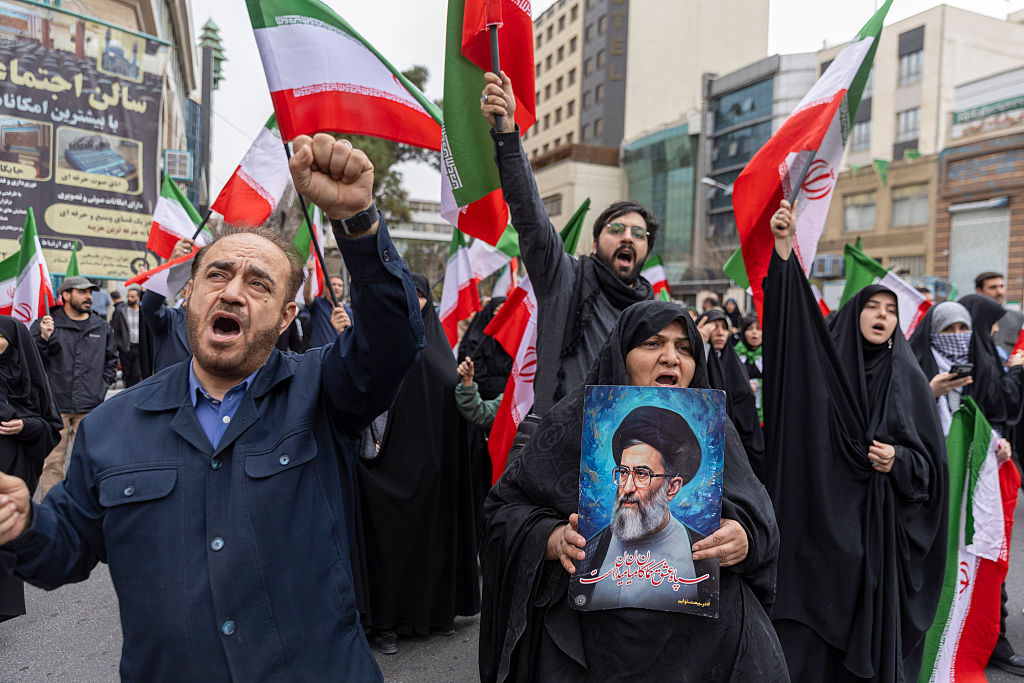
But with the war in full swing and the Iranian leadership increasingly hit by US and Israeli bombs, there aren’t many moderates to speak of anymore. Mohammad Khatami, a leader of the reformist movement, has been muted. Larijani, the one man who had respect across all of Iran’s political factions and power centers, is now dead. Trump may not even know with whom he can negotiate, even if he wanted to. Meanwhile, the hardliners have consolidated their authority by using the war to their advantage. Anybody who remotely shows support for Trump’s war or has the gall to protest the regime will be locked up — or worse.
Trump and Israeli Prime Minister Benjamin Netanyahu have projected the image that the Iranian government is flailing. In reality, the regime might be as unified as it has ever been. With that comes the reality that any hope of a diplomatic off-ramp is becoming increasingly unlikely. Both America and Israel will continue to seek high-level government targets, but as long as they keep on eliminating moderates, expect a continued barrage of attacks on neighboring Gulf states and a spiraling of oil prices.
Daniel R. DePetris is a fellow at Defense Priorities and a syndicated foreign affairs columnist for the Chicago Tribune.
 DanDePetris
Join the discussion
Join like minded readers that support our journalism by becoming a paid subscriber
To join the discussion in the comments, become a paid subscriber.
Join like minded readers that support our journalism, read unlimited articles and enjoy other subscriber-only benefits.
Subscribe