




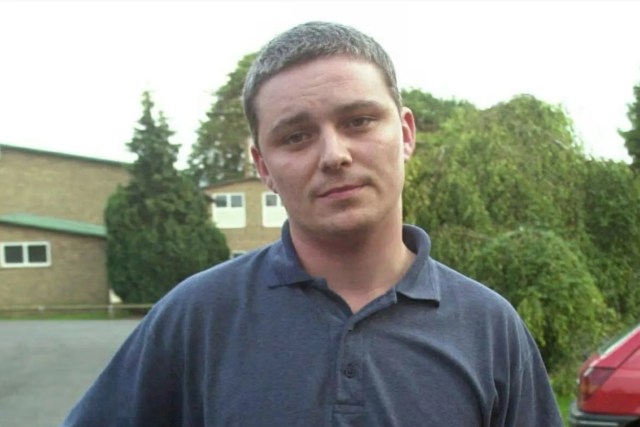
Ian Huntley murdered two 10-year-olds, Holly Wells and Jessica Chapman, in Soham in 2002. (Credit: Alamy)





Few murderers in modern Britain were as loathed as Ian Huntley — and few deaths have been welcomed so gleefully. Comment sections are blunt, often celebratory, and even Huntley’s own daughter has said there’s a “special place in hell” for her father, admitting she felt glad when she heard he’d been attacked. And, to an extent, such emotion is understandable. Huntley’s killing of Holly Wells and Jessica Chapman shocked the country back in 2002, and the Cambridgeshire town of Soham remains synonymous with horror.
Yet allowing all this anger, all this hatred, to shape the logic of the prison system is a mistake. However satisfying it may feel to some observers, Huntley’s bloody death, and the rising chaos in cellblocks right across the country, erodes the very authority that keeps these institutions working. And if that’s bad news for prison discipline, to say nothing of inmates themselves, Huntley’s fate, and that of people like him, ultimately makes life less safe for everyone — both in jail and out.
HMP Frankland, the County Durham prison where Huntley was attacked with a spiked metal pole last month, is one of the most secure in the country. It holds Category A prisoners, men assessed as posing the highest risk to the public and national security. But that underplays the system’s sophistication, for Frankland actually operates under several distinct “regimes”.
The main population houses many of the country’s most dangerous offenders, alongside a unit for prisoners with dangerous personality disorders. There is also a so-called “separation center”: a closed unit used for the most ideologically challenging inmates in the system, including Islamist extremists. It was here that Hashem Abedi, the brother of the Manchester Arena bomber Salman, attacked three prison officers with hot oil and improvised weapons. Separate from all these is the “protection estate”, where prisoners at risk from the general population are segregated for their own safety. It was here that Huntley was serving his sentence, and where he was attacked.
Unsurprisingly — and as I learned firsthand over the years I spent at Frankland serving a life sentence — these varied units can only function by tightly controlling the movements of prisoners. When inmates move between areas, from a wing to the gym or the clinic, they pass through multiple checkpoints designed to prevent the transfer of weapons, drugs or other contraband. Wands, sniffer dogs and airport-style body scanners are common. I myself remember standing in a queue waiting to pass through security, not unlike the slow shuffle through customs after a flight. If someone was ever stopped with contraband, the entire line was held up as staff investigated.
Prisoners only mix with others on their own regime, and even then interactions are monitored by staff and security cameras. Workshops are supervised, with tools like hammers and screwdrivers issued individually and tracked through meticulous tagging systems. Even visits and healthcare are held separately, effectively creating parallel systems within the same prison.
Regimes and movements are structured precisely to reduce opportunities for escape, the passing of contraband — or violence. Yet even in such controlled environments, human instincts endure. Where the social restraints of ordinary life fall away, prisoners organize themselves into informal hierarchies that soon shape the culture of prison life. A prisoner’s perceived morality, and the nature of their offense, inform where they sit within a jail’s unwritten order.
Within this hierarchy, crimes against women and children are the most despised. Other prisoners frequently regard their perpetrators as legitimate targets, something that remains true even within protection units. Child killers remain at the very bottom, while other murderers — like men who kill their wives — enjoy a marginally higher status.
It is not yet possible to know the precise motivations behind the attack on Huntley. Within prison culture, however, acts of violence are often shaped by these same reputational dynamics. A prisoner who attacks someone occupying the lowest rung of the moral hierarchy may be seen as enforcing a twisted kind of justice.
Anthony Russell, the man suspected of killing Huntley, is himself serving life for the rape and murder of one woman and the murder of another. On paper, then, Russell is near the bottom of the moral hierarchy too; by allegedly murdering Huntley, he may have hoped to alter his position. I often witnessed this dynamic during my own years in custody. Attackers received no rewards, no privileges, no tangible benefits. What changed was their reputations. A prisoner seen as willing to inflict extreme violence on a fellow inmate — especially one at the bottom of the moral food chain — is likely to enjoy boosted respect from some inmates: and simply be feared by others. And for someone like Russell, unlikely to ever be released, that shift in reputation may serve him for the rest of his life.
As for Huntley himself, he mostly seems to have avoided provoking other inmates, though there are some suggestions that he wore a red top in jail, apparently mocking the Manchester United jerseys of his victims. Either way, prisoners like him normally keep their heads down. Before this last and fatal assault, after all, he had already survived two earlier attacks, including one in which another inmate slit his throat.
Yet if all this savagery is obviously a problem in itself, especially when prisoner-on-prisoner assaults jumped by 11% in 2024, the real challenge is again hierarchical. Once violence becomes entwined with the informal dynamics of the prison population, it becomes the mechanism through which status is asserted and reputations built.
At that point, anyway, the authority of the institution starts to weaken, as control shifts from formal rules to the unwritten codes of the wing. And if prisoners are permanently pushed to the margins — denied any possibility of engagement — they rarely move beyond that position. Isolation hardens identity. Resentment grows. The space to confront one’s demons narrows, and the willingness to engage with psychologists or teachers lessens.
This matters because most prisoners will eventually return to society. The only question is: what will they be like when they do?
As comments under stories of Huntley’s death vividly show, many people imagine that brutality behind bars is a deterrent: make prisons frightening enough and crime will stop. In truth, though, deterrence rarely works so directly. Most offenders don’t commit crimes expecting to be caught. Many crimes, particularly sexual offenses, emerge from deep-seated psychological patterns, distorted thinking and long-term behavioral problems that can’t be corrected simply by the threat of punishment.
Addressing those patterns requires long-term psychological treatment. It also requires structured programs, professional engagement and sustained effort over many years. For all this to happen, the prison environment must be stable, something fatally undermined by vicious acts of violence.
When assaults are rife, after all, prisoners are focused not on rehabilitation, but instead on mere survival. Even worse, safety often means getting protection from organized criminals: whether drug gangs or Islamists. I again witnessed this dynamic first-hand during my time in custody, with Islamist networks deploying a particularly strong reputation for collective retaliation. For vulnerable prisoners, aligning with such groups meant safety from bullying or worse. But protection always came at a price. Loyalty was expected, and ideological pressure soon followed.
None of this is easily solved. The only way to eliminate violence in prison altogether would be to keep everyone permanently locked away. But a prison run on that basis ceases to function. Education classes stop. Workshops close. Healthcare, gym sessions and social interaction disappear. The very activities meant to stabilize behavior and prepare prisoners for release are the ones that require movement, contact and trust. Shut those down and you don’t create safety. You create stagnation, resentment — and men who leave prison more dangerous than when they arrived.
Better, then, to tighten security. Stronger intelligence gathering among staff; closer supervision within workshops and protection units; stricter control over tools and materials — all this would reduce opportunities for violence. Some prisoners, those with particular reputations or vulnerabilities, may also need tighter movement restrictions within protection units. To reiterate, none of these measures will remove the risk entirely. But well-staffed wings, experienced officers who understand prisoner dynamics, and tighter control of potential weapons, will make attacks far less likely. In prisons, as in any complex system, safety does not come from eliminating human interaction. It comes from managing it carefully.
In short, it’s clear that Huntley’s death isn’t merely the story of one notorious inmate, or even of a single prison in crisis. Rather, it goes right to the heart of what kind of penal system our society wants: one that quietly tolerates violence, or one that maintains disciplined authority over even the most hated of prisoners. The first might satisfy our anger — but it’s the second that’ll keep us safe.