








March 21 2026 - 1:00pm
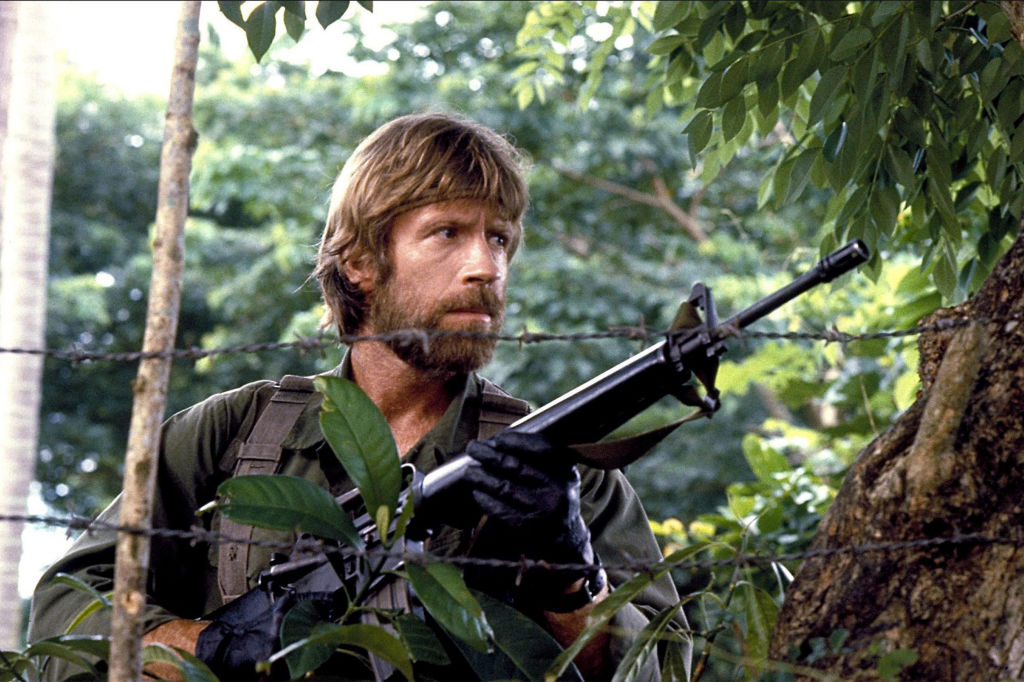
Carlos Ray Norris, better known as Chuck Norris, passed away on 19 March, his family announced yesterday. Norris lived to the respectable age of 86, with a lifespan stretching from the attack on Pearl Harbor, all the way through America’s victory in the Cold War and the era of the War on Terror. And just as he lived in interesting times, Norris himself led a very interesting life. He served in the US Air Force, became a black belt in many different forms of martial arts, and eventually rising to fame as a beloved Hollywood actor.
For the Millennial generation, however, Norris’s greatest claim to fame may just be his influence on early internet meme culture. Starting in the mid-2000s, so-called “Chuck Norris facts” began to take off. The format was built around various hyperbolic or ridiculous claims about the martial prowess, masculinity, and toughness of this all-American hero. For example: “Chuck Norris was once bitten by a king cobra. After five days of excruciating pain, the cobra finally died.”
Interestingly, Norris himself had somewhat mixed feelings about how he became the center of an online hero cult, downplaying his own prowess or saying that these “facts” about his life shouldn’t be taken all too seriously. In the early days of the post-9/11 age, Chuck Norris facts became a worldwide phenomenon, spreading far and wide to Western and even non-Western countries.
Would something like that be possible today? Though the world is arguably more connected and online than it has ever been, the age of Chuck Norris facts seems increasingly anachronistic. The “meme culture” of the early 2000s was one where most Westerners still had immense pride in their own countries and faith in the official narratives being sold to them by the media and government. Chuck Norris jokes were, in other words, coming from a place of earnestness.
Today, young people are increasingly disillusioned and cynical. The closest analog to Chuck Norris for a Zoomer is probably Charlie Kirk, a man whose gruesome death at the hands of a sniper quickly became fodder for all kinds of AI-generated memes.
What is so telling about the “memeification” of Charlie Kirk is that all attempts to instill his death with deeper political or social meaning completely failed. There was no awakening of some new political consciousness, no civil war between the Left and the Right, no organizing or protesting or anything real. All of those attempts were swallowed up by a tidal wave of cynicism. Chuck Norris was born into and lived through an age of expansion and optimism; the memes about him were impressive and larger than life.
Today, young Americans know very little of optimism and expansion. They can’t afford a home, they don’t see their futures improving, and they lack faith in their own institutions and founding myths. As impressive as Chuck Norris might have been, he no longer speaks a language that these people understand.

Join the discussion
Join like minded readers that support our journalism by becoming a paid subscriber
To join the discussion in the comments, become a paid subscriber.
Join like minded readers that support our journalism, read unlimited articles and enjoy other subscriber-only benefits.
Subscribe