




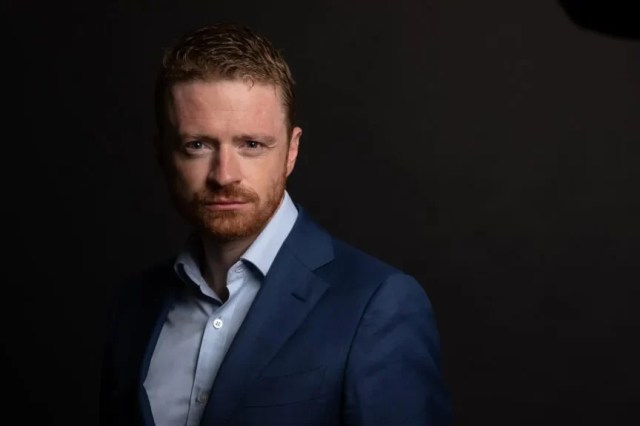
McSweeney's fate was sealed by his historic support for Peter Mandelson.




“No one likes us, we don’t care…” The British Left has a long history of echoing Millwall supporters — adopting policies based on an imagined country, rather than adapting to the country as it actually is.
But Morgan McSweeney was meant to be different. His driving motivation was to pursue a relentless courtship with the median voter. It was a strategy, though, that won him plenty of enemies, not least within the Parliamentary Labour Party. Labour MPs, in the main, did not get into politics to cut welfare, or to legislate punitive measures against migrants. If the old-fashioned class struggle has long ago ebbed, it has been replaced within Labour by a stalwart commitment to redistribution via post-hoc benefit payments, combined with a liberal-progressive social outlook. McSweeney’s project cut directly against this, and they hated him for it. This is, after all, an organization crowded with heady idealists who see any modicum of compromise as betrayal. And after enduring 18 months of uncertainty, U-turns and attempts at appeasement, they got what they wanted. The Mandelson Affair was their coup de grâce.
The Prime Minister remains, for now. But without the architect of his political ascent by his side, Starmer finds himself hamstrung at a moment of great political danger. The Intelligence and Security Committee is set to release yet more correspondence; who knows who will be compromised. The Gorton and Denton by-election is around the corner; it risks being catastrophic. And then there will inevitably be a Labour wipeout in the May locals. The PLP is restive and mutinous; rivals are gathering. Angela Rayner is coiffed and poised, waiting for closure on her tax affairs from HMRC; Andy Burnham is watching from the sidelines, nursing his grievance and ambition. Starmer, a process man by instinct, might even fall on his sword in mortification. However, it wouldn’t take much to see him off: just some well-timed ministerial resignations, or a solemn, plaintive visit from cabinet colleagues: “Thank you, Keir, but it’s time to go.”
In any case, with his personal polling in as dire a state as Liz Truss’s, a leadership battle sooner or later is near-inevitable. The question is when, not if. Starmer’s dwindling band of allies may be furiously briefing that the ever-orthodox and fiscally moderate Prime Minister is the only thing preventing financial cataclysm — a Labourite update of “après moi, le déluge”. But make no mistake, they will soon be the ancien régime.
For now, though, he clings on, an uncharismatic, unpopular Prime Minister tethered to a thin and uncertain policy agenda. And when a government cannot articulate a clear purpose, it relinquishes political momentum, battered by storms and scandal, without the respite of a driving agenda to return to in times of calm. As a result, a two-pronged populist insurgency is drawing in voters from the Left to Zack Polanski’s Greens, and from the Right to the Faragists. So much for Starmerism, which was meant to restore common sense to the forefront of politics. It was meant to “tread a little lighter on people’s lives”, eschewing ideology for pragmatism. The Sensibles were back in charge, and McSweeney would maintain his voter coalition by breaking all the party’s taboos on the issues of the day — appealing steadfastly to voters rather than to the concerns of the progressive activist class. But instead, it fatally ignored the complications and deeper tensions within Labour’s electoral coalition.
McSweeney, then, spent his time in Downing Street dragging Labour away from its comfort zones: here was an iconoclast, determined to smash all the right-on pieties and shibboleths come-what-may. The intended audience wasn’t Westminster’s bleeding hearts, the Polly Toynbees, or Europhile citizens of anywhere. McSweeney focused on the “hero voters” of the UK’s marginals — those who had backed Boris and Leave, perhaps, but who had swung behind a changed Labour Party in 2024. Or so the theory went. Keir Starmer owed him his election victory, and if he had allowed McSweeney to set the electoral strategy, then why not allow him to define the governing strategy, too?
It has been a disaster. Once in power, Labour immediately started to shed support. The policy mix has been scattered, the rhetorical framing fitful. Cumulatively, titbits of ad-hoc, piecemeal reforms, many of them abandoned after public or parliamentary backlash, appear less as well-planned, median-voter catnip, more like policy calibrated to alienate every disparate section of the electorate. The harsher, anti-migrant rhetoric repulses the activistocracy, while doing nothing to attract Reform voters who can watch footage of small boat arrivals and asylum hotel protests every lunchtime on TikTok; the Net Zero project pushes away the populist Right without keeping on board the younger, green-tinged demographic, many of whom believe the Labour leadership is now complicit in the Gaza genocide; an asylum and migration crackdown horrifies the migrant communities and Labour-voting cosmopolitan professionals, but reassures few if any of McSweeney’s hallowed “hero voters”, who will never be convinced by the superficial patriotism of a leadership so viscerally associated with metropolitan liberalism.
To govern is to choose — and lacking a guiding philosophy, Starmer has instead established policy inquiries, committees, reviews and taskforces, to avoid decision-making. He recoils at political conversation and regards ideological chatter with disdain. He thought he could leave the politics to his chief of staff, but it was only a certain type of politics that the Irishman excelled in: McSweeney is the consummate party machine man, an expert bureaucratic fixer and internal faction fighter who knows how to read polls and interpret. The ruthless efficiency with which Labour translated its relatively meager vote share into Commons seats in 2024 is testament to that.
While his knack for internal machinations and for the nitty-gritty of political praxis is certain, McSweeney lacked the ability to define his project (and it was his project, more than Starmer’s) when he entered Downing Street. He had a plan to win control of the Labour Party, and even the country, without ever having a clear sense of what he would do with power. His tenuous Blue Labour association was based on little more than his obvious appreciation for that tendency’s potential as an electoral tactic — attracting the Reform-curious — rather than being a considered, moral driving force which could underpin a coherent policy agenda.
Starmerism’s attempts to appeal to this nostalgic, romantic idea of “Labour’s people” — the traditional working-class voters of the post-industrial towns and smaller cities — increasingly resemble a jilted lover begging for reconciliation. The electorate has moved on and found a new partner. His name is Nigel.
The disciplined “Ming vase” courtship that secured victory in 2024, has, in government, produced an administration defined less by caution than paralysis. In power, McSweeney seems to have masterminded a project with little motivating it beyond survival. It is becoming “no things to no men”. And with an eye on the polls, its final defenders are beginning to morph into their former nemeses: those hard Left militants and unreconstructed Corbynites who agitated against any compromise with the electorate, whose politics spoke not to the country but to their own narrow clique.
Soon, the initiative will pass to the soft Left, who will attempt to chart a different course, perhaps wooing back prodigal sons and daughters from the Liberals and the Greens, ostensibly to unite the Left-wing vote against a divided Right. Yet the danger is that Labour retreats once more to its instinctual comfort zones; it may not be enough to forge that progressive alliance from a fragmented electoral map, but the soft Left MPs can at least assuage their consciences, mouthing that old refrain: “No one likes us, we don’t care.”
Jonny Ball is a Contributing Editor at UnHerd. He formerly wrote under the name Despotic Inroad.
 DespoticInroad
Join the discussion
Join like minded readers that support our journalism by becoming a paid subscriber
To join the discussion in the comments, become a paid subscriber.
Join like minded readers that support our journalism, read unlimited articles and enjoy other subscriber-only benefits.
Subscribe