




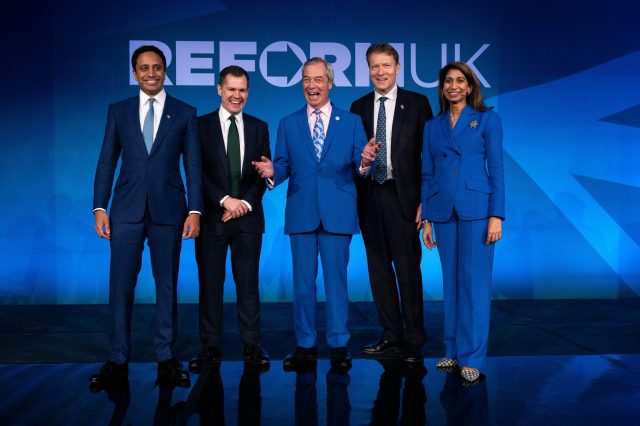
Meet the ’shadow cabinet’. (Thomas Krych/Anadolu/ Getty)




Be in no doubt: Nigel Farage is deadly serious about governing the country. The Reform project was polished a little more yesterday morning, as the Clacton MP announced his “shadow cabinet”. Such breezy branding has no basis in constitutional fact, but its ambition is to convey the political gravity of Reform. The party which has led in the last 200 polls wants to run things.
In the event of Farage entering No. 10, we now know Robert Jenrick would become the Chancellor of the Exchequer. Richard Tice, meanwhile, will ascend to Deputy Prime Minister — as well as overseeing a new department of Business, Trade and Energy. Given the party’s plans for migration, which would mark a break with the post-war trajectory, it’s little surprise that Zia Yusuf, the party’s logistical supremo, will shadow home affairs. Suella Braverman’s focus, meanwhile, is education.
Glossy press conferences in London may be part of Reform’s reality. But so too, increasingly, are the efforts of the party’s membership. It’s one thing to read headlines declaring Reform has overtaken Labour to become Britain’s largest party, or seeing Zia Yusuf share a viral graphic on social media. It’s quite another to observe hundreds of party activists making voter contacts and collecting data — the meat and veg of political campaigns.
And that’s exactly what I saw on a rain-lashed Saturday in Gorton and Denton a few weeks ago. Some of those Reform activists, slogging through the mire, came from far away: I met one group freshly arrived from Shropshire. Others were from the seat itself, or elsewhere in Greater Manchester. Across all of those conversations, I was reminded of an important shift. Reform, for all of its brand recognition among opinion-makers — not to mention the fact that its candidate, Matt Goodwin, is a TV presenter — is now a mass party.
In races like Gorton and Denton, there is typically only one party campaigning in such a fashion. During the Corbyn years, the Labour hope was that deficits elsewhere — such as a generally hostile media — could be countered by mass canvassing, social media and in-person conversations. That approach yielded impressive results in 2017 before failing two years later. Before, and since, the Liberal Democrats mastered the art of flooding constituencies come by-election time. In the twilight years of the last government, they were the bane of the Conservative Party.
And yet, in Gorton and Denton, I saw something new: not just the rise of Reform as a serious national force, but three parties fighting a strong “ground war”. Labour remains a mass party, just. And besides the emergence of Reform as a genuine expression of popular politics, there is now also the Greens. Walking up a residential street, a little past six in the evening — as several St George’s flags fluttered from lampposts — it was hard to miss the party’s campaign HQ. From a distance it seemed reminiscent of a kebab shop: narrow glass shopfront, fluorescent neon sign, people packed inside.
But rather than jolly punters in search of a late-night doner, here were dozens of activists arriving to collect leaflets for delivery. That isn’t normal — most certainly not for a party which, until two years ago, boasted a solitary MP. Zack Polanski’s outfit, as with Farage’s before the last election, should not be discarded as a social media confection. There is real substance beneath the viral TV appearances.
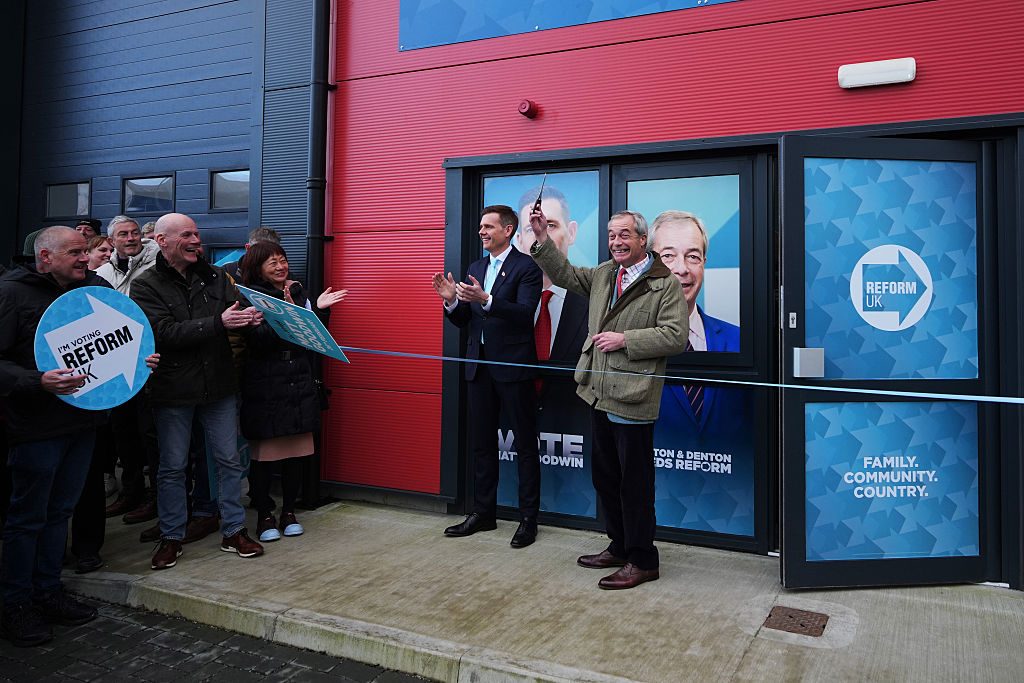
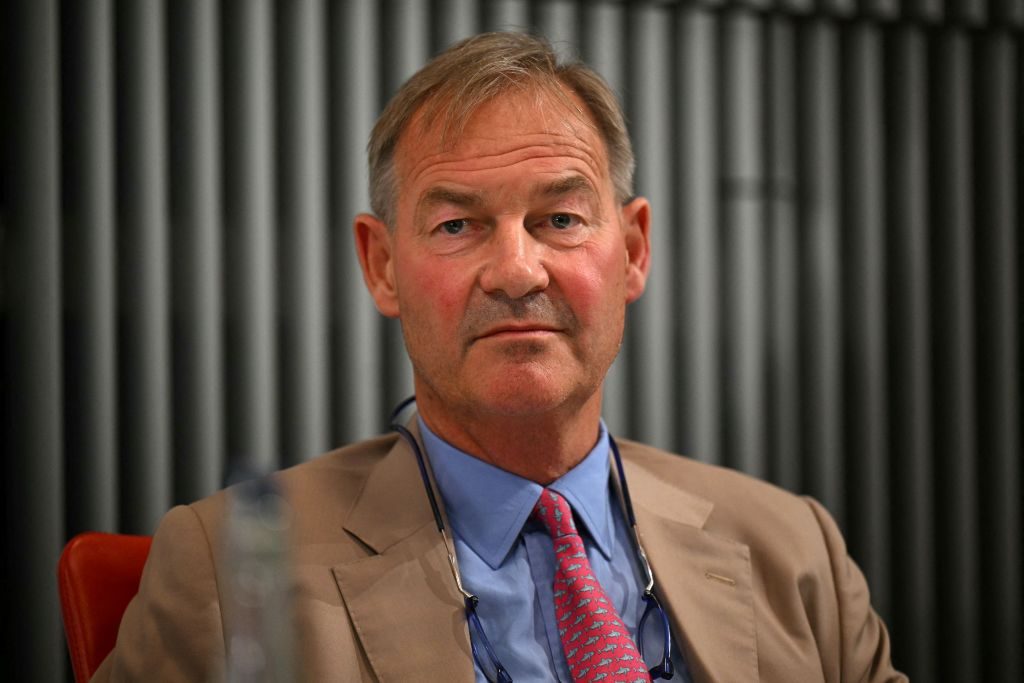
But while the Greens and Reform are both mass parties, the similarities end there. Because for the latter, not only do connections flow down to activists and members, but also up to powerful figures in the media and civil society, like Jim Ratcliffe, as well as much of the disintegrating Tory party, especially donors. Left populism — think Bernie Sanders or AOC — seeks to juxtapose plutocrats against the people. That’s a powerful frame Polanski has adopted, with the Green leader — in his first speech on the job — contrasting a “nation of neighbors” against the billionaire class. The extraordinary thing about the gauntlet Reform has thrown down to the Left is an ambition to be both. Its members are as likely to own an Audi Quattro as a horse.
Multiple motivations drove Farage’s announcement yesterday. One is to signal how Reform is no longer a one-man band, with different figureheads responsible for discrete areas of policy. The bigger point, though, is experience. Remarkably, there are more politicians from the Liz Truss government in Farage’s top team than in Kemi Badenoch’s entire shadow cabinet. That is no accident. If Reform wishes to form the next government, it must perform the political alchemy of being both the party of change, while having familiarity with the apparatus of the state. After all, how else could it hope to change things?
While rarely mentioned by its progressive critics, this is Reform’s greatest vulnerability. Polling last year revealed that a looming concern among the party’s “soft considerers” is they have no experience of running the country — even when those same respondents agreed with Reform across multiple policy areas. Though most agree that Farage’s insurgents are driving the national agenda, almost half the public believes the country would go from bad to worse with the former MEP in No. 10, not least because he has no experience in government. To take the top job having never been the Leader of the Opposition or served in a Cabinet would be without precedent in the modern era. It’s almost impossible to imagine.
So it is little surprise that while a frankly astonishing 42% of the public think Reform “understands the problems facing Britain”, they are still more likely to perceive Labour as “fit to govern”. The more data you see, the more Farage’s strategy of embracing former Tories — like Braverman and Jenrick — makes sense. Despite the personal popularity of both figures among the Reform membership, their admission to the party’s ranks at Westminster is intended as a signal to the wider electorate. Having built a mass organization, Reform is now trying to look like a party of government.
It would be naive not to foresee a tension emerging here. Indeed, that has already come to the fore. Last week, Rupert Lowe, formerly a Reform MP for Great Yarmouth, launched a political party of his own: Restore Britain. Restore is the fully-leaded version of Reform, with one critical addition: its politics are, for better or worse, more heavily inflected by online discourse. Lowe’s virtuoso social media game is a big reason why the party has allegedly attracted tens of thousands of members in under a week, with Lowe himself announcing on X that it had overtaken the Liberal Democrats. But that strength is also a weakness, with the former businessman’s online superfans not necessarily reflective of the wider public. According to one poll, just 8% of voters even know who Lowe is. Perhaps Farage’s greatest strength over the years — whether it was judging public sentiment for a second Brexit referendum, or here — is to appreciate that Twitter (and now X) isn’t real. Besides being more fun, it turns out that going to the pub is a better gauge of public sentiment.
Could a fragmenting radical Right, partly fueled by Reform’s pursuit of elite credibility, come back to bite Farage? It’s too early to say, but that by-election in Gorton and Denton could provide a clue. Standing for Advance UK, yet another Reform offshoot founded by a one-time Farage acolyte, Ben Habib (reputedly recognized by just 4% of voters), is Nick Buckley. A local campaigner around homelessness and anti-social behavior, Buckley was awarded an MBE in 2020 for his services to young people and the community in Greater Manchester. Intriguingly, his campaign seems more interested in attacking Reform’s Matt Goodwin than either the Green or Labour candidates, with Buckley even attacking academics who enter politics (Goodwin is a former professor of political science).
Speaking on Tuesday, Farage sounded like one of the Gallagher brothers as he castigated Lowe, insisting that the two had never even been friends, and that the former Southampton chairman is someone defined by crises and needless confrontation. That enmity was tinged with a certain recognition, though. Of all the parties on the Right seeking to steal a march on Farage — from Advance UK to UKIP and the Heritage Party — it is Restore which presents the greatest challenge.
It is an inescapable fact that British politics increasingly resembles a proportional representation (PR) system, on both the Left and Right, only without the voting system. Hours after the Reform announcement yesterday, a new poll from YouGov put four parties — Reform, Labour, the Conservatives and the Greens — between 17% and 24%. Suddenly Lowe’s wrecking project feels like it could make the difference, while the need to win wavering Tories becomes ever more critical for Farage and his friends.
For more than two decades, I’ve heard the arguments against electoral reform. A first-past-the-post system guarantees strong mandates, I was told as a student of A-level politics. It provides stable, competent government, I was informed a few years later as an undergraduate. Most important of all, as I learned in the aftermath of the 2008 financial crisis, it means — in contrast to the Continent — that the extremes can never define the center. Increasingly, none of this makes sense, and it feels curiously similar to the cope pumped out before the Brexit vote in 2016. Nobody believes this stuff anymore, least of all those with any power. If anything, our first-past-the-post system seems to contribute to the abiding sense of permanent dysfunction.
Lord Hailsham was right when he said that the Westminster system can lead to a form of “elective dictatorship”. It’s just, in the case of contemporary Britain, we persistently concentrate power onto two parties incapable of running the country. They are both, ideologically and in terms of personnel, exhausted. Farage’s job, as witnessed on Tuesday morning, is to convince enough people that he offers a genuine alternative. But it’s a sign of the times — and an important one at that — that the radical Right could be balkanizing before it’s even achieved power.
Aaron Bastani is the co-founder of Novara Media, and the author of Fully Automated Luxury Communism.
 AaronBastani
Join the discussion
Join like minded readers that support our journalism by becoming a paid subscriber
To join the discussion in the comments, become a paid subscriber.
Join like minded readers that support our journalism, read unlimited articles and enjoy other subscriber-only benefits.
Subscribe