








January 1 2026 - 7:15pm
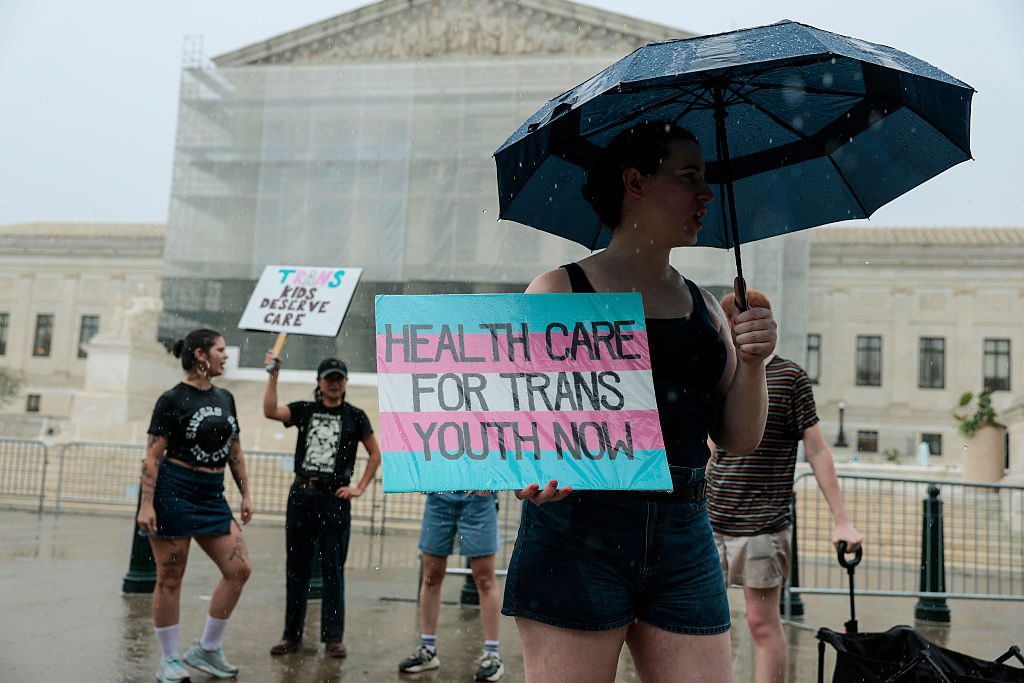
Donald J. Trump promised to “stop the transgender lunacy” on day one of his second term as President. With his first executive order, reestablishing male and female as the only sexes — something we shouldn’t have needed were it not for policies replacing sex with gender identity — he kept that promise. A slew of other orders followed as the President set about reversing Biden- and Obama-era gender policies in education, mental health, and medicine.
Naturally, 2026 has begun with continued pushback. As of today, gender reassignment surgery is no longer available on federal healthcare programs. As a result, federal employees have filed a lawsuit against the ban claiming that it amounts to sex-based discrimination.
Admittedly, some changes in the past year have been overreach, such as banning transgender people from serving openly in the military. Others should have garnered bipartisan support but didn’t, thanks to our polarized society. Regardless, these policies made big waves, including prompting major hospitals to shut down their pediatric gender clinics.
More recently, multiple federal departments announced various methods to deinstitutionalize gender identity. As mentioned above, Medicaid will no longer fund treatments or the hospitals that provide them. Gender dysphoria will no longer be considered a disability. Breast binders will come with a warning label.
As significant as these shifts are, many could be temporary, undone at the end of Trump’s reign (assuming that he accepts the democratic handover of power). Looking back on the past year and the transition from Biden to Trump, the Manhattan Institute’s Leor Sapir — a co-author of the US Department of Health and Human Services’ crucial report on gender dysphoria research — told me that progress had been made. “It has been a good year for getting more medical professionals to pay attention to the debate—and recognize it as a debate,” he said.
Sapir admitted that Trump’s rhetoric — see “transgender lunacy” — wasn’t necessarily helpful, but the truth is, he’s in line with what the majority of Americans, including Democrats, believe. “This seems to be one of the few areas in which Trump enjoys strong tailwinds,” he said. Most Americans don’t think minors should medically transition, or that males should compete against females in sports.
In 2025, the Supreme Court upheld states’ rights to ban youth medical transition, and will hear a case about sports early in 2026, which will likely go the same way. But, Sapir said, the big question is “what is going to happen in the blue states?” That’s because the Democratic political establishment continues to ignore the feelings of the average voter.
Many Democratic politicians have passed “sanctuary state” laws, which protect minors from states where gender medicine is banned and some states require that insurance companies cover these interventions. One possible future, Sapir said, is that “Democrats just underwrite the legal and financial risk”. This sets up a battle between state and federal governments that we’ll likely see intensify in 2026.
That will be just one of many, most of them waged in the courts, from the Supreme Court case on conversion therapy to lawsuits by detransitioners. If a detransitioner wins, one possible outcome is that medical malpractice insurance costs skyrocket, dissuading most clinicians from offering gender treatments. But that’s a big if.
And even if that does happen, policy changes don’t get at the larger issue of how we got here in the first place: the polarization that plagues America. “Tribalism remains the most important factor,” said Sapir. As long as liberal and mainstream media continue to frame the issue as Left-versus-Right, those on the Left won’t feel safe stepping out of line. “The only way to break through groupthink,” Sapir said, is with “legacy, Left-of-center media doing thorough journalism”.
That ship apparently turns at a snail’s pace. For example, last month the New York Times reported on Trump’s policy changes, claiming that “the federal government does not recognize even the existence of people whose gender identity does not align with their sex at birth”. The report failed to explain why such policies might have been necessary. Thus, as far as changing hearts and minds, Sapir said: “I don’t think we’ve reached that breakthrough point.”
Maybe it will come in 2026.

Join the discussion
Join like minded readers that support our journalism by becoming a paid subscriber
To join the discussion in the comments, become a paid subscriber.
Join like minded readers that support our journalism, read unlimited articles and enjoy other subscriber-only benefits.
Subscribe