




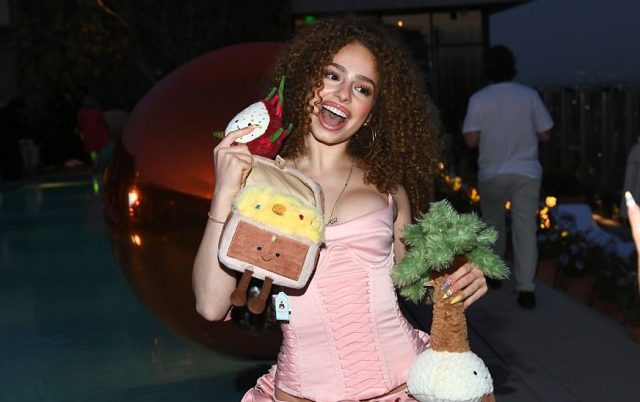
Jellycats are made for Instagram. (Alberto E. Rodriguez/Getty Images for Jellycat)




How well do you remember your childhood bedroom? I see the primrose-yellow room, shared with my twin sister for 13 years, like a distorted dream. The blue wooden beds, the huge spiders that would scuttle from under them, the bedside table stuffed with Enid Blytons and Beatrix Potters. And the favorite toys — mine a floppy-eared rabbit called Daisy, hers a long-legged monkey called Amby. Amby was a Jellycat — in fact, the oldest toy the beloved British brand has continually made. By the time we graduated to our own rooms, Amby had been through the wars: his shabbiness was a testament to being well-loved during a childhood which was now over. Amby served his purpose, and now enjoys a dignified retirement.
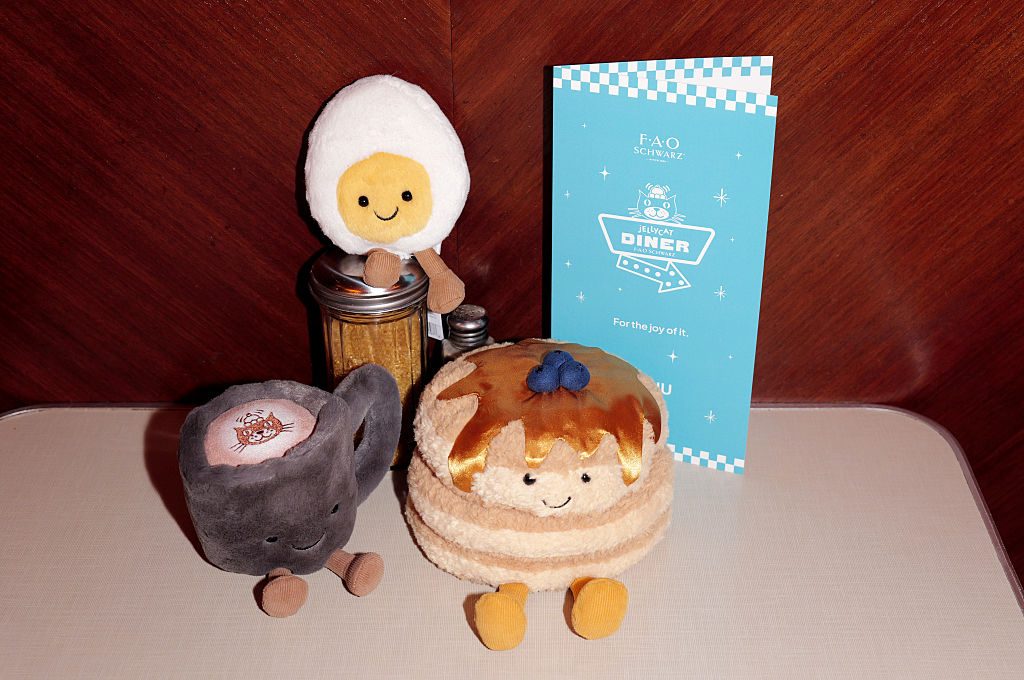
But Jellycat no longer markets their soft toys — offputtingly referred to as “plushies” — exclusively to children. Instead its products are destined to be ogled by drooling adults who fill their grown-up bedrooms with anthropomorphized “amuseables”. There’s Rene the waffle, Michelle the mussel, a boiled egg with a bridal veil. There’s a pistachio, a bowl of ramen, a boule of sourdough — all with a vacant, beady-eyed smile and, in most cases, a tiny pair of arms or legs sticking out too. These are fated to deck out the Instagram feeds of grown women, to dangle from a Millennial’s handbag or to be plucked from the shelves with a pair of tongs as part of a bizarre pop-up “experience”. The “chip shop” event at Selfridges in London was a particular hit, where shoppers could blow upwards of £300 on teddy-fied fish, chips, mushy peas and lemon and film embarrassed workers miming the whole affair for TikTok. The obsession is now competitive; one British 19-year-old, Hope Roberts from Bedfordshire, has won the Guinness world record for the most Jellycat toys in a collection: 877 unique items.
Jellycat has saved many a baffled boyfriend in the lead-up to Valentine’s Day: if your better half has no discernible personality or interests, simply drop £45 on an inexplicably animated bouquet of roses and call it a day, brochacho. It has also, if the interviewees of one highly alarming BBC article are to be believed, shepherded customers through the tribulations of Covid. One 32-year-old Chinese woman called Stella says that, during the pandemic, “everyone felt jittery, and no-one knew what would happen”. Thankfully, her growing collection of 120 toys now helps her to “regulate my emotions”. Normalizing collective mental breakdowns — for what else could self-soothing with a hoard of teddy bears in your thirties represent? — has been an extremely successful marketing tactic for Jellycat, which was founded by brothers Thomas and William Gatacre in 1999, as well as for other toy companies. Normal women in their twenties and thirties are roleplaying suspended adolescences by collecting toys — Sylvanian Families, Labubus, Jellycats — and using them as “emotional support” items. There is something deeply disturbing about the idea of this army of self-infantilizing women elbowing toddlers out of the way in gift shops to get their mitts on the latest cuddly toy.
This is particularly the case in East Asia, where many of these “kidult” product trends have taken off in the past five years; pop cultures here have long embraced cuteness — popularized via the Japanese term kawaii — as an acceptable and desirable aesthetic for professional adults. In a region of plummeting birth rates, sexlessness, social isolation and general otaku-esque oddness, regression into the trappings of childhood is an unsettling but inevitable result. It’s as though reclaiming the aesthetics of infancy shields us from the oppressive and difficult responsibilities of being a grown-up, with the soft toy physically embodying the emetic contemporary refrain: “I’m just a girl!”
As many of these blights — sexlessness, birth-rate entropy — have now also taken root in the West, plushie crazes have followed. What Erica Kanesaka, an American professor of “cute studies” quoted by the BBC, refers to as “outdated understandings of adulthood” have been replaced by queasy consumer obsessions that retreat to the material and moral safety of girlhood. In a grim dating culture which alienates both men and women from the promised security of marriage, retreating to the nursery is a kind of apologia for a cozy alternative, however pathetic.
Weird, certainly. But what’s perhaps weirder still is that a British brand has found itself at the commercial epicenter of such a trend: Jellycat generated £333 million in revenue in 2024, more than doubling its total from the year before. The manufacturer, owned by Jelly Holdings, is among a handful of home-grown companies booming at a time of general commercial atrophy: in an unconfident nation beset by weak investment and a groaning tax burden, Jellycat and, depressingly, the porn hosts OnlyFans are standout success stories. If British soft power resides in a quiver of culturally critical brands, then the focus of a bizarre adult soft-toy craze and the profiteers of an amateur pornography pandemic make us a nation of freakish shopkeepers indeed.
Both brands have thrived in a crisis of femininity. If OnlyFans offers brutal, public dehumanization in exchange for potential fame and riches, Jellycat sells the exact opposite: membership of a private, pre-sexual and threatless girlhood paradise, a prelapsarian bedroom scene where your teddies never stop smiling. Both brands have exploded since the pandemic because many women don’t know what on earth to do with themselves; at the extremes are either total degradation or debilitating cosseting, neither of which helps you cope with the real world. Covid accelerated this disaster by pushing everyone online; a drought of real-world interaction has planted a psychotic seed in the culture of femininity.
If you’ll permit a leap, the Jellycat toy also represents something else, something grown-up little girls will remember: the promise of motherhood, of soft little objects to be petted and fussed over, of dollies we pushed around in pint-sized prams. Hopeless in the face of nosediving birthrates and romantic alienation, Millennial and Gen Z women have invented many baby-substitutes: small dogs, house plants, Jellycats. A Dogs Trust survey found that two thirds of young dog owners (aged 25-34) see themselves as “their dog’s parent”. We’re witnessing a generation of Little Edies, playing house and cooing over indifferent pets in a grotesque simulacrum of nurturing. Perhaps this is what makes the spectacle of plushie-collection so unsettling: it turns put-together women into shambling lunatics living ersatz adulthoods.
Soft toys herald a new age of disordered femininity. Jellycat’s success strikes at a pre-verbal impulse: the familiar comforts of the childhood bedroom, where real life seemed so far off and fantasy was couched in cuddly reassurance. The brand may represent a heartwarming British commercial success story or sound the alarm for a failed sexual culture, one in which women denied the dignity of a steady relationship, home ownership and motherhood are offered the paltry consolation prize of a croissant stitched with a smiley face.

Join the discussion
Join like minded readers that support our journalism by becoming a paid subscriber
To join the discussion in the comments, become a paid subscriber.
Join like minded readers that support our journalism, read unlimited articles and enjoy other subscriber-only benefits.
Subscribe