





A small number of on individuals have outsize influence on the world's destiny. Image: JG Fox




One year gives way to another. The news cycle portrays a world permanently teetering on the brink of catastrophe: imminent wars with nuclear powers, the collapse of democratic norms, and the looming risk of cyber armageddon — all while powerful forces are trying to reshape the global order. The actions of Donald Trump in particular — as his intervention in Venezuela demonstrates — are challenging to predict with accuracy.
But amid the noise there is signal. Finding that signal, and discerning what the future is likely to hold, is the mission of the Swift Center for Applied Forecasting, where we apply scientific methodologies to scenario analysis and forecasting to predict the future. In 2025, we successfully predicted that major threats dominating the headlines would fail to materialize. We correctly forecasted a significant war between India and Pakistan would not occur; that H5N1 would not become a devastating pandemic; and that the global oil market would be resilient to price shocks despite the conflict between Israel and Iran. Conversely, we identified quieter, yet critical geopolitical shifts, such as the rising risk of US engagement in Venezuela, weeks before the mainstream press acknowledged this reality.
What does 2026 hold? The starting point is to know where to look. With that principle in mind, we have identified specific scenarios for 2026 — five relating to technology and five relating to geopolitics — that we believe are underrated and worth watching. In each case, resolution one way or another will dictate geopolitics for years to come or constitute a significant step toward a landmark in human history.
Technology
1. Will any, or all of, OpenAI, Anthropic or SpaceX IPO?
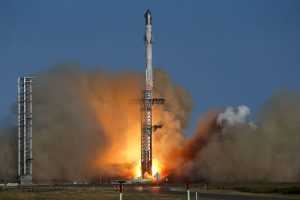
The potential initial public offering (IPO) of OpenAI, Anthropic, or SpaceX in 2026 would mark a new era for frontier technology. These firms will no longer be AI and rocketry startups, but full-fledged geopolitical assets. Crucially, an IPO forces transparency. For years, the capabilities and financials of these labs have been shrouded in NDAs and corporate secrecy. But a public listing would require the disclosure of risk factors and expenses such as compute costs. It would also require published revenues rather than opaque comments during podcast interviews. It would effectively serve as a public audit of the AI market, revealing whether the path to AGI is truly the profit utopia many believe.
An IPO for any of these entities would very likely to be the largest technology listing since Alibaba or Saudi Aramco. It would absorb significant liquidity from capital markets and would stand a good chance of setting valuation benchmarks for the entire AI and aerospace sectors for the coming years.
Each of the three companies is driven by an insatiable need for liquidity to fund the next generation of capital-intensive projects. It may be possible for all three of them to IPO in 2026. Our forecasters note that the prospect of artificial general intelligence (that is, AI with across-the-board human-level capabilities) and multi-planetary life has captured much of the market’s interest. 2026 may represent the optimal window to convert that hyperbole into public capital before the excitement fades or regulation arrives. However, the capital required for all three to IPO will be substantial — enough to leave a question mark over whether all three will IPO.
2. Will an AI system exceed 85% on the key intelligence benchmark?
How do you measure the capability of an AI model? By using “benchmarks”: suites of tests that assess the model’s ability to solve a range of problems. The ARC-AGI-2 benchmark is widely regarded as the only test that effectively measures “fluid intelligence”: that is, the ability to learn and generalize from novel information. While large language models (LLMs) can pass the Bar Exam by reciting law, ARC-AGI requires them to solve abstract visual puzzles they have never seen before. The average human scores between 60-65% on the test. A score of 85% is generally seen as the threshold for AGI-level performance on this specific benchmark.
Earlier in 2025, no AI model scored more than 24% on ARC-AGI-2. But Poetiq AI, a system that acts as a “reasoning layer”, or wrapper, on top of existing frontier models like Gemini, recently scored 54%. The fact that a small team of six researchers could leverage existing models to originally break the 50% barrier suggests that the underlying intelligence of current models is yet to be fully exploited.
The view persists that LLMs are merely “clever parrots”, but if a model were to score 85% it would be an important development. In short, it would constitute powerful evidence that we are getting closer to creating a general reasoning model. This would likely trigger an acceleration in investment and add fuel to the concerns of those calling to regulate frontier AI models.
Some of our forecasters are bullish. They argue that if a wrapper can double performance in a few months, the integration of these reasoning techniques directly into the training of GPT-5 or Claude 4, the leading models produced by OpenAI and Anthropic, could easily bridge the gap to 85% in 2026. More skeptical forecasters argue that the curve will flatten; the jump to 54% picked the “low-hanging fruit” of reasoning, but the final 30% represents a fundamentally harder class of difficulty.
3. Will a private fusion energy company achieve net energy gain?
Energy is the hard constraint on the AI revolution. Data centers, between them, are as hungry for energy as are small nations. As such, the search for a dense, clean, and scalable power source has intensified. Achieving “net energy gain” — that is, producing more energy from an experiment than is put into it — in a private facility would be an important milestone, for it would signal that fusion is transitioning from an experiment to an engineering and commercial problem. It would unlock substantial investment and could fundamentally alter the long-term projections for climate change, industrial capacity, and geopolitical energy dominance.
The probability for this event in 2026 remains low. The historical precedent is that technical progress consistently lags behind promised schedules. This precedent, understandably, weighs heavily on forecasts. But new developments contradict that pessimism. While only the government-run National Ignition Facility (NIF) has publicly achieved net energy gain, investors are piling capital onto attempts to repeat the feat in private facilities. Companies such as TAE Technologies, Commonwealth Fusion Systems, and Helion are deploying high-temperature superconducting magnets and advanced computational modeling that were unavailable a decade ago. For a private sector facility to achieve this would demonstrate fusion is becoming a commercially viable alternative to natural gas and fission — unlocking a scalable energy source that is capable of meeting the demands of the AI revolution.
A critical development to watch is the intersection of politics, media, and energy. Trump Media and Technology Group (TMTG) has announced a merger with TAE Technologies in a deal valued at over $6 billion. The combined entity aims to site its first utility-scale power plant next year. Devin Nunes, CEO of TMTG, has explicitly linked this move to “ensuring America’s AI supremacy” by providing the massive power required for future data centers.
While constructing a plant and achieving net gain are vastly different milestones, the aggressive timelines of private firms suggest that 2026 could see a breakthrough for private fusion. If a private company achieves what NIF did, but in a way that is commercially viable, the energy markets will price in a future of abundant power long before the first electron hits the grid.
4. Will Tesla deliver its first Optimus robot to paying customers?
While LLMs displace cognitive labor, humanoid robots target physical labor. Optimus is Tesla’s humanoid robot prototype. There are several hurdles to widespread commercial release of humanoid robots — with those problems including battery density and real-world motion and navigation — but if Optimus reaches the market, it would be a sign that humanoid robots have become commercially viable.
The implications for the labor market would be huge. Humanoid robots do not need breaks and are increasingly physically capable. If their dexterity and reliability improve, and the cost of running them comes down, then they will start to become serious competitors to human workers. Once a robot costs around $15/hour to operate, human wages for the equivalent tasks will be difficult for businesses to justify.
Elon Musk views Optimus as potentially more valuable than its car business, and competitors are on the march: companies like Agility Robotics and Figure AI are already running pilots in factories. Naturally, Swift Centre forecasters remain skeptical that mass adoption of humanoid robots will occur in 2026, viewing pilot programs within Tesla’s own factories as more likely than general retail availability. However, this is a crucial invention to watch in the months ahead.
5. The AI race: Will a Chinese company beat the US models?
The narrative of US leadership in AI is built on the assumption that export controls and superior talent will keep Western models ahead. However, if a Chinese company were to release an open-source model that beats Western closed models on a “time horizon” benchmark — which measures the ability of an AI to autonomously complete long, complex tasks — then the assumption of US leadership would be immediately weakened.
Already, the gap between US and Chinese models is closing faster than analysts anticipated. The next battleground isn’t just about chatbots that can write poetry. Instead, it is about “agency”: AI that can plan and execute complex tasks on its own. If a Chinese lab such as DeepSeek releases a model that tops the charts in autonomy, and gives that model away free of charge, that lab would be flooding the market with free, high-level intelligence. This would undercut the business models of the US tech giants and mean there was a real threat to the US’s leadership on frontier AI.
In short, it would prove that the US’s attempt to gatekeep the future is floundering, leaving Washington with next to no leverage and Silicon Valley with no monopoly. Swift Center forecasters are therefore closely watching AIs’ performance against the time horizon benchmark set by the AI evaluation organization METR.
Geopolitics
While technology seeks to drive the world into a new era, geopolitics in 2026 is defined by fragmentation and the conflicts of old. The post-Cold War order is fraying, and in its place is emerging a new round of protectionism, regional blocs, and raw power politics.
1. Will the Supreme Court strike down Trump’s emergency tariffs?
Since taking office, President Trump has leveraged emergency executive powers to impose broad trade tariffs, including a blanket 10% tariff on all global imports. The constitutional legality of these powers is now being tested in the US Supreme Court.
A Supreme Court ruling against Trump’s emergency tariffs would be a defining constitutional moment for the US in 2026. A strike-down could hamstring the administration’s economic agenda. It could also create chaos in global markets, for importers, having paid billions in import duties, will seek billions in refunds. Such a ruling would force the administration to seek alternative, and probably more aggressive, legal avenues to enforce their desire for protectionism.
Our forecasters note that this is a high-stakes legal battle with the potential for significant economic fallout. The administration argues that tariffs are a national security tool, citing precedents from the Nixon era. However, the Supreme Court has shown some resistance to executive overreach.
In response, the administration might use the Smoot-Hawley Act or the International Emergency Economic Powers Act (IEEPA) to provide legal justification for tariffs, signaling that the trade war will continue regardless of the ruling. A defeat would have the additional significance of being framed by the administration as an abuse of power by the courts, hampering the economic will of the people. But a win for Trump would show just how powerful he has become.
2. Will Russia and Ukraine agree to an indefinite ceasefire or peace agreement?
A ceasefire in 2026 would redefine the security architecture of Europe. It would almost certainly leave Russia in control of significant Ukrainian territory, validating the use of force to redraw borders. It would also force difficult conversations about the lifting of sanctions, the reconstruction of Ukraine, and the future of Nato. Conversely, a failure to reach an agreement risks an embarrassment for the Trump administration while prolonging the human, economic, and financial costs of the war. It also prolongs the risk of the war escalating into a direct conflict between Nato and Russia.
A peace in 2026 is unlikely to be a true resolution. More likely is an “indefinite ceasefire” akin to the Korean Peninsula’s frozen conflict. This allows both sides to claim partial victory — or simply survival. The key variable to watch is the terms of security guarantees for Ukraine and how seriously they are enforced.
3. Will Benjamin Netanyahu still be Prime Minister of Israel?
After two years of war in Gaza, and a shorter war between Iran and Israel, the Middle East is in a fractious state — with consequences for us all. Central to what happens next will be the political survival of Benjamin Netanyahu, the prime minister who took Israel to war. His coalition relies on the Israeli far-Right, making a two-state solution or normalization with Saudi Arabia difficult if not near-impossible. If Netanyahu loses, the probable winner will be Naftali Bennett. Bennett’s path to victory will require a coalition with centrists and possibly Arab parties. The departure of Netanyahu could therefore create an opportunity for a diplomatic reset between Israel and its neighbors.
This year, Netanyahu faces both an election and the resolution of his corruption trial. While the polls currently show him losing to a centrist coalition, the Israeli opposition is fractured, and Netanyahu is a master campaigner. If Netanyahu survives 2026, he will probably move to finalize his overhaul of the judiciary. Specifically, he could seize control of the Judicial Selection Committee and pass the “Override Clause”, which would allow his government, if it has a majority in the Knesset, to ignore Supreme Court rulings. This would effectively end the independence of Israel’s judiciary, removing the last barrier to permanent annexation policies and shielding Netanyahu from his own corruption trial.
4. Will Reform UK win the most seats in the 2026 Welsh Senedd and England local council elections?
While the world watches Washington, a quiet political earthquake is building in Wales. The 2026 Senedd elections will use a new voting system that swaps “First Past the Post” for “Closed List Proportional Representation”. Insurgent parties such as Reform UK are expected to benefit from this new system, for as they can convert vote share into seats more efficiently than under First Past the Post.
After 27 years of the Labour Party’s governance in Wales, there is a feeling of voter fatigue. Issues such as NHS waiting times and controversial 20mph speed limits have been highly unpopular with working-class voters, who are flocking to Reform UK. Reform, riding high on its local election victories and strong public polling, could take control of the Senedd in 2026, with Plaid Cymru being the other major horse in the race. If Reform, the Right-wing party led by the Brexiteer and MP Nigel Farage, wins the most seats, it would be a historic shock to the UK’s political system.
A victory for Reform in Wales would be more than just a headache for Keir Starmer, Rachel Reeves and Labour; it would be a resounding signal that the traditional Westminster parties are losing their grip on power. Just as voters in the US, France, and Germany have punished incumbents for perceived failures on immigration and economics, Welsh voters appear ready to reject the norm. If Labour loses the Senedd — a socialist citadel the party has held for nearly three decades — it would signal that there are no safe havens from the rising challenger parties. It would demonstrate that the disconnect between the governing class and the governed has reached a breaking point from which traditional parties may not recover.

5. Will the Iranian regime fall?
There is growing unrest in Iran over the soaring cost of living. Across social media there are numerous videos of cars being set on fire during running battles between protesters and security forces, with several deaths already being reported. Many protesters have called for ending the rule of the country’s Supreme Leader, while others have called for a return to the monarchy.
While street protests are not new to the Islamic Republic, the recent events signal a shift in the political risk. The coordinated strikes by the “Bazaar” (the conservative merchant class) represent a historic break between the regime and its traditional economic backbone. Student unrest is common; merchant class unrest less so. This signals a substantial shift in the risk of the unrest turning into a crisis that the Iranian government can’t control.
Already, the Islamic Republic faces difficulty in de-escalating the protests. This is because the driving force is not just inflation, but fiscal rigidity. The regime faces significant spending pressure following the return of UN sanctions and the costs of the 12-Day War with Israel in June. Reports suggest that projected oil revenues now cover only a fraction of administrative costs: perhaps as low as 5%. This forces a stark trade-off. Does the government concentrate funding on security, or on the maintenance subsidies that previously helped manage social unrest? Our forecasters have noted the government’s decision to close public offices in 26 provinces. Officially, the reason for this was “energy conservation”, but given the context of mild weather and the country possessing the world’s second-largest natural gas reserves, it instead suggests the state is running on empty.
On the Islamic Republic’s side is that it remains the strongest regional ally to China and Russia. Iran sends ~90% of its oil exports to China, and China is Iran’s largest trade partner. Iran is also the only country in the region actively and publicly supplying Russia with military equipment for the war in Ukraine. However, with Chinese demand for oil lessening, Beijing’s willingness to bail out Tehran may be waning.
Should the regime fall, the geopolitical realignment would be profound. It would represent a strategic victory for the United States and Israel, while dismantling a central pillar of Chinese and Russian influence in the Middle East. The fallout would be felt directly in Europe, where the loss of Tehran’s drone and missile supplies would damage Russia’s war effort in Ukraine. Regionally, Hezbollah and the Houthis would lose vital support, dramatically reducing their capability to continue destabilizing the region.
Collectively, as we look forward to what 2026 may bring, we see rapid technological advancements matched by growing geopolitical tensions. Yet the dawn of genuine stability across the Middle East may be breaking on the streets of Tehran.
Join the discussion
Join like minded readers that support our journalism by becoming a paid subscriber
To join the discussion in the comments, become a paid subscriber.
Join like minded readers that support our journalism, read unlimited articles and enjoy other subscriber-only benefits.
Subscribe