








January 5 2026 - 7:00am
Venezuela is a long way from Britain, but the impact of the US intervention on the politics of our closest neighbor, France, is of immediate relevance.
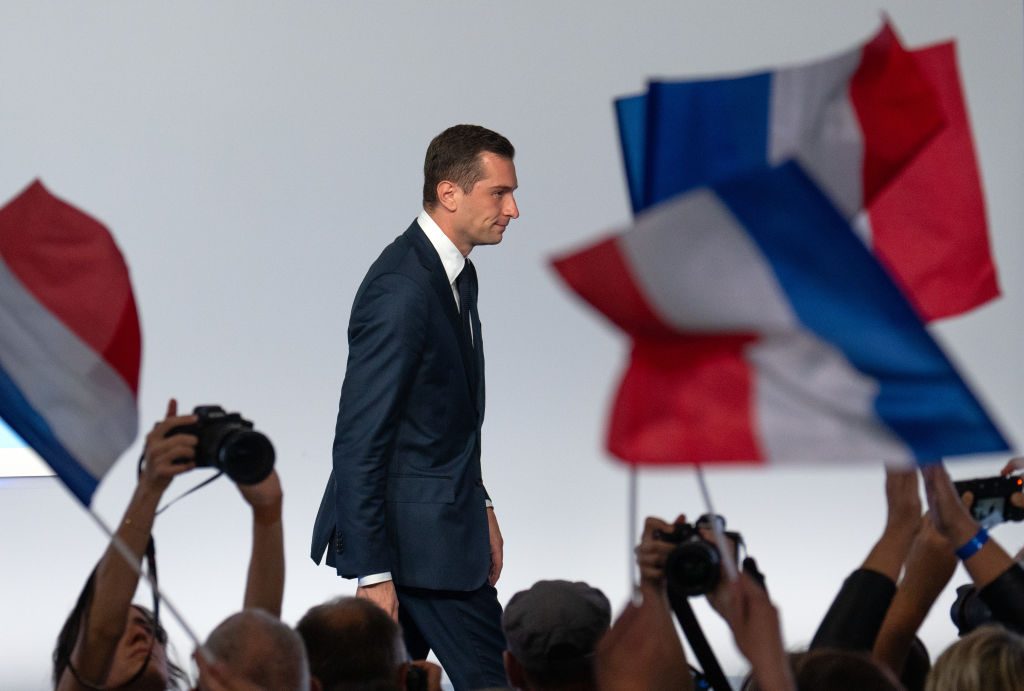
Just look at the gulf between the reactions of the centrist establishment and the populist Right. Emmanuel Macron’s statement was so close to the US government line that Donald Trump reposted it on Truth Social. In stark contrast, the two leading figures from the Rassemblement National (RN) — Marine Le Pen and Jordan Bardella — expressed grave misgivings.
Though they condemned Nicolás Maduro’s “red regime”, they also made clear their opposition to America’s actions. “The sovereignty of states is never negotiable, regardless of their size, their power, or their continent,” Le Pen insisted. “Respect for international law and the sovereignty of states cannot be applied selectively,” Bardella added. It would therefore seem that the most prominent source of French resistance to American overreach is less than liberal in character. That’s an irony that should not be lost on British fans of “European values”, though, of course, it will be.
Le Pen and Bardella know their own people. Compared to their British or Italian counterparts, the French public has a significantly less favorable opinion of America, according to Pew research. At the same time, they’re overwhelmingly opposed to Russia’s invasion of Ukraine, so Bardella’s opposition to the “forcible overthrow of a government from outside” also helps distance his party from its previous friendliness with Vladimir Putin.
However, the most significant part of Bardella’s statement is his argument that the weekend’s events demonstrate France’s “strategic and geopolitical vulnerability” — and require a “resolute effort to rearm our Nation”. He’s not the only French politician calling on his countrymen to tool up. Gabriel Attal, a leading member of Macron’s party, is also warning that the world is now “governed by force” and that it is time for democracies to “rediscover the path of strength”.
There is, nonetheless, a crucial difference between Attal’s muscular liberalism and the RN’s approach. At no point do Le Pen and Bardella mention a role for Europe, let alone the European Union. Theirs is an essentially national project, in which “France should, at last, fully assume the defense of its interests and make its independent voice heard on the international stage.”
This sentiment won’t go down well in Brussels. France has the most powerful military in the EU and is the only member state with nuclear weapons. Bardella’s election as French president in 2027 — he’s currently the clear favorite — would thus greatly weaken the EU’s Common Foreign and Security Policy.
Still, there could be an opportunity here for Britain. Bardella’s stance isn’t entirely isolationist. In his statement on Venezuela, he also said that France must “rebuild a diplomatic network weakened by Emmanuel Macron”. So if Bardella doesn’t plan to submit to Trump, Putin or Ursula von der Leyen, that leaves one other realistic option: a new entente with Europe’s other nuclear power, the United Kingdom. After all, this is a nation so committed to the principle of national sovereignty that it quit the EU.
Assuming the Americans can no longer be relied upon and that the EU remains paralyzed by its own internal contradictions, then an Anglo-French partnership would be the last best hope for the defense of Europe. Instead of hankering after closer ties with a defenseless EU, Keir Starmer should concentrate on building a new coalition of the willing — starting with France.
Peter Franklin is Associate Editor of UnHerd. He was previously a policy advisor and speechwriter on environmental and social issues.
 peterfranklin_
Join the discussion
Join like minded readers that support our journalism by becoming a paid subscriber
To join the discussion in the comments, become a paid subscriber.
Join like minded readers that support our journalism, read unlimited articles and enjoy other subscriber-only benefits.
Subscribe