




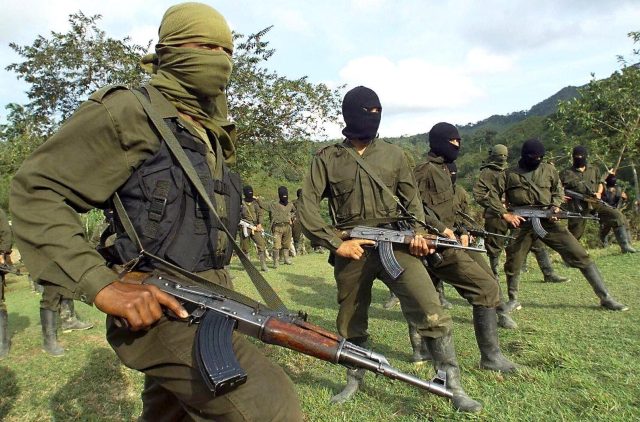
Members of the ELN guerrilla (Pedro Ugarte/ Getty).




At 2am on Saturday, Fermín* was awoken by his sister, shouting frantically that the Americans were bombing Venezuela’s capital. Soon, everyone on his street, in the far eastern city of San Antonio del Táchira, was up and following the news. But when Donald Trump announced that special forces had blasted into a compound and detained Nicolás Maduro, Fermín simply didn’t believe it. “It seemed too incredible,” says the wiry 39 year old, who works as a gardener in the Colombian city of Cúcuta, just across the border from San Antonio. “We thought it had to be fake.”
As the world now knows, it wasn’t. But what that means for this city and Fermín’s country remains unclear. For though Fermín felt euphoria over Maduro’s arrest, after years of Chavista misrule, Venezuela’s ruling socialist party is still in power, and a dangerous pro-government militia is still active in Fermín’s neighborhood. Indeed, with its web of guerrillas, gangsters, soldiers and political police, the frontier city of San Antonio del Táchira speaks vividly to explosive problems in Venezuela and the dangers of them spilling into more violence — amid Trump’s new “Donroe Doctrine” of open aggression in Latin America.
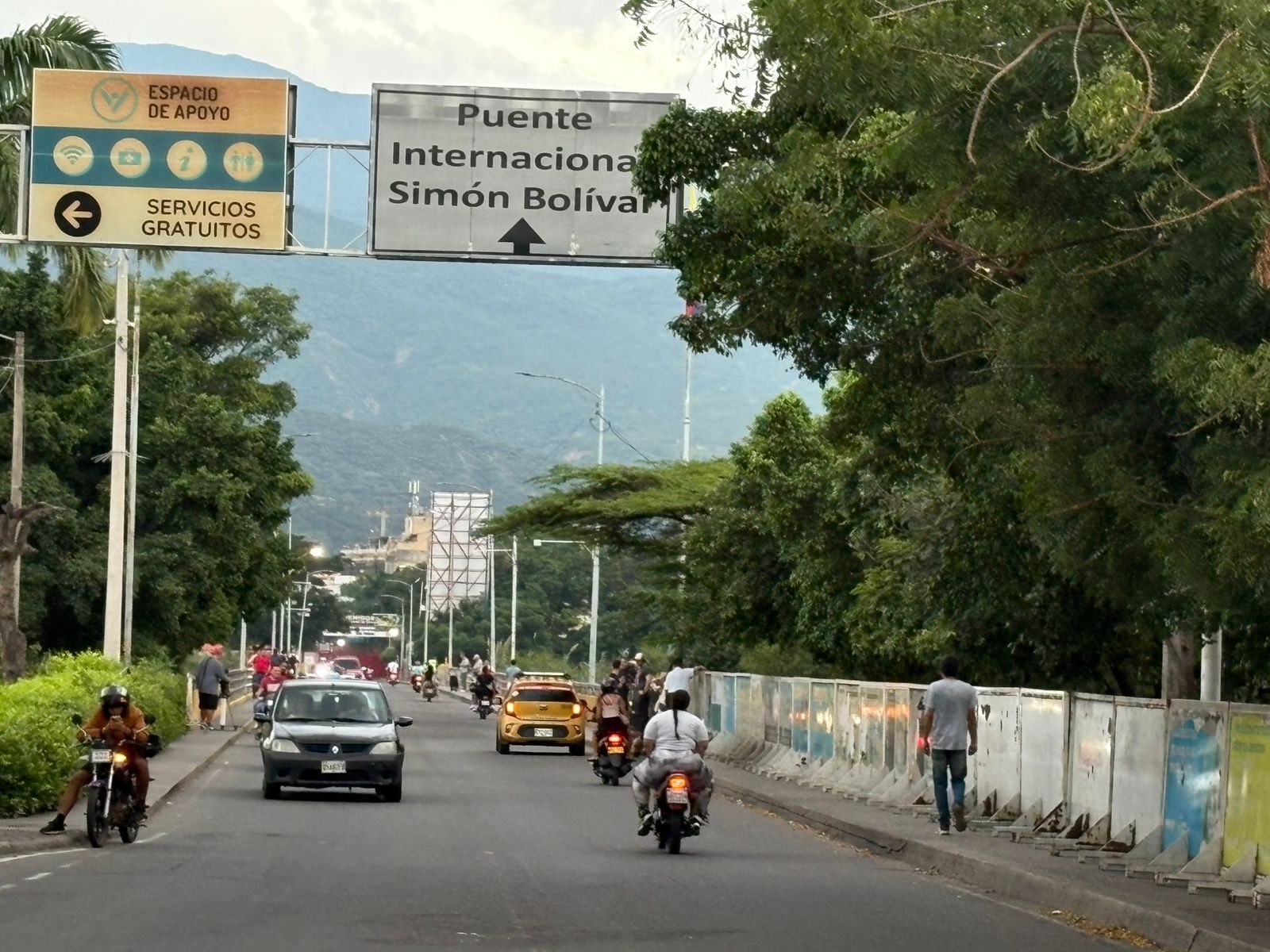
Since 2014, almost eight million people have fled hunger and poverty in Venezuela. Close to three million have settled in Colombia, and frontier towns like the sprawling Cúcuta are particularly popular destinations. With the Venezuelan economy in a mess — inflation currently sits at 225% — many of Fermín’s countrymen follow him over the border into Cúcuta to work. In the evenings, they cross back over the Táchira River, being sure to return before the Simón Bolívar International Bridge closes at 9pm. Close by, as dusk falls, I talk to Venezuelans as they are blasting salsa and reggaeton, drinking Coca-Cola and beer in plastic cups, and eating hot dogs from a stand.
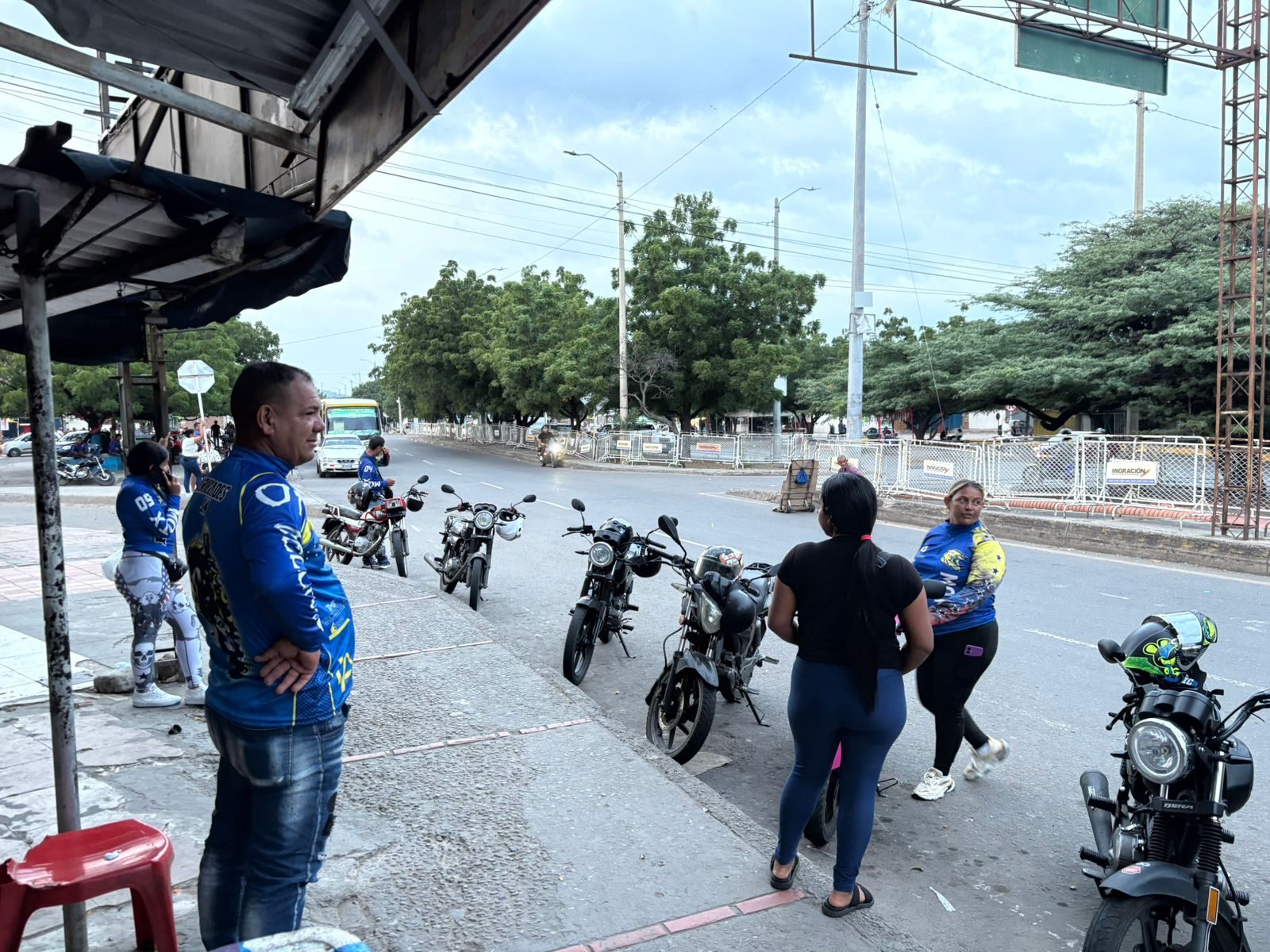
There are more opportunities in Cúcuta than in Venezuela. The sweaty city of a million people, framed by green hills, has a booming clothes industry, coffee and sugar trades and universities. Even so, this lively community where they sell food and drinks, and zoom about as motorcycle taxis, has its problems. On the Venezuelan side, there are pro-government militias: the so-called colectivos. Since the American attack, they are reported to be putting up checkpoints and detaining people suspected of siding with Washington. The army and political police, known by the acronym SEBIN, also keep tabs on opponents.
Repression is increasing in other ways, too. The government is detaining journalists in Caracas and it has blocked foreign journalists from entering since the strike. Several teams tried to cross in as tourists at Cúcuta; Venezuelan troops held them and deleted photos and video before deporting them back across the river. In front of the bridge, dozens of TV crews made do with taking live shots from Colombian soil, a boon to the gaggle of drinks sellers nearby.
Locals must also contend with guerrillas from the National Liberation Army, or ELN, which has an estimated 5,000 fighters. Active on both sides of the border, the ELN is a fierce backer of Chavismo; following Trump’s attack, it released a statement calling on Venezuelans to defend against “the gringo aggression”. In more prosaic terms, though, the guerrillas extort many businesses in the area, calling payments “vaccines”. One Venezuelan tells me he used to have a food business but gave up because of the extortion, and now drives a taxi.
Whatever its Marxist rhetoric, the ELN also makes money from the drugs trade. Close to the bridge, along a stony river where goats munch on bags of trash, are dirt tracks known as trochas. They’re used by smugglers to take contraband over the border, whether sides of beef — or bricks of cocaine. Once the runners reach Venezuela, crossing the river on rickety wooden planks, they’re liable to face a tax: whether from guerrillas or soldiers. “They all work together,” says Celio, a charismatic former gasoline smuggler. Gangs get their cut too: Celio warns me not to go further along the trochas because it’s the home to infamous gangs like the Tren de Aragua. Five men with guns recently held up a photographer friend there, stealing his equipment.
Collaboration between gangsters and the state is key to the case against Maduro. US prosecutors indicted him in 2020 and again this year on crimes including narco-terrorism conspiracy. Though Venezuela is not a significant producer of cocaine, nor of other drugs like fentanyl, narco traffickers do shift tons of white powder from Colombia through places like Catatumbo, north of here, and on to the United States and Europe, all with the alleged complicity of the Venezuelan army. In 2018, I interviewed convicted Mexican trafficker Fernando Blengio, who told me that the military worked openly with narcos.
While Trump may have taken out Maduro, then, these broader criminal networks still appear firmly in place. And if the regime begins genuinely to totter — violence has lately erupted on the streets of Caracas — corrupt soldiers and gangsters could yet be used to repress the population. Another possibility, of course, is that they instead turn on each other, transforming Venezuela into a low-intensity civil war.
Amid this tangled mesh of state power and criminal violence, the people of La Parada, the local term for the Bolívar bridge checkpoint, seem unsurprisingly cynical of the government in Caracas. Several speculate that the army had not put up a fight but let Maduro be captured. “How come things are normal here if there was really an invasion of our country?” asked Sarai*, selling drinks by the river crossing in Cúcuta. Even so, some are optimistic that acting president Delcy Rodríguez is capable of overseeing a transition back to democracy. “We have to move slowly to change the institutions,” suggests Roberto*, a stocky former Venezuelan soldier. “We need someone inside the government to do that.” The guerrillas, gangs and militias of Cúcuta show how difficult such change could be.
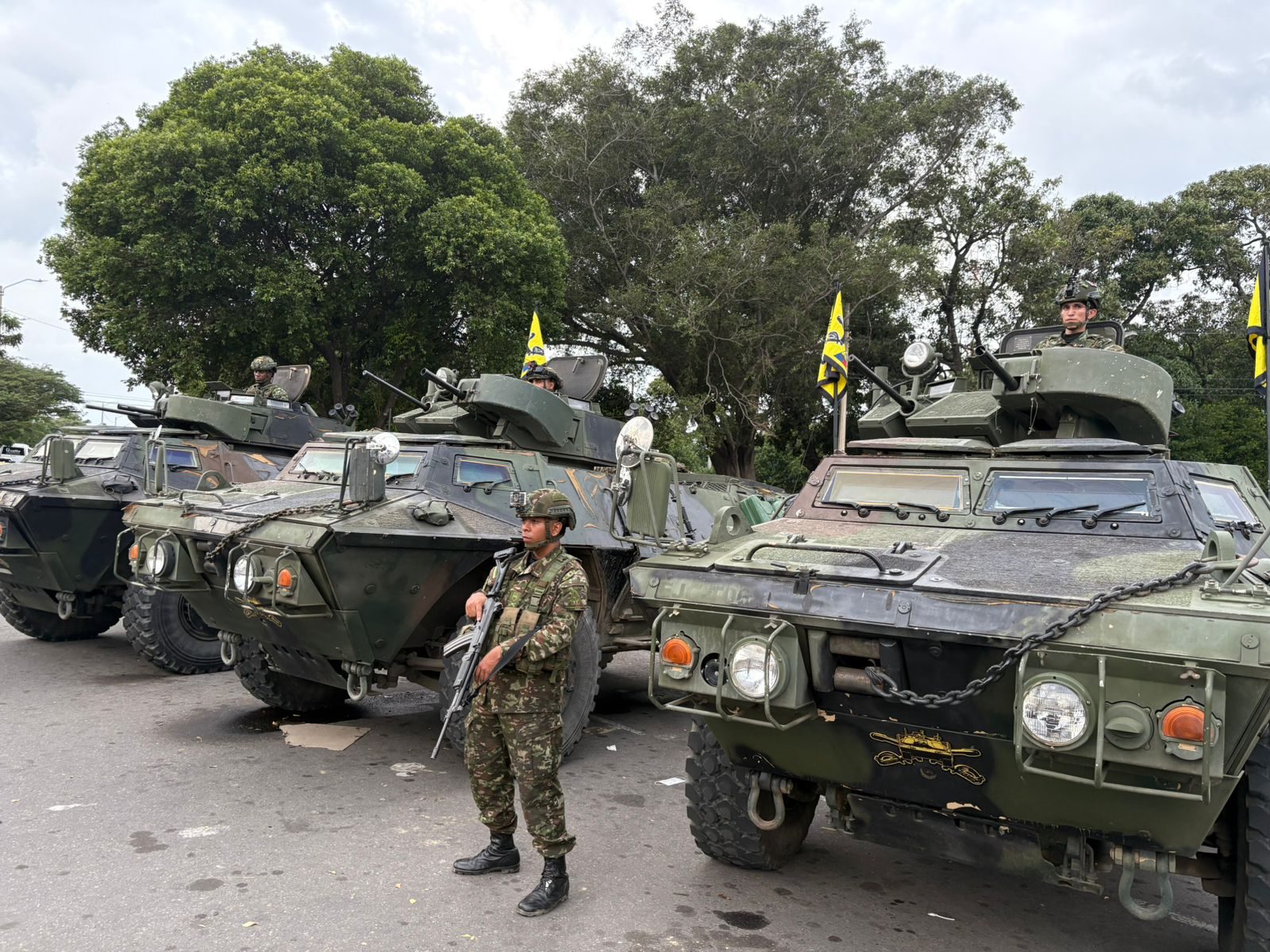
Nor is Venezuela the only country facing challenges following America’s attack on Caracas. On the west bank of the river, I join a Colombian army convoy as it patrols the roads north of Cúcuta. It’s nighttime, and a bright moon bounces light off the heavily armored vehicles. The colonel in charge describes how he also woke to news of the US attack on Venezuela; unlike Fermín, he was soon on a call with Colombian President Gustavo Petro, who ordered 30,000 police and soldiers to reinforce the 1,300-mile frontier with Venezuela.
Petro, himself a former guerrilla, fervently condemned the abduction of Maduro, posting that “the United States is the first country in the world to bomb a South American capital in human history”. Trump responded by accusing Petro of being involved in cocaine production and saying he didn’t have long left himself. Ominous words — though there’s currently no known indictment of Petro, and he’s anyway due to step down this year once his term ends. If the Donroe Doctrine means additional attacks in Latin America, then, other countries may have more to fear. That includes Cuba and Nicaragua, both with more entrenched authoritarian Leftist leaders. Trump, as always, has shown he can be impossible to predict.
As for Colombia, an army officer in the convoy tells me he thinks the Americans are more likely to strike a cocaine lab than attack the government itself. Yet even if Petro and his successors avoid direct intervention, the challenges of Cúcuta still hint at trouble ahead. For one thing, there are those ELN guerillas. Colombian army sources warn that a large concentration have lately crossed the border from Venezuela. In December, the ELN also carried out a wave of bomb and gun attacks on Colombian targets, causing terror with makeshift explosives and killing an ambulance driver as they shot up a police station.
It goes without saying, meanwhile, that a meltdown in Venezuela is likely to spark even more violence across the border. Guerrillas and gangs operate across the two countries and flee heat from one to the other, and that’s before you add Colombia’s own brutal history of drug runners and Marxist fighters. One US argument for taking out Maduro was that his regime causes instability. But a collapse in Venezuela could cause even more.
For the moment, anyway, the rhythms of life in Cúcuta continue. As night falls, Fermín says he’d have to return home to Venezuela — and the fears and hardships he has faced for years. But, he adds, Venezuelans have learned to wait, hardly surprising when the Chavistas have been in power since 1999, when Fermín was just 12 years old. “Before,” he adds, “we made the mistake of thinking things would change when they wouldn’t. Now, we have learned to be patient.” The risk, of course, is that change could be violent, with US forces weakening the regime from the top and guerrillas and militias taking advantage of the power vacuum from below. So while things might get better, there is also the fear they could get even worse.
*Names have been changed.

Join the discussion
Join like minded readers that support our journalism by becoming a paid subscriber
To join the discussion in the comments, become a paid subscriber.
Join like minded readers that support our journalism, read unlimited articles and enjoy other subscriber-only benefits.
Subscribe