








January 20 2026 - 6:00pm
Will California implement a wealth tax on its billionaires? The plan has been gaining traction in the state legislature — and while it is some way off becoming law, some billionaires seem to think it will. This week, real estate broker Julian Johnston told Fox News that he’s working directly with three billionaires moving from California to South Florida, where there is no income tax for those who reside there fewer than 183 days of the year. While it looks like California is finally ending its love affair with Silicon Valley, the question of a wealth tax — not just in the Golden State — won’t go away any time soon.
The proposed initiative would impose a one-time 5% tax on the 2025 net worth of California residents worth more than $1 billion. It would be due in 2027, and taxpayers could spread payments over five years, with additional costs. The revenue would go into a special fund with 90% reserved for healthcare spending, and 10% reserved for the state’s failing K-12 education system and other sectors dependent on state spending.
Yet this is just the tip of the progressive spear. The idea of taxing wealth, even before being realized for capital gains, potentially has broad support. The prospect alone has already been enough for some billionaires to up and leave the state. Back in 2020, Oracle co-founder Larry Ellison moved his primary residence from California to Hawaii and has continued to relocate assets, while the New York Times reported earlier this month that Google co-founders Larry Page and Sergey Brin have moved residences and business assets out of the state. Palantir co-founder Peter Thiel moved the family office to Miami in December and has this month donated $3 million to a lobby group fighting against the proposed tax.
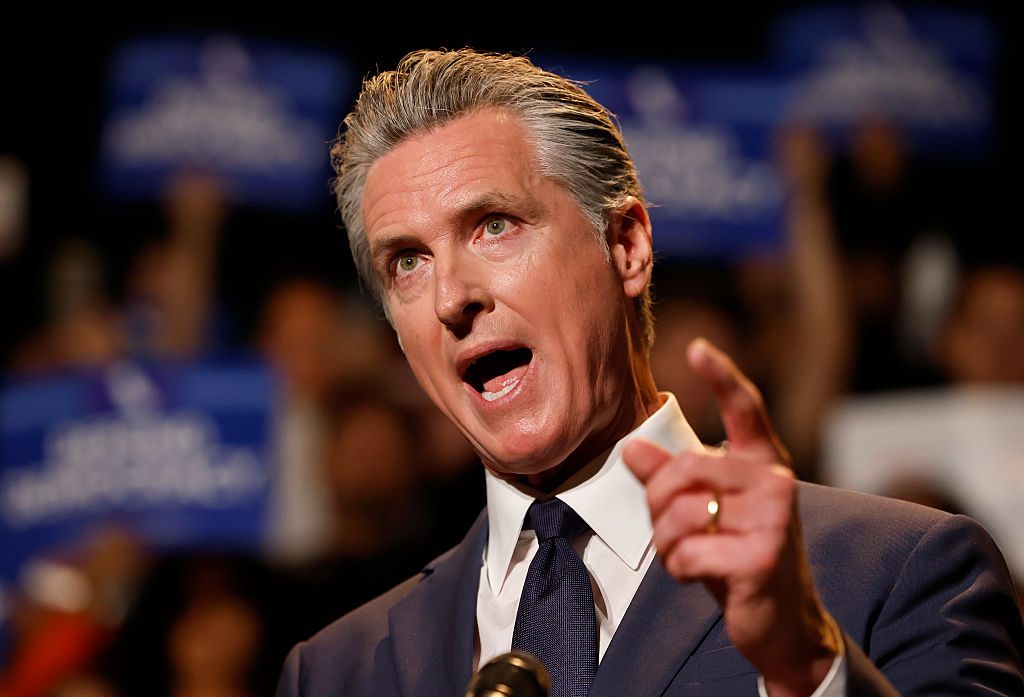
As a result, the proposal will not win easily. Even prominent Democrats such as Governor Gavin Newsom and San Jose Mayor Matt Mahan oppose it, knowing how damaging it could be if enacted. Newsom has argued that a wealth tax is inherently self-destructive. The state’s regulatory and tax regime has already created a dwindling fiscal base, with the top 1% contributing some 40% of income taxes. In 2021 alone, the departure of wealthy people cost the state an estimated $20.4 billion in taxable income. In a federal system, as Newsom has correctly said, California lives in what he calls “a competitive reality with 49 other states”. However, he has stated that a “national conversation” on wealth taxes would be worth having.
Naturally, Newsom and other prominent politicians, both Democrats and Republicans, have for years depended on political donations from Silicon Valley and Hollywood to finance campaigns. Over the past two decades, the Democrats have relied more and more on rich individuals as unions have decreased in influence and become disillusioned with Democratic politics. For California, the loss of revenues would worsen a steady and deeply ingrained budget deficit predicted by the Legislative Analyst Office to last through 2028. A severe budget crisis is exactly what Newsom does not want as he tries to convince the country he should be the next president.
Yet even if the proposal is delayed, declared unconstitutional, or defeated at the polls after a massive tech-funded campaign against it, the issue will live on nationally. This is particularly true since, according to a Gallup poll from September last year, a majority of Democrats now favor socialism over capitalism. And among young Democratic voters, socialism trumps capitalism by more than three to one. Public opinion, according to Pew last March, was strongly in favor of taking more not just from the ultra-rich but also those making over $400,000.
Until the country finds a way to convince the average American that extreme wealth does not come at their expense, both the oligarchs and the heavily Democratic professional classes risk experiencing serious tax raids unseen for decades.
Joel Kotkin is a Presidential Fellow in Urban Futures at Chapman University and a Senior Research Fellow at the Civitas Institute, the University of Texas at Austin.
 joelkotkin
Join the discussion
Join like minded readers that support our journalism by becoming a paid subscriber
To join the discussion in the comments, become a paid subscriber.
Join like minded readers that support our journalism, read unlimited articles and enjoy other subscriber-only benefits.
Subscribe