








December 1 2025 - 11:50am
For many in the activist caste of Britain, the working classes have been an ongoing disappointment. In 1937’s The Road To Wigan Pier, George Orwell bemoaned how “the mass of the workers do not feel any native hatred of capitalism. They are not in the least likely to revolt.” Meanwhile, by the late Seventies, the Marxist academic Eric Hobsbawm was mourning the decline of a coherent working-class identity as more and more workers swapped blue collars for white and the workplace homogeneity which allowed millions to feel unified began to vanish.
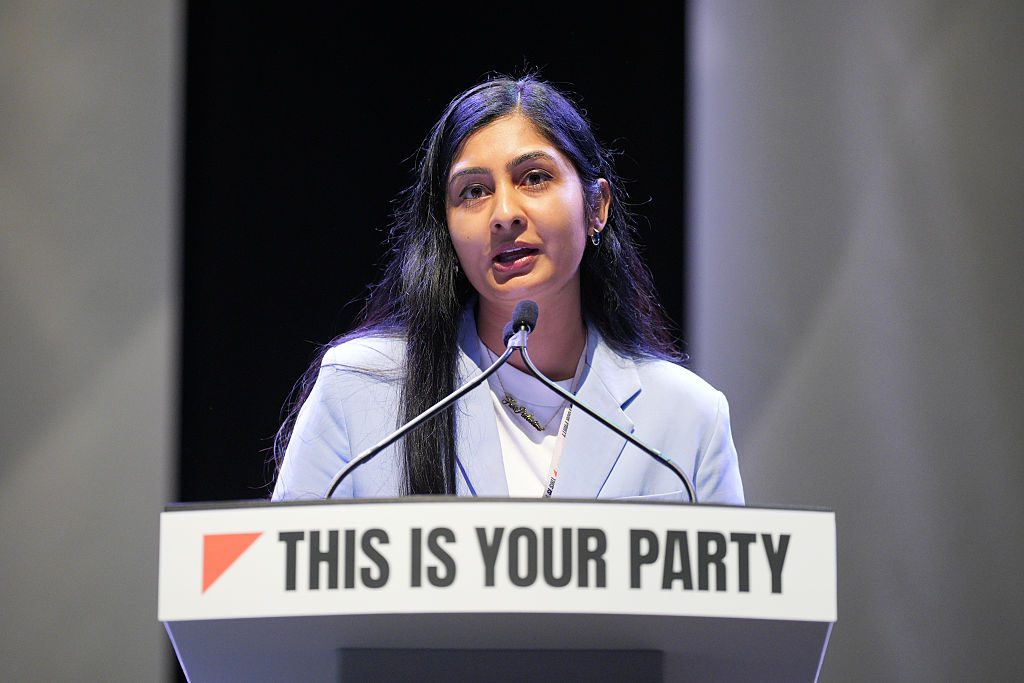
It’s this longstanding resilience toward revolutionary change and the splintering of identity among the working classes of Britain that forms a backdrop to the inaugural Your Party conference. Trotskyists, Socialist Workers Party members, blue-haired sociology graduates and blue-rinsed T-54 battle tank appreciators descended on Liverpool this past weekend, looking to seize the biggest far-Left political moment in a generation.
Yet there was a specter haunting the event — the specter of class. The evening before the conference began, as Jeremy Corbyn and Zarah Sultana gave separate rallies to separate groups of supporters, the “Gaza Independent” Blackburn MP Adnan Hussain wrote an explanation for PoliticsHome as to why he had left the movement last month. Describing himself as a working-class, ethnic-minority child of immigrants, Hussain claimed the new party had an “increasingly rigid ideological culture that insists socially conservative values have no place in a left-wing movement”.
Unlike the calloused and oil-stained socialist firebrands of old, many in Your Party appear to have lived sheltered lives. They seem shocked that the majority-South Asian communities which will form their electoral targets — parliamentary seats where Labour narrowly beat pro-Gaza independent candidates in 2024 — are behind the curve of progressive thinking.
Various hard-Left neuroses cropped up onstage in Liverpool this weekend and boiled over into screaming froth, addressing niche controversies of no interest to the overwhelming majority of the British working class. This fallout has now become routine as Your Party tries unsuccessfully to find a middle ground between the teachings of Mohammed and of Judith Butler. Hussain responded online to being called a transphobe during one conference speech by suggesting he might sue for defamation.
Your Party’s conference and its founding has brought sunlight to the unease by which modern progressives negotiate their class politics and on what conditions. Sultana, speaking in an interview at the weekend, claimed the party would represent “the true diversity of the working class”. In reality, many want this diversity to be caveated and sanitized to mean “only the nice workers, but definitely with different skin colors”. This is the politics of working-class people as a means to an end, whose advocates are still figuring out whether poverty is really worth fighting against given that the plebs remain so unenlightened.
Others are more pragmatic, and accept that the working class of Britain is multicultural and multi-ethnic, holding up this quite basic and self-evident fact as though to realize it was a great achievement. Your Party’s pragmatists have concluded that some groups are, in fact, allowed to have socially conservative views. After all, their communities might deliver a Your Party MP. It’s an Orwellian rewriting of intersectionality dogma in service of the prospect of power. Oceania, it seems, was always at war with gender-neutral toilets.
What is obvious is that each Gaza Independent MP who leaves the project will remove a parliamentary seat that Your Party would otherwise lock down. Hussain will not lose Blackburn to a Your Party challenger in 2029. He knows his core voters will be unmoved when conference speakers scream blue murder about his views on gender.
Regardless of what Your Party decides to do with the working classes, this is where the new party’s shambolic operation will find itself next on its quest for ideology. Its supporters are now learning difficult lessons about the concept of leverage.
Join the discussion
Join like minded readers that support our journalism by becoming a paid subscriber
To join the discussion in the comments, become a paid subscriber.
Join like minded readers that support our journalism, read unlimited articles and enjoy other subscriber-only benefits.
Subscribe