




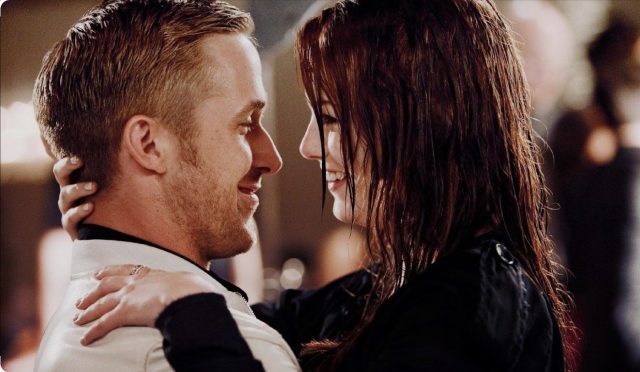
Warner Bros Entertainment Inc. Ryan Gosling with Emma Stone in Crazy, Stupid, Love (2011).




I was 18 when I met my first pick-up artist. It was my first year of university and I was at a Halloween house party, dressed as a magician’s assistant. The host had a Joy Division poster, which I complimented. He laughed. “A lot of girls pretend to like these bands because they want to get with me. What’s your favorite song on Unknown Pleasures?”
What I didn’t realize at the time was that he was using a well-rehearsed psychological trick to seduce women. If a slightly awkward young man approached you in the late 2000s, or early 2010s, and told you that the little speck of gunk in your eye was cute, he might have been a pick-up artist, and his trick of choice might have been a “neg”. This was short for “negative feedback” — meant to both compliment and demean at the same time, in the hope that you’d seek his approval. In answering my host’s question about Joy Division, I was already doing just that. We ended up dating for two years.
During that time, the pick-up artist surprised me by how open he was about the psychology behind his art — PUA for short. He unpacked some of the vocabulary and discussed some of the favored ploys: negging, comparing hand sizes, showing off card tricks, and, above all, appealing to fate. The more you call upon any universal system — astrology, tarot, destiny — the less personal agency women have to take in making an impulsive or risky sexual decision. He introduced me to some of his pick-up friends too. “When done right,” one of them told me, “PUA should be like make-up. It should enhance rather than cover. It should be invisible.” I was being given a privileged glimpse of what lay behind the curtain. I felt like a trusted ally. That, in hindsight, was part of the pick-up.
These young men would all have read The Game, one of the most infamous books of the 2000s. Neil Strauss, its author, had ghostwritten memoirs of Jenna Jameson and Marilyn Manson, but PUA proved to be his most controversial topic. Strauss immersed himself in what was then a nascent subculture. Having rebranded himself as “Style”, Strauss attended a bootcamp led by an arch-seducer known only as Mystery, whom he managed to befriend. Strauss joined the pick-up community, imbibed — or rather, got drunk on — its teachings on body language, dress and conversation starters, and put these lessons into practice. Ostensibly a memoir of that period in Strauss’s life, The Game was also a manual, promising men secret tips on how to get any woman into bed. Published with a Bible-black leather cover, the book was a bestseller, catapulting Strauss to the status of talk-show celebrity. Perhaps unsurprisingly, it was wildly popular among certain types of young men — including those I met when I was 18. Perhaps also unsurprisingly, the publication did not win Strauss friends in the women’s liberation community. The feminist blogosphere accused Strauss of advocating for anything from objectification to rape to merely being a pig, making The Game subject to one of the first digital-era moral panics.
It is now 20 years since the book’s publication. In the era of Andrew Tate, the initial backlash seems almost quaint. I was struck, on rereading The Game this year, by Strauss’ success in making the story feel more charming than sleazy. Our narrator is quick-witted and happy-go-lucky as he leads us through a simple story of boy-meets-girls. He picks the reader up, preempting their reticence with jokes, anticipating their frustration with vulnerability. It worked on me.
Strauss himself came to disavow pick-up, hosting a funeral for “Style” in 2013 ahead of his marriage to the model Ingrid de la O. (They are now divorced.) In hindsight, he got out in the nick of time. Social media was not only changing the face of dating, but of feminism as well. Young women became more organized and vigilant; consent classes and thinkpieces sought to stamp out any remnants of PUA. Apparently innocuous behavior, like staring or giving compliments, suddenly acquired menacing undertones, and neither men nor women could feel safe. Strauss’s former colleagues, still in PUA, fared badly. In 2014, Julien Blanc, a PUA instructor, was denied a visa from the UK after it was argued that his interpretation of pick-up veered towards the coercive. The movement naturally dwindled, and its methods began to appear antiquated. Why bother women on a street, or in a bar, when they are more likely to be on an app?
While PUA might have shrunk in practice, it continued to lurk in spirit — Patient Zero for digital-era misogyny. It was PUA forums that popularized the “red pill” meme, adapting terminology from The Matrix. Swallow the “blue pill” and you’ll share the unchallenging majority view that men and women are roughly the same and that neither is, or should be, in charge of the other. Choose the red pill, and you’ll see the world as it apparently really is: men and women are fundamentally and irrevocably different, female sexuality needs to be controlled rather than enabled, and there is nothing worse or more humiliating than being involuntarily celibate. Incels, and their occasional acts of violence, are another offshoot of the red-pill view. It’s almost tragic that Andrew Tate looks like a gritty reboot of Neil Strauss: a badly re-articulated echo that is angrier, shinier, and more ambitious and famous.
Today’s discourse about The Game tends to focus solely on its gender-wars aspect. But these critics seem not to notice that the book’s principal focus is homosocial: on male relationships, male approval, and male identity. These men kiss women and think about what their friend might do in that situation. One pickup artist tells another that while kissing a woman, he was so preoccupied in focusing on imagining what it’d be like for his friend to kiss her, he forgot what the kiss was like altogether. The pick-up artists imitate each other, get ready for nights out, and they go out together. In the end, they even live together. In the book’s climax, Style and his comrades decide to launch Project Hollywood — a house of pick-up artists. Here, the squabbles become so all-encompassing that the pick-up artists seem to forget what they thought they wanted all along, which was to get laid.
The phrase “intrasexual competition” is usually used to denigrate women as petty and duplicitous, always looking to slyly damage each other. But in The Game, men are constantly fucking each other over. They steal each other’s targets and squabble with the gossipy urgency of fourteen-year-old girls. Despite this ostensibly being a book about women, the real romance story is between Strauss and Mystery. They fight; they get back together; they fall out of love and get jealous. Their dynamic has much more feeling and commitment than any of the relationships depicted with women. There is a queasy reverberation of the famous adage: if a tree falls in a forest and no one is around to hear it, does it make a sound? If a man picks up a woman in a bar and no one is around to witness it, did he even pick her up at all?
Rereading The Game again, I was also struck by how much of a role magic played in their stories. Perhaps it made sense that I was dressed as a magician’s assistant when I met my first pick-up artist. Unbeknownst to me, I was entering the domain of the fantastical and magical.
The pick-up artists learn card tricks, read palms and perfect their mind-reading routines. Mystery outlines plans to become a professional magician as an exit route. Attempting to peacock, he and many of his fellow PUAs dressed in frilly shirts and furry hats: the universal dress code of the magician. As well as playing conjurors’ tricks, they often spoke to women about mystical magical concepts: not just horoscopes, but “the stars”, “auras” and “healing energies”. For women, there is nothing more enchanting than someone knowing you better than yourself.
But magic is more than a modern way of getting women into bed. It is the folk-underbelly of religion. Tradition without the infrastructure. And seduction is magic. It’s what draws two people together in a way that feels natural, easy, but is also rare and urgent. Many of the pick-up artists were clearly deeply unpleasant; but a lot of them wanted genuine enchantment, I think, even more than they wanted to simulate it. Yet we want our magic without magicians, for the existence of a magician undermines the validity of the magic.
One of the main criticisms that feminists, and women in general, make of PUA is that it’s just another magician’s con: a form of lying. And perhaps it is: but when it comes to dishonesty and sex, where do we draw the line? Persuading someone into sex isn’t a crime — but at what point is someone pressured, or tricked?
In the post-PUA era, “consent” has come to mean that we want all the facts available before we make a decision. But there’s still no consensus on which facts are relevant. Women wear make-up, but we’d be hard-pressed to see this as a form of lying (though in China, a man successfully sued his wife for not disclosing that she had extensive plastic surgery after seeing the birth of their ugly children.) People also lie about their jobs — does that violate consent? In Israel, people have been successfully prosecuted for pretending to be brain surgeons, or even pretending to be Jewish in search of sexual conquest. And what about alcohol? Alcohol can cause the hard edges of the world to blur handsomely. In that attractive mist, we might find our lips gravitating towards those of a stranger, only to wake up the next morning and regret our loosened inhibitions. We pad our CVs, we pad our bras: is any of this so dishonest as to make a connection no longer consensual?
An encounter is magical, rather than a lie, when the fantasy is shared between the two participants, when both sides want to believe in the power of the moment, and get swept away in the mutual frisson. That is what the seducer should aspire to, and it is timeless.
But The Game still feels like an artifact. The past is a foreign country; they do things differently there. The well-worn opening of The Go-Between rang through my head when I was reading the book. Today, if awkward young men went to the smoking area of Fabric to proffer their business cards to a group of Goldsmiths freshers, they’d be cruelly giggled out of the club. I almost feel retroactive sympathy — and then I remember how reductively PUAs thought of the women they’d hit on.
Back then, and up till some point in the 2010s, people used to go out to bars to flirt and be flirted with. Were we more likely to believe in magic then? Magic needn’t be True Love, but the sparks could come from someone who asked you for a lighter in the smoking area of a sticky bar. But sometimes I think that millennials and Gen Z are now too cool for magic. It’s become old hat, like Santa Claus or the concept of a “dream job”. By “magic”, I mean the spark. The capacity for good faith between the sexes. The pick-up, and then letting the chips fall where they may, and maybe, within that, finding love or something like it. We might call this new attitude street-smart. We might call it cynicism.
It’s not that we no longer believe in magic. It’s that magic itself is less present in us. Why? Many try to proffer their pet issues. Maybe it’s men and their lowered testosterone or their addiction to pornography. Maybe it’s women and their sex-positive feminism, their sex-negative feminism, their hormonal birth control, their academic superiority over men, or the fallout of the #MeToo movement. Maybe it’s something else: dating apps, capitalism, socialism, or post-Covid atomization. With all these competing diagnoses, it’s hard to imagine what a cure may be, or if we indeed believe a cure is even desirable.