








December 26 2025 - 3:00pm
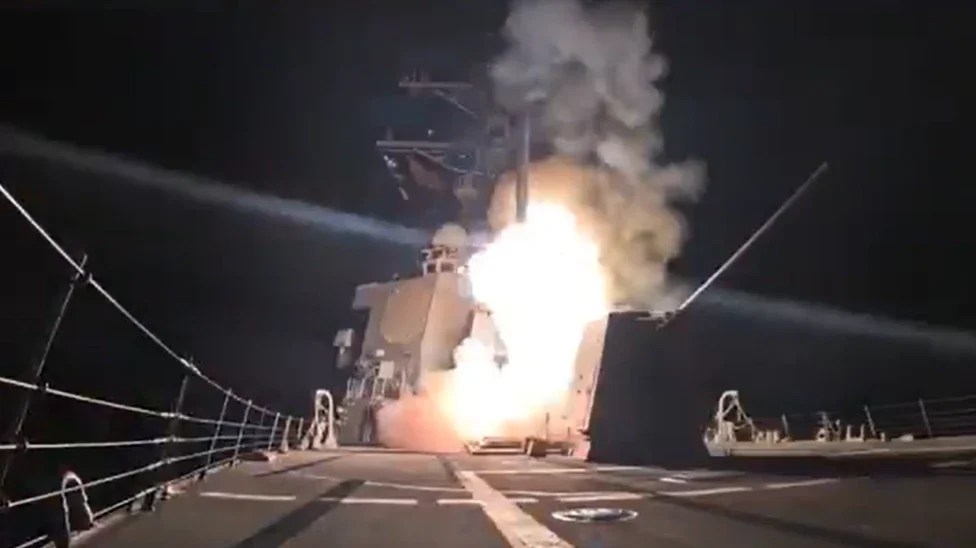
The US airstrikes against Islamic State fighters in Sokoto State in north-west Nigeria last night are unlikely, on their own, to alter the trajectory of the country’s Islamist insurgency. This is true even if they did kill “multiple Isis terrorists”, as US Africa Command claims. But the strikes could still matter in another sense: if they signal a shift in US policy, they may yet improve the security outlook in West Africa.
When 13 Christians were abducted from a Protestant Evangelical church in central Nigeria 10 days ago, it seemed like a depressingly familiar script was playing out. The Christmas period generally and Christmas Day specifically have regularly been a time of great suffering for Christians in Nigeria over the last decade and more, with victims killed in both sectarian clashes with Muslim herdsmen and targeted atrocities, often against church services, by Islamist terrorists.
The US strikes, in disrupting this script, are something of a blow to jihadist propaganda, and this is not without value. Political victories are in many ways more important than military victories in defeating an insurgency, but both are necessary in rolling back jihadism in West Africa, which remains formidable.
The instability unleashed by France’s military withdrawal from West Africa, and the subsequent Russian move to fill the vacuum, is not easily reversible. It is also the essential context for Africa’s emergence as Isis’s most active theater worldwide. Indeed, in August Isis suggested that its strength on the continent had reached the point at which it could contemplate expanding its anti-Christian campaign into nearby Europe.
So far, however, the Trump administration has shown little evidence of pursuing a substantive policy in Nigeria, still less across West Africa.
Donald Trump’s first remarks on Nigeria in early November focused narrowly on the humanitarian issue of jihadist violence against Christians, and he framed his statement on yesterday’s strikes in the same terms. Trump is not known for liberal interventionism, and the apparent exception in Nigeria has less to do with conditions on the ground or the threat posed by Isis than with domestic US politics — specifically the concerns of Evangelicals within his political base.
Trump’s emphasis on symbolism over substance can be seen to some extent in the strikes themselves. Yesterday’s strikes occurred in north-west Nigeria, while the main Isis hotbed is in Borno State, on the other side of the country, along the border with Cameroon in the north-east.
Still, Trump has highlighted a real problem, and the reaction to it has not reflected well on many of his critics. Left-leaning media outlets, “humanitarian” groups, and international bodies have objected, rather strongly, to Trump describing the deliberate slaughter of tens of thousands of Christian civilians in Nigeria as “genocide”. This is strange, considering that they freely use the word “genocide” to describe the civilian casualties resulting from Israel’s assault in Gaza.
Trump is notoriously mercurial and perhaps the strikes in Nigeria are a one-off. The same unpredictability, however, leaves open the possibility of a “mission creep” that engages the West on the security threats in West Africa that it has neglected for too long. Whether that possibility becomes reality will depend on whether Washington is prepared to move beyond symbolism and address the deeper strategic failures that have allowed jihadism to entrench itself across the region.
Join the discussion
Join like minded readers that support our journalism by becoming a paid subscriber
To join the discussion in the comments, become a paid subscriber.
Join like minded readers that support our journalism, read unlimited articles and enjoy other subscriber-only benefits.
Subscribe