








December 14 2025 - 2:00pm
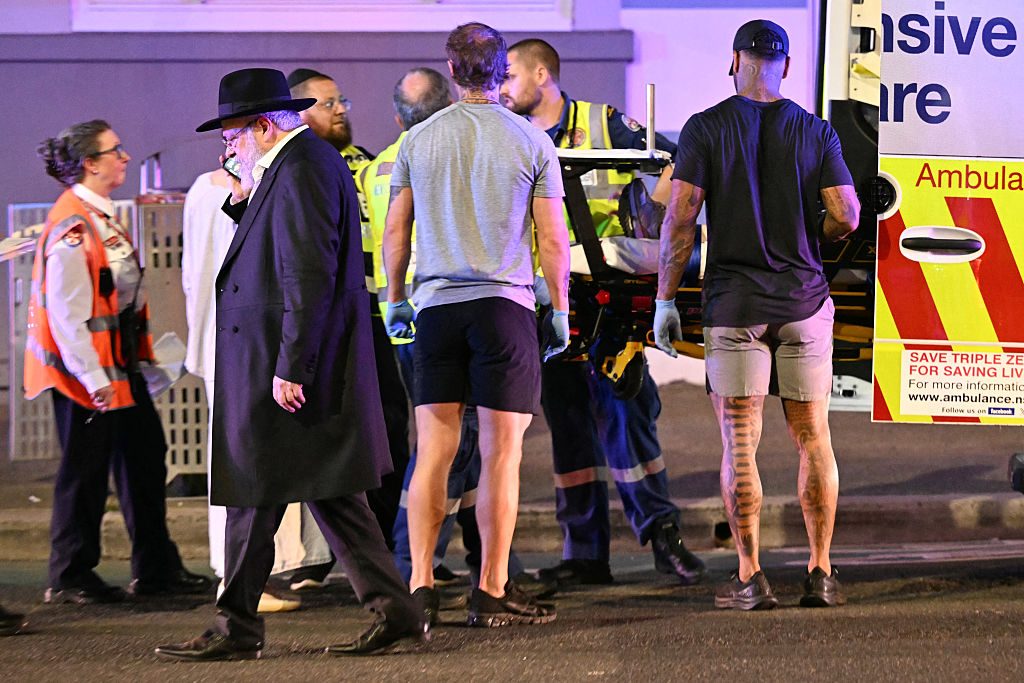
This morning, another Jewish festival turned into a bloody battlefield. A terror attack unfolded on a Chabad “Chanukah by the Sea” event in the picturesque Bondi Beach area of Sydney, when two terrorists opened fire on families gathered in celebration. Twelve are dead — including a child and rabbi, according to Israeli media — and at least 29 wounded. New South Wales Police Commissioner Mal Lanyon declared it terrorism; one attacker was killed, the other in custody. The ethnic heritage or religion of the attackers is not yet known. On the first eve of the festival of lights, darkness struck again.
Here in the UK, the horror lands like a fist to the chest. We recognize the pattern: the Manchester synagogue car-ramming and stabbing on Yom Kippur just two months ago, arson attacks, vandalism of Jewish properties, threats, the weekly protests where “globalize the intifada” rings out unchallenged. This is what globalizing the intifada looks like — spilling the blood of innocents.
Australian PM Anthony Albanese called the attack “shocking and distressing”. He is half right — it’s hardly shocking. The Jewish community saw it coming and sounded the alarm. Australia’s Jewish community has endured a fivefold surge in antisemitic incidents since October 2023, with Jewish schools, homes and synagogues firebombed. The Albanese government has been accused of failing to deliver adequate security funding and of refusing to confront the rising tide of hate. One survivor in Bondi told Israeli news outlet Ynet: “The security level was very low […] it took 15 minutes for reinforcements to arrive”. The co-CEO of the Executive Council of Australian Jewry in January said that the Government’s response is “plainly and simply not working”. Many Australian Jews feel abandoned, in the same way that many British Jews do when we watch police stand idly beside banners praising violence or hear officials claim certain chants, like calls for “jihad”, are merely “context-dependent”.
Most chilling of all, Australian authorities knew the danger was real and state-sponsored. The Government confirmed earlier this year that Iran orchestrated at least two prior antisemitic attacks, the arson of a kosher café in Sydney and a synagogue in Melbourne, explicitly to “terrify Jewish Australians”. Diplomats were expelled, operations at the Australian embassy in Tehran were suspended, and the IRGC designated terrorists. And yet, last night’s massacre still happened. Here too, counterterrorist police warned of increased hostile state activity at protests with Iranian links, yet not much has been done about it.
This is where unchecked incitement leads: from the hateful slogans shouted on our streets, amplified online, to the radicalization of lone actors or proxy networks, and finally to Jewish blood on the ground. The same rhetoric that echoes through London marches has echoed through Australian cities, normalizing antisemitism and blurring the line between protest and hate, until property is set on fire or someone is murdered.
Tonight, as we strike the match for the first Hanukkah candle and teach our children the blessings, British Jews will also scan the news, rehearse escape routes, and wonder which celebration will be next. The fear runs bone-deep; the grief is all too familiar. And the question haunting every menorah we light is stark: when will governments protect Jewish lives with real urgency? That means stopping the incitement and radicalization that threaten us week after week.
Dr Limor Simhony Philpott is a writer and researcher focusing on antisemitism, extremism and defence.
 limorsimhony
Join the discussion
Join like minded readers that support our journalism by becoming a paid subscriber
To join the discussion in the comments, become a paid subscriber.
Join like minded readers that support our journalism, read unlimited articles and enjoy other subscriber-only benefits.
Subscribe