








December 3 2025 - 7:00am
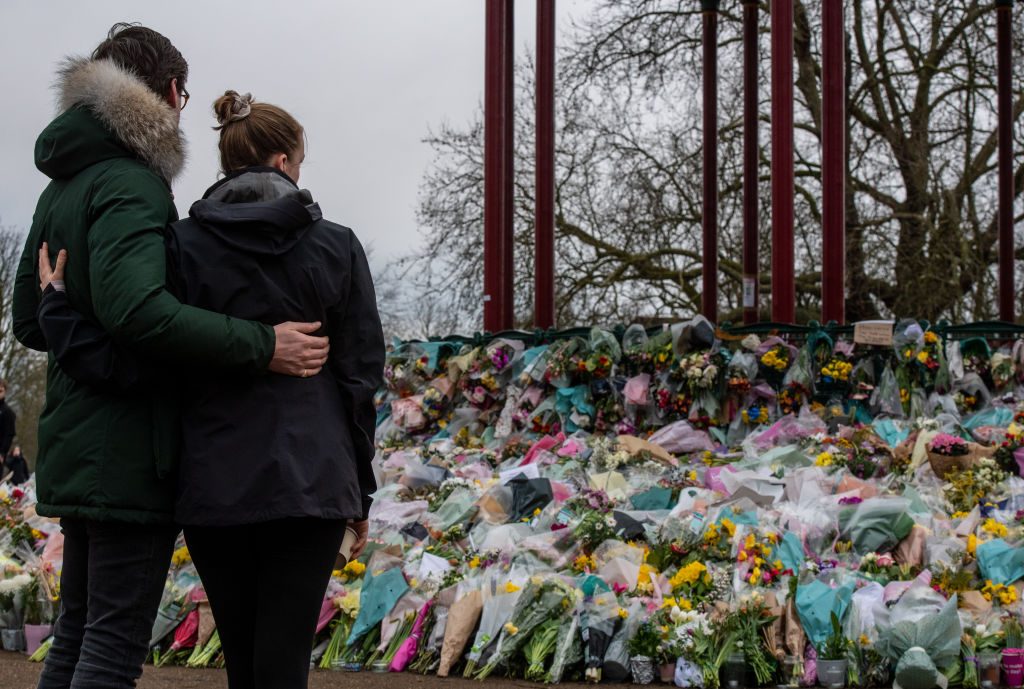
Yesterday, Elish Angiolini published the second part of her inquiry into sexually motivated crimes against women in public spaces — another meticulously compiled report destined to vanish into the Governmental void. At 235 pages, it follows last year’s 361-page effort, which was prompted by the 2021 murder of Sarah Everard and whose recommendations ministers enthusiastically welcomed before doing precisely nothing with them.
The inquiry heard that the National Police Chiefs’ Council had produced guidance to help forces tackle these crimes. Yet as of September, over a quarter of police forces still hadn’t bothered to implement it. Angiolini’s own survey found more than three-quarters of young women aged 18–24 had been made to feel unsafe in public because of male behavior.
But the most damning part of this stage of the inquiry is not what was found — it’s what cannot be found. “No one was confidently able to tell me how many women nationally report being the victim of sexually motivated crimes in public spaces,” Angiolini told the press conference. There are no reliable national figures for rape in public places. None for indecent exposure. None for sexually motivated assaults. This absence of even the most basic data betrays the truth behind the Government’s much-vaunted pledge to halve violence against women and girls in a decade: it cannot reduce what it does not bother to count.
The report lands in the middle of the UN’s annual “16 Days of Activism”, promoted at a time when the world “unites to raise awareness about gender-based violence”. Once, when men had balls and women had ovaries, we all understood this phrase to mean “male violence against females”. But today clarity is treated as vulgar. In the service of the NGOcracy, language is neutered to avoid causing offence to the very group that overwhelmingly commits sexual violence. Even Reclaim the Night marches routinely now admit men. The unspoken truth behind all such inclusion is simple: nobody who truly understands male violence wants to make men feel judged or angry, because we know what the bad ones might do.
Angiolini’s findings lay out the grim basics: the data is a shambles; women change their routes, plans and habits as routine self-defense; policing is piecemeal; and local initiatives depend on short-term scraps of funding. None of this is new, and Angiolini knows as much. But she is obliged to write it again, because little in the culture of policing or politics has changed. Indeed, since Angiolini was commissioned to report on Wayne Couzens’s murder of Everard, another serving male officer — serial rapist David Carrick — was unmasked and convicted. Her remit has now been extended to take account of this.
The truth Angiolini gestures toward but cannot say outright is this: politicians care about violence against women only when it can be turned into political capital. When the perpetrator is a migrant, the Right-wing outrage machine sparks into action. When the perpetrator is a police officer like Couzens or Carrick, activist groups on the Left such as Sisters Uncut make temporary noise. But the ordinary, daily reality — that a minority of men are dangerous, predatory and opportunistic — cannot be turned into a neat party-political narrative. There is little to be gained from admitting that the greatest threat to a woman’s safety is the otherwise unremarkable man who decides, that day, that she is available for use.
Angiolini warns we have “simply come to accept” that women don’t feel safe on their own streets. Prevention, she argues, is essential, yet it is almost never prioritized because politicians prefer initiatives which can be measured and counted and bragged about. Real prevention means confronting male violence as a political and social issue rather than treating it as a natural hazard.
It also means, as she makes clear, taking pornography seriously as a cultural engine of entitlement and aggression, one that trains men to expect compliance, normalizes violence and rewrites sexual scripts. But pointing the finger at men, even the minority who are dangerous, remains forbidden territory. And saying out loud that pornography fuels violence is treated as equally taboo; critics are routinely derided as prudish, misandrist or hysterical.
And so the cycle continues. The report will be praised. A few police forces will promise to learn lessons, and ministers will nod gravely. And then we will wait for the next murdered woman. In the meantime, the state will continue to pretend that constant, low-level vigilance — scanning pavements, clutching keys, altering routes, the shrinking of women’s lives — is normal. That this, rather than freedom, is what women should expect.

Join the discussion
Join like minded readers that support our journalism by becoming a paid subscriber
To join the discussion in the comments, become a paid subscriber.
Join like minded readers that support our journalism, read unlimited articles and enjoy other subscriber-only benefits.
Subscribe