








December 7 2025 - 12:00pm
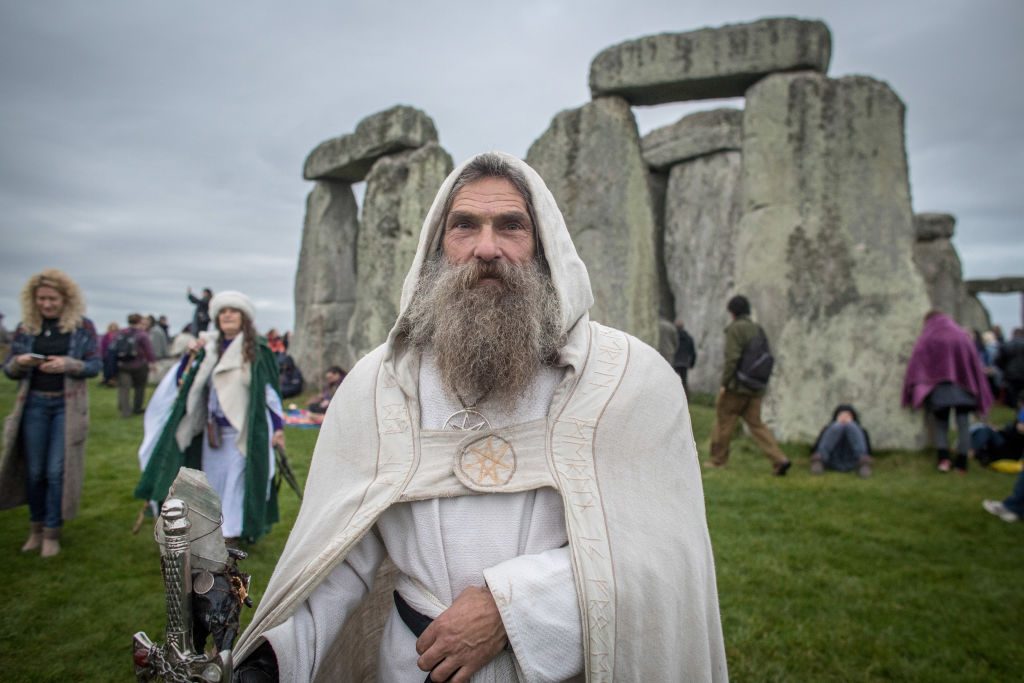
Paganism might be the perfect religion for post-Covid Britain, where not only places of worship but also in-person voluntary groups of all kinds are suffering from a crisis of commitment and participation. This doesn’t mean that people no longer have an interest in religion. Rather, cultures of religiosity in an increasingly online world are steadily shifting away from the Victorian model of bums on pews; church attendance, for instance, has yet to return to its pre-pandemic level. Understandably, people who select their own communities are drawn to “unorganized religion” — wholly unregulated, self-initiated ways of connecting with the divine.
This may be one reason why Paganism is reportedly the most popular religious choice for Britons leaving Christianity behind — if they don’t simply identify as non-religious, that is. It offers people an opportunity to believe in something and engage in rituals while belonging to a seemingly ancient tradition, but without committing to an organization or institution that has expectations of its members.
There isn’t just one kind of Paganism. There are many different “paths” rather than hard-and-fast sects and denominations, and most regard all paths as equally valid. Neo-Paganism as most people know it began in Britain in the Forties before spreading to the rest of the world. At first it was a deeply communal religion which emphasized group initiation and participation (and some Pagan paths still stress this), but from the Nineties the “Hedge Witch” movement advocated the possibility of self-initiation and solitary practice. In recent years the idea of the solitary Pagan has been supercharged by online trends such as “WitchTok”, TikTok videos dedicated to spells and rituals of self-realization.
The number of people openly identifying as Pagans in Britain remains small — only 74,000 respondents to the 2021 Census were prepared to use the label to describe themselves. But to dismiss Paganism as a religion with a tiny number of adherents misses the point. It isn’t just another religion that competes on an equal playing field with the likes of Christianity and Islam. It is a different kind of religion that seeks neither converts nor members. There is no such thing as a Pagan confession of faith, which raises the question of whether it is possible to “convert” to the religion at all. You simply become a Pagan by doing Pagan things. It is a religion of doing rather than believing, and people may start doing those sorts of things long before they identify as being of that sect.
What is most remarkable about the progress of Paganism in modern Britain is not its numerical growth, but its social acceptability. It no longer feels countercultural. The Green Man, instantly recognizable as a modern Pagan icon, appeared on invitations to the coronation of Charles III, while Professor Alice Roberts — a former president of Humanists UK and an avowed atheist — has hinted that she might be open to identifying with the “Pagan” label.
Perhaps because it does not seek converts or make demands on believers, it attracts less hostility than Christianity and Islam from post-Christian and non-religious Britons. It is not surprising that Paganism is becoming a religion for the post-religious. Archaic scriptures, pesky dogmas that require consistency, confessions of guilt and membership obligations all appear to be rather a big ask in the 21st century. Strip all those specificities away, and maybe Paganism is simply what is left.
Join the discussion
Join like minded readers that support our journalism by becoming a paid subscriber
To join the discussion in the comments, become a paid subscriber.
Join like minded readers that support our journalism, read unlimited articles and enjoy other subscriber-only benefits.
Subscribe