








December 13 2025 - 5:00pm
These are not the best of times for the old neighborhood dive bar, an institution that once helped anchor urban social life and now survives mainly by inertia.
In New York City, one of the last surviving examples sits improbably just off Times Square. Jimmy’s Corner, a cramped boxing bar which opened in 1971, is surrounded by chain restaurants, luxury hotels, and the permanent churn of Manhattan redevelopment. It is one of the last stubborn scraps of old New York still clinging to life in America’s most aggressively monetized neighborhood. It’s survived by doing almost nothing at all: cheap drinks, cash payments, no pretense. But maybe not for long. Now, as The New York Times recently reported, it faces an uncertain future after the death of its longtime owner and a dispute with its landlord.
Dive bars are a lot like pornography; they’re difficult to define, but you know it when you see it. The phrase dive bar once served as a slur for basement taverns and disreputable drinking holes, before evolving into something more cherished. What they all have in common is a no-bullshit working-class refusal of curation: inexpensive drinks, worn furniture, mismatched stools, and a clientele shaped by the neighborhood rather than what’s trendy. Dive bars feel lived in rather than staged.
But for a host of reasons, they’re slowly dying out. Longtime owners are aging out. Rents rise faster than any bar tab can keep pace with. And now, alcohol consumption keeps plummeting nationwide, as a recent Gallup poll showed that 53% of Americans are now convinced even moderate drinking isn’t healthy, versus 28% a decade ago. Gen Z, shaped by the pandemic and a wellness-inflected culture, would rather hit the bong than linger at the bar. As a result, happy hour isn’t so happy anymore. New York alcohol sales have declined nearly 25% this year. Philadelphia has seen its liquor licenses plunge by 40% since 1997, and Chicago’s bar apocalypse is even worse, down from 3,300 establishments with tavern licenses in 1990 to about 1,200 today.
For me, that loss is personal. For years, my old neighborhood haunt was Happy Village, a saloon that first opened in Chicago’s Ukrainian Village in the 1870s as a tied house for Peter Hand Brewery. Inside, there was a worn wooden bar, a quirky side room with free ping-pong, a beer garden with a koi pond, and bartenders who called you by your first name. Happy Village wasn’t necessarily a scene. It was simply there, night after night, and the best nights sometimes meant staying long enough for something unplanned to happen — a conversation with a stranger, a friendship formed without intention, a late night with a date that mattered more than it should have. But as of last year, Happy Village is now a vacant dirt lot. It was bought by a hospitality company and razed and redeveloped to remake it as a fancy new restaurant.
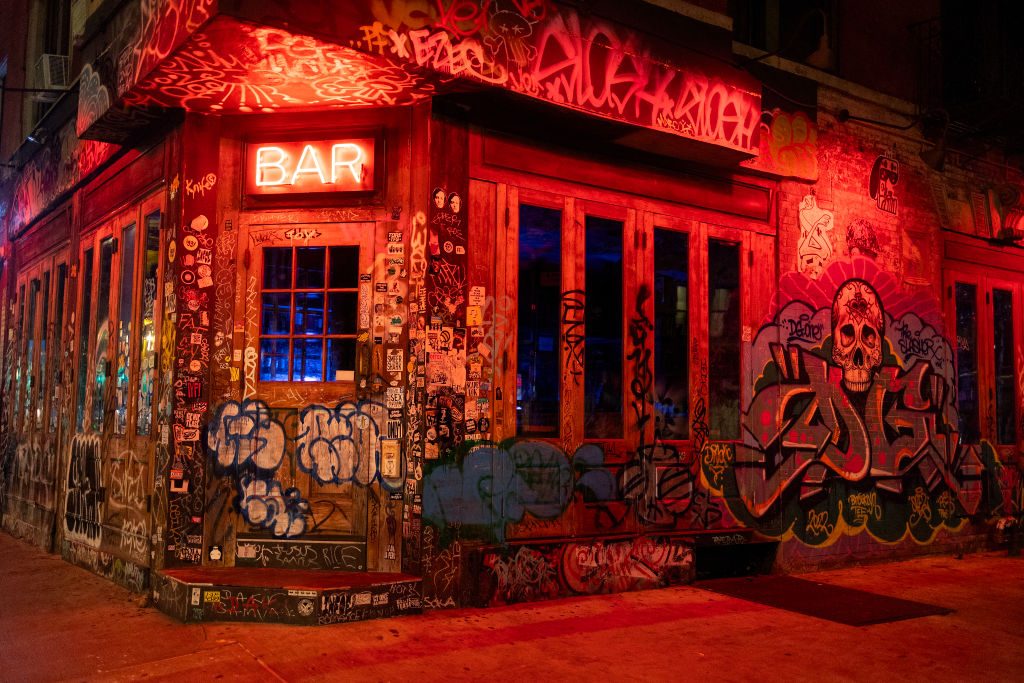
What replaces these spaces is telling. Where dive bars close, we get rooftop lounges, experiential cocktail programs, or bars that claim the dive aesthetic but are really just faking it. You know the type: carefully distressed surfaces, ironic neon signs, $20 cocktails named after an old local sports hero, or a street name. They offer a simulacrum of dive bar culture rather than the real deal.
If Jimmy’s Corner closes, it will certainly not be the last of its kind. But each loss narrows the range of places where Americans are not sorted by taste, income, or identity before they walk through the door to ask for a shot or a beer. Like it or not — they’re the defining third spaces of the last century — and nothing comparable has emerged to replace them.

Join the discussion
Join like minded readers that support our journalism by becoming a paid subscriber
To join the discussion in the comments, become a paid subscriber.
Join like minded readers that support our journalism, read unlimited articles and enjoy other subscriber-only benefits.
Subscribe