




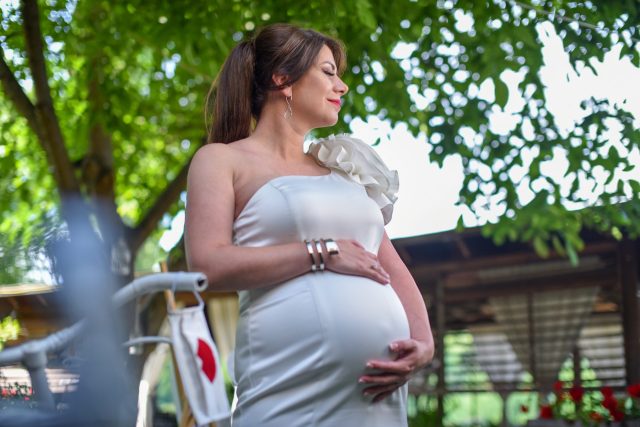
Marriage is a way out of the fertility crisis. Credit: Getty





The fertility crisis in the United States is, in large part, a marriage crisis. Births to married women are only a tick below where they have been since the late 1980s, while births to unmarried women have fallen precipitously, by as much as 30% from a 2007 peak.
Conservatives, who’ve long bemoaned single parenthood, have scant reason to cheer this outcome. It’s not that people are waiting to have kids until after marriage. Rather, they’re increasingly opting out of committing to partnership and parenthood altogether. And as new research shows, progressives, especially, are less likely to find either marriage or parenthood worth pursuing. This, even as Americans on the Right of center remain committed to both.
Two centuries ago, Jane Austen could safely assume her readers would find it “a truth universally acknowledged” that a young man with means would be in pursuit of a match. Today, marriage is just one life path among many. And in a new poll commissioned by my think tank, the Ethics and Public Policy Center, and conducted by YouGov, we find a massive partisan divide on whether the traditional milestones of marriage and parenthood are even desirable.
We asked never-married adults between the ages of 18 and 45 whether they “would like to get married someday.” Three-quarters of young people who supported President Trump in the 2024 election agreed; but only 60% of those who supported former Vice President Kamala Harris said the same. That share is not far from the 61% of 12th-grade girls who told the Pew Research Center that they are likely to choose to get married — a sign that marriage, once a near-universal norm, is now on an unmistakable downward trajectory.
For parenthood, the partisan divide was even starker: Nearly 70% of young-adult Trump voters without children, including two-thirds of women, said they want to be a parent someday. Among young adults who voted for Harris, only 46% said the same.
There are underlying demographic factors at play here. For starters, Harris voters are more likely to be college-educated, urban, and secular compared to their peers. The politics of gender, particularly around the charged election of 2024, might also have made poll respondents highly attuned to the messages they were sending, and more reluctant to be seen as “endorsing” life scripts associated with the other side of the aisle.
But that itself — the polarization of marriage around a partisan axis — is part of the problem. Marriage, as social scientists continue to point out, is the cornerstone of a healthy society. It’s more likely to produce happier, more grounded adults, and kids who do better on any number of social indicators than those raised in less stable environments. It’s also, increasingly, the most likely social arrangement to produce any kids at all.
In 2007, America hit “peak baby,” with the most infants born that year than any other year in US history — about 69 births per 1,000 women; last year, the figure fell to 54. Yet decline isn’t the same across the board. The fertility rate among married women is down only about 7.5 percentage points from where it stood in 2007. This recent stability in married women’s fertility is in part a consequence of a post-Covid bump in remote work: With newfound flexibility to work from home or in hybrid arrangements, women, particularly those with a college degree, were able to better balance the demands of both the job and a newborn.
For unmarried women, however, birth rates have plunged, down almost 30% since the high-water mark of 2007.
Over that same period, the annual marriage rate dropped by more than 12%. A back-of-the-envelope calculation suggests that if everything else remained the same, but marriage rates had stayed where they stood in 2007, the United States could have seen an additional 1.6 million babies born by now. If Americans want more babies, in other words, we’ll need more marriages.
That starts with turning down the political heat: The Right needs to stop using marriage as a stick with which to pummel the Left; the Left, meanwhile, simply needs to embrace the centrality of marriage to the common good.
Too many conservative commentators, for example, openly prescribe marriage as a political cheat code, with the goal of flipping female voters red. The assumption is that married women are more likely to pull for Republican nominees. It’s true, but the picture is complicated by the fact that older women are more likely to get married. Control for age, and the relationship between marriage and voting GOP weakens considerably. And the loudest cheerleaders of this hypothesis too often rely on highly polarizing definitions and archetypes of marriage, designed more to inflame their base than to actually make the positive case for family — and of the GOP as the party of the family.
For example, online Right-wingers openly fantasize about repealing the 19th Amendment, which granted women the right to vote. Social-media “tradwife” fantasies and “your body, my choice” provocations are likely to turn off many women. Then, too, they frame marriage as a means for restoring older gender hierarchies, also likely to be found unappealing. If the goal is to restore marriage, not just polarize an electorate to pursue political victory, the Right needs to disavow goonish political rhetoric around gender.
Why shouldn’t we let the other side fade away demographically? I can hear the too-online voices retort. After all, if conservatives are the only ones marrying and reproducing, won’t the demographic solution to politics eventually present itself in dwindling numbers of liberal babies growing into fewer future liberal adults?
Not really. For one thing, not all babies inherit their parents’ political orientation. For another, greeting your political opposition’s path towards loneliness and alienation with a shrug borders on the inhumane. More profoundly, a political culture that can’t depolarize around that most basic of human instincts — the impulse to be fruitful and multiply — will face a future of zero-sum conflict, stagnation, and decay.
Meanwhile, a Left concerned about America’s demographic trajectory and the long-term well-being of its coalition also needs to make peace with marriage. The Left’s successful legal redefinition of marriage to accommodate same-sex couples was one of the most effective social movements of the past half-century, largely because it tapped into the belief that marriage was an institution worth aspiring to.
Now, marriage is presented by too many on the Left as, at best, one possible path among many; and, at worst, a trap of domestic drudgery. In our survey, 57% of women who voted for Harris said they thought the institution of marriage benefited men more than women, far higher than the 35% of Trump-supporting women or the 19% of Harris-supporting men who said the same. Among all women under 45, just 42% agreed with the idea that marriage presents more benefits than drawbacks for women. With narratives like that, is it any wonder a recent Pew survey finds the share of female high-school seniors who say they will likely choose marriage fell by over a third over the past three decades?
For the Left, then, a new political approach to marriage might mean a more frank acknowledgment that marriage should be a goal. Yes, there are many paths to individual fulfillment, but for most people, it will most reliably include finding ways to give of oneself to a spouse and potential children.
If we can’t solve the companionship crisis, birth rates will continue to slump in the United States and globally. The consequences are fairly straightforward. Economists can easily forecast the greater fiscal strain from an aging population whose promised old-age entitlements are expected to be upheld by a shrinking base of workers. Demographers warn about the pressures of great-power competition and managing mass migration in an age of declining fertility. Sociologists might foresee a creeping crisis of loneliness, and the alienation that presents itself in closing schools, thinner family trees, and the empty corridors of nursing homes with fewer visitors.
Ideas from across the political spectrum could make it easier to form families and raise kids. Economic and social policy steps could make blue-collar men more marriageable, soften tradeoffs between home and work, make our public spaces more kid-friendly, or make it more affordable to buy a home. None is a silver bullet, but all could help.
America won’t have a more dynamic and optimistic future without more children. The nation won’t have higher birth rates if it can’t restore marriage. And it won’t be able to accomplish that unless the Right is able to stop thinking about marriage in crass political terms, and the Left gets over its aversion to normative claims about human flourishing. If they don’t, or can’t, the increasingly visible partisan valence around family and parenthood will only worsen.