








December 24 2025 - 8:00am
Yesterday it was reported that the Labour government has once again made a U-turn on a policy proposal, this time on the inheritance tax raid on family farms. Under the amended proposals, the inheritance tax relief threshold would be increased to £2.5 million from the originally proposed rate of £1 million. An additional £2.5 million relief rate would be available for spouses, meaning that in these cases, farms with a value of up to £5 million would not be hit with inheritance tax.
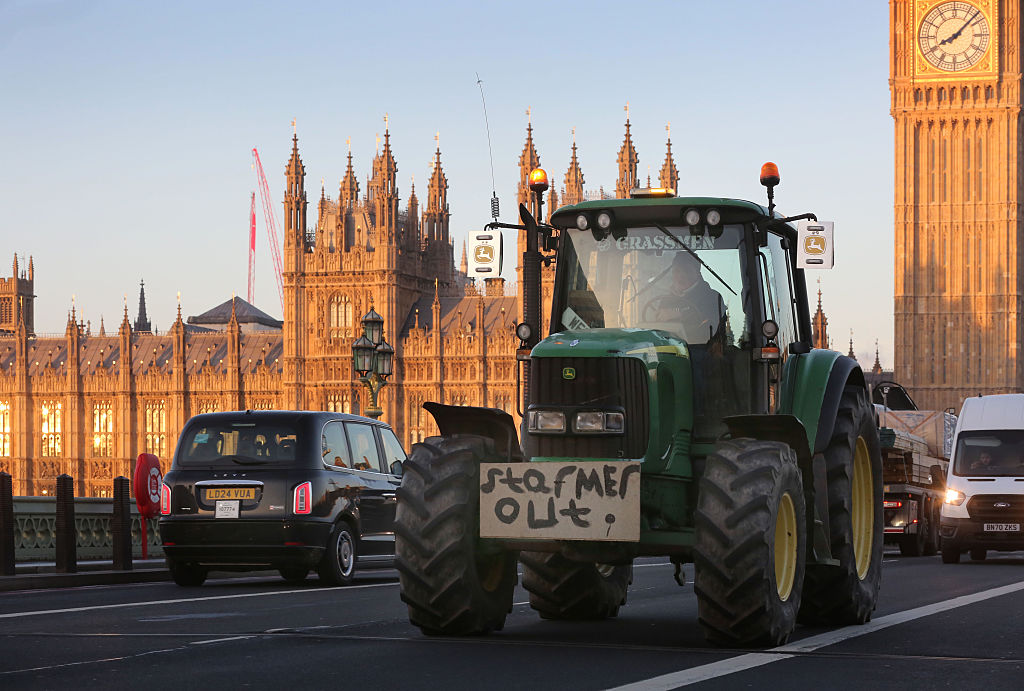
The U-turn comes after a year of intense backlash from the farming community and numerous protests in London. On Budget day last month, several arrests were made as farmers brought rush-hour traffic to a standstill outside Parliament in protest of the policy. While initially the Government had maintained that it would not back down, the inheritance tax reversal is yet another policy that Labour seems unable to carry out. It was only earlier this month that Labour’s Markus Campbell-Savours lost the whip for being the only one of his party’s MPs to vote against the proposals in the Budget.
This is a positive backtrack given that the rural population is consistently on the receiving end of many of Labour’s most controversial policy decisions. But for some it is too little, too late. One farmer, John Charlesworth, took his own life on the day before the Budget amid fears that the inheritance tax changes meant his family might lose the farm.
Farmer and writer Jamie Blackett tells me that, while this is a positive decision in the short term, the Government has “put the farming industry through hell and back”. After first learning about the initial drastic inheritance tax proposals, Blackett says, “many of us have spent cash we could ill afford to spare on professional advice.” Looking towards the future, he added, Labour needs to ensure that farmers don’t end up in a similarly dire situation due to fiscal drag, calling on the inheritance tax thresholds to be regularly raised to prevent this.
“Ministers have a long way to go to rebuild the trust with the countryside,” Tim Bonner, the Chief Executive of the Countryside Alliance, tells me. Despite viewing the move as a positive one, Bonner says that the long battle “has caused months of unnecessary pain and anxiety” for the farming sector. “Whether [the Government] will learn the fundamental lessons of this policy debacle, which is that it needs to work with the rural community, not legislate against it, remains to be seen,” he adds.
There will still be thousands of family farms with enough machinery, livestock and land to exist above the threshold, but which operate on such slim margins that the prospect of having to pay the tax is an existential threat. The inheritance tax on family farms is yet more proof that Britain seems intent on limiting ambition, where those who dare to work hard and achieve wealth — liquid or otherwise — are hit hardest of all by an increasingly extractive, redistributive state. The people cannot take much more.
Join the discussion
Join like minded readers that support our journalism by becoming a paid subscriber
To join the discussion in the comments, become a paid subscriber.
Join like minded readers that support our journalism, read unlimited articles and enjoy other subscriber-only benefits.
Subscribe