




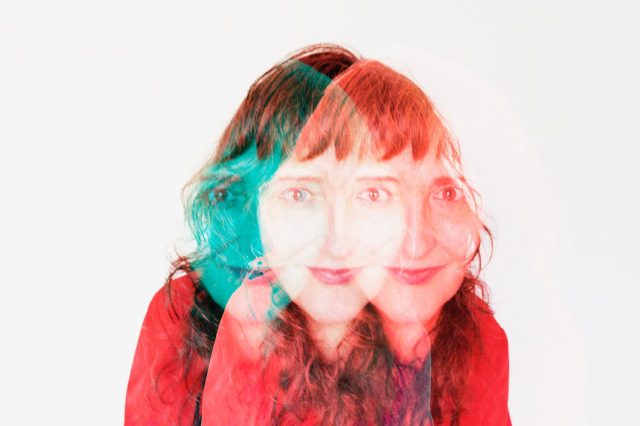
The discourse around destigmatizing mental health has led to its explosion. Credit: Getty




When Eva Kaufman was 14, she struggled to make sense of her mental health. A native of Cambridge, Mass., inclined toward heavy eye makeup and chokers, Kaufman was consumed by angst and sadness, often without a cause, and had difficult relationships with her parents and boys. So she did what anyone would: she turned to Google, where she quickly diagnosed herself with Major Depressive Disorder, or MDD, a disease said to follow the sufferer for life.
Kaufman chose the MDD diagnosis over other forms of depression because it sounded more enduring and less likely to be caused by something specific, which tracked with her feelings. She was only in the eighth grade, but decided she was doomed forever. Her behavior reflects a larger trend of teens diagnosing themselves with psychiatric conditions, using information gleaned from friends with official diagnoses, or from the internet, and therapists on TikTok.
Young people are sometimes using “these digital platforms as a substitute for mental health treatment,” according to a Canadian study published in the journal Acta Psychologica. Moreover, the study found that “the overwhelming majority of TikTok videos on mental health are not created by professionals, and most contain misleading information.”
Kaufman would spend the next three years fighting with her parents, smoking weed, vaping, and getting involved with sketchy older guys. At the time, these behaviors seemed like symptoms of her mental illness. But looking back, now 21 and happy, Kaufman thinks they were just symptomatic of being a teenager.
We worked a retail job together in 2022 at the infamous one-size-fits-all clothing store Brandy Melville, often commiserating over a can of Diet Coke. I thought she was the “cool coworker” because of her vaguely apathetic aura, platinum-blonde hair and affinity for sad music. At the time, I had a raging eating disorder and thought of the 1990s Kate Moss as my personal Jesus — a delusion fueled by my employment at the shamelessly body-type-exclusionary store. (The “one” size is extra-small.)
Compared to what’s happening today, Kaufman’s form of self-diagnosis was low-tech. In 2018, Kaufman relied on WebMD and Mayo Clinic articles. Now, mental-health influencers are rampant on TikTok, and social media are rife with infographics listing symptoms of OCD, autism, and everything in between. The trend started during the pandemic, with content creators offering users easily accessible resources for therapy. But the result has been to flood young people with potential diagnoses, and has made us very quick to call ourselves crazy.
Many never seek professional help, but some do, often in order to validate the conclusions they have already reached. Frequently, those conclusions turn out to be wrong. “At least three-quarters of the time, we are talking about normal variation,” says Dr. Jennifer Katzenstein, a pediatric neuropsychologist at Johns Hopkins School of Medicine.
Katzenstein says she’s seen an increase in self-diagnosis in the last three to five years among her teenage patients. Many don’t realize, she says, what normal stress looks like, or what normal social anxiety looks like, or that sometimes it’s normal to be inattentive and easily distracted. “A lot of our kids who feel awkward in social situations think that they’re on the autism spectrum,” she says. “They’re coming in thinking that’s the diagnosis.”
Katzenstein notes that the problem is a side effect of a well-intentioned and mostly beneficial nationwide push to remove the “stigma” from mental-health conditions. Destigmatization means we aren’t bullying people for their diagnoses anymore. And the lobotomies and forced sterilizations of the past have become inconceivable. We can now openly have conversations about mental health. But the side effect is that these conditions have gone viral and are seducing vulnerable young people who want explanations for their emotions.
Moreover, as teens and early-20-somethings tinker with their identities, they’re working these supposed conditions into their self-images and behaving accordingly. When they view themselves as sick, they accept and anticipate sick behavior. “We go in looking to affirm,” Katzenstein says. “Our brains want to be right.”
Kaufman landed on MDD because she thought of herself as someone who was fundamentally sad, not someone who experiences sadness. Her supposed condition became her identity. During this period, she says, she also expected less of herself and would excuse bad behavior as symptomatic. Her social circle echoed and amplified her conclusions. “There have been times where most of the people I’ve surrounded myself with treated their real or perceived diagnoses as a personality trait,” she says.
The social consequences of destigmatization have been much more far reaching than might have been expected, and have created many negative downstream consequences. At 23, I have become used to the idea that I’m “crazy” — that everyone is. A guy at a party recently said to me that he was interested in me because he was “into super skinny chicks who act insane.” Offensive words, but my first response was to be flattered by “skinny.” I barely clocked the “insane” part.
This is the cultural ambiance now. On dating apps like Hinge, it is alarmingly frequent to encounter guys who’ve answered the “I go crazy for … ” prompt with “girls who are slightly autistic.” Friends of mine have been told that their ’tism is cute (yes, Generation Z abbreviates autism now).
Obviously, this trivializes real mental-health issues, and it fetishizes them, too. When guys say they are into girls with autism, what they mean is that they’re looking for quirky girls who are a little awkward and random. They want the effervescent and pink-haired Ramona Flowers from Scott Pilgrim vs. the World, not the girl with sensory issues who can’t interpret facial expressions or understand sarcasm. Not to mention that people with legit autism diagnoses would probably prefer to be chosen for themselves, rather than their neurodivergence.
It’s difficult for everyone, from peers to parents to mental-health professionals, to navigate this new landscape. Gwen Schubert Grabb, a Los Angeles-based therapist, says she’s seen the “come one, come all” attitude of the mental-health movement being taken advantage of. Increasingly, she says, young people — and some older adults, as well — arrive with a list of symptoms to rattle off. And sometimes they have an agenda. “Look at the emotional-support and service-animal industry,” she says. “People I don’t even know will call me up and ask me to write a letter so they can bring their dog to some kind of event. I am like, ‘No, I’m not doing that.’”
But she’s a professional and can discern when something illegitimate is afoot. Most others can’t, or are afraid to.
Anna Caruso, 22, a senior at Northeastern University, has long suspected she has an anxiety condition and, at times, depression. But she kept it to herself growing up because the attitudes at home and at school were not sympathetic. However, she noticed a pivot in acceptance toward mental illness during Covid.
Caruso says that when her high school reopened during her senior year, a student body that once seemed perfectly healthy was now largely mentally ill. It seemed unlikely, but difficult to challenge. “You never want to be the person to say, ‘Hey, I really don’t think that you have a mental illness,’ right?,’” Caruso says.
She does not underestimate the impact the pandemic had on young people’s psyches — social isolation and a rise of deaths across the world should be, by anyone’s standards, a valid reason to be unhappy — but the sheer numbers struck her as unbelievable. And to be fair, she’d diagnosed herself, as well, with some combination of anxiety, ADHD and depression.
“During Covid, I feel like everyone wanted to be, I don’t want to say a victim, but people wanted to be felt sorry for,” says Caruso.
The pandemic years were also the era of George Floyd and McCarthyism-levels of cancel culture. I’ve long been tempted to believe that some of my straight, white, affluent peers were using neurodivergence to join the ranks of the marginalized. If someone was “mentally ill,” then they, too, were a part of America’s disadvantaged class.
I’ve seen white classmates trade stories with students of color about times they’ve been subject to “mistreatment,” because education systems designed for the neurotypical, for example. Classmates have also established “safe-space” social circles. Sometimes it’s as subtle as nodding along to a black peer speaking on prejudice, with an attitude of: “we’re in this together.”
In a cultural atmosphere that systematically rewards suffering, people tend to find a reason to suffer. But there is a crucial difference between sympathy and empathy. And as with the mental-health discourse, there is a grave risk of romanticizing, or trivializing, the real issues. So far, destigmatization has been many things: a flytrap for teens trying to understand their identities; an excuse for guys to be weird about girls who “aren’t like the others”; and a means to expiate white guilt. Mental-health problems should not be stigmatized, but this trend should be.
Join the discussion
Join like minded readers that support our journalism by becoming a paid subscriber
To join the discussion in the comments, become a paid subscriber.
Join like minded readers that support our journalism, read unlimited articles and enjoy other subscriber-only benefits.
Subscribe