








November 28 2025 - 6:00pm
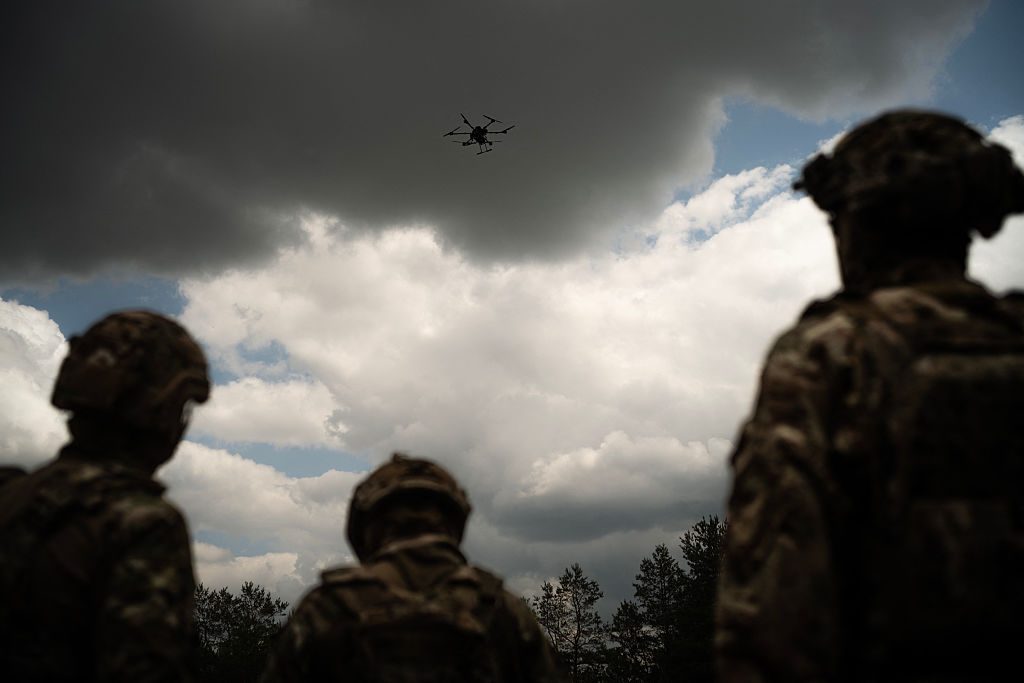
Nobody has claimed responsibility for a drone attack on Khor Mor gas field which cut power across most of Iraqi Kurdistan on Wednesday night. But whoever the perpetrator is, they have sent a clear message to governments around the world: non-state militant groups can now use relatively cheap, accessible technology to cause major disruption at a national level. This threat has not yet struck Britain, but most accept that it will at some point. The consequences are potentially disastrous unless we find solutions, and fast.
Contrary to common belief, the use of attack drones by militant groups is not a new phenomenon. Isis deployed small commercial quadcopters during its occupation of parts of Syria and Iraq as far back as 2015. At the time, though, instances were uncommon by today’s standards and tactics remained elementary. Troops with the right equipment and training were successful in repelling their threat. It wasn’t until 2024 that the first US soldier actually died from an enemy drone attack.
The exploitation of commercial drones by both sides in the Ukraine war since Russia’s 2022 invasion has accelerated their proliferation as a weapon of war. On Ukraine’s front line, they’ve become a threat that soldiers find themselves almost entirely vulnerable to. Countermeasures such as monitoring and jamming systems have proven absolutely necessary, yet insufficient despite relentless evolution. Ukraine now drapes fishing nets over its roads to protect vehicles near the front line.
Militant groups around the world have caught on. This week’s Khor Mor attack was most likely carried out by an Iran-aligned militia. In August, a Colombian cartel killed 12 police officers with a drone strike that knocked out a Black Hawk helicopter. Last December, Boko Haram killed five soldiers in the first recorded drone attack by a terrorist group in Nigeria.
It’s only a matter of time before terrorist groups launch domestic attacks from within the UK and other Western countries. While I was reporting on drones in Ukraine last year, a former intelligence officer made that exact prediction, saying: “The West is not prepared.” The news last month that Belgian police had foiled a plot to carry out a terror attack with a drone-borne IED suggests the prediction may soon come true. The three suspects had been planning to target a list of politicians, including Prime Minister Bart de Wever.
But what happens when police don’t get there in time? The current outlook is not reassuring. Drone incursions at airports in the UK and across Europe have been causing chaos since 2018, and a solution has not yet been found. The Civil Aviation Authority’s CEO, Rob Bishton, told the Financial Times this month that the technology is evolving too fast for the organization to keep up. Users can easily bypass virtual fences which prevent commercial drones from operating near critical infrastructure, and physical fencing would need to be unrealistically far out to be effective. “It’s not a question of if, only of when,” Bishton said.
This isn’t to say that there aren’t effective countermeasures for some applications. The Royal Navy reports successful tests of special “direct energy” weapons which use lasers to target drones, and just confirmed a £316 million contract to install one on a ship. But it’s unrealistic to think that such technology could be widely used for terrestrial counter-terrorism operations, especially at that cost.
The reality is that we’ll have to come to terms with the very real possibility of a drone-borne terror attack on British soil while protecting ourselves as best as we can. At Mountjoy Prison in Ireland, where prisoners receive deliveries from drones, that has meant copying a rudimentary solution seen only 2,000 miles to the east in Ukraine: fishing nets.
Charlie Metcalfe is a freelance journalist specialising in foreign affairs with experience reporting from the Middle East and Europe, including Ukraine.
 chrlmtclf
Join the discussion
Join like minded readers that support our journalism by becoming a paid subscriber
To join the discussion in the comments, become a paid subscriber.
Join like minded readers that support our journalism, read unlimited articles and enjoy other subscriber-only benefits.
Subscribe