








May 24 2026 - 12:00pm
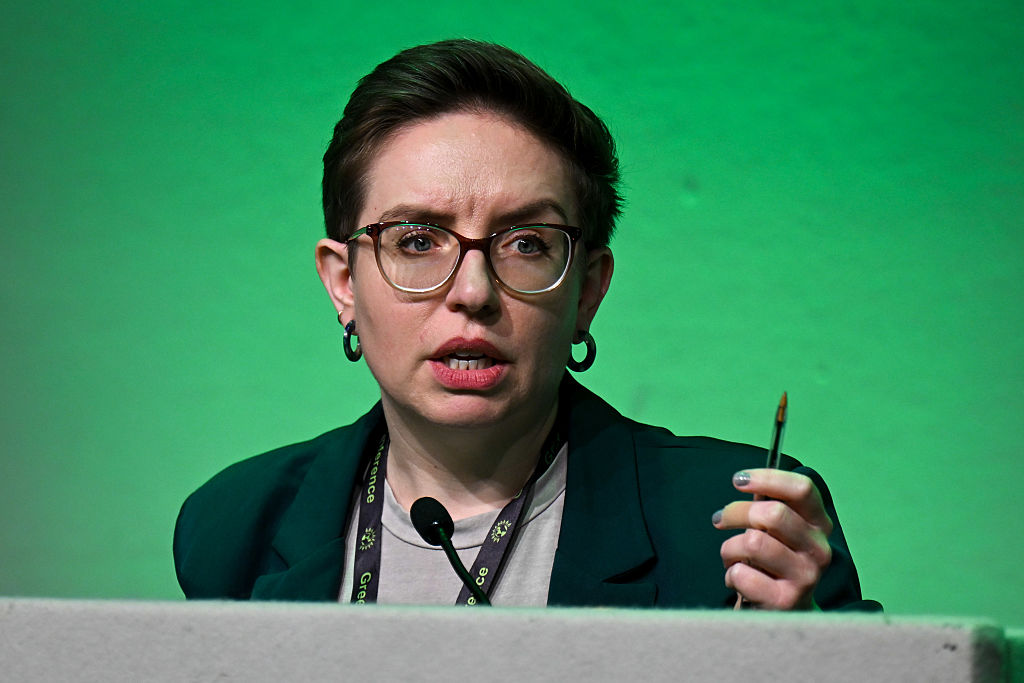
Carla Denyer, the Green Party MP for Bristol Central, announced earlier this week that she would be taking several weeks away from Parliament due to burnout and “the mental and physical symptoms that arise from it”. She added that her constituency office would continue “functioning as usual” during her absence.
That is, of course, reassuring news for constituents. But it also raises an obvious question: if the office can operate perfectly well without her, what exactly is she stepping back from?
Like all backbench MPs, Denyer faces remarkably few formal demands. There is no minimum voting record to maintain, no mandatory attendance threshold in Parliament, no required number of constituency surgeries, and no obvious metric by which productivity is meaningfully assessed. If an MP finds the pressures of Westminster overwhelming at any given moment, they are perfectly entitled to retreat to their constituency for months on end, focusing instead on litter-picks, community events or the opening of local gardens. Indeed, many constituents would probably welcome the visibility.
This would raise an issue, however, because it would be most beneficial for constituents to have a representative in Parliament who advocates for them and shares their grievances in the place where change can most feasibly be brought about. It is precisely that need to be seen to be doing more for one’s constituents that can so quickly lead to feelings of being overwhelmed and overburdened.
Denyer is far from alone in feeling this way. At the 2024 general election, 132 MPs chose not to stand again, with many examples of the toll politics had taken on their mental health. When Nicola Sturgeon resigned as First Minister of Scotland, she admitted: “I get up in the morning, and I tell myself, and usually I convince myself, that I’ve got what it takes to keep going and keep going and keep going. But then I realize that that’s maybe not as true.” Her former SNP colleague Mhairi Black also spoke openly about burnout, gradually withdrawing from parliamentary life before ultimately deciding not to contest her seat in 2024. We are now less than two years into this parliament, and the pattern already appears to be repeating itself.
This reflects a broader national trend. More people in Britain than ever are out of work with stress-related conditions, with the Trades Union Congress estimating that 22 million working days were lost to stress in 2024–25 alone. Ironically for this government, last month’s welfare reforms were explicitly designed to address that very problem, with Work and Pensions Secretary Pat McFadden warning last year that too many young people were “getting out of the habit” of work.
That is a legitimate argument: Britain does face a growing crisis of economic inactivity, particularly among younger adults. Yet it sits awkwardly alongside a political class that appears to create ever more accommodations for itself: proxy voting, remote participation, and now indefinite stress leave from a role with few formal obligations attached to it.
Being an MP is not a job in the conventional sense, complete with measurable targets and fixed expectations. It is an office — one whose demands are, to a remarkable extent, self-directed. But it is also supposed to be a vocation. MPs are entrusted with public office and expected to give themselves fully to it; indeed, they are not even formally permitted to resign from Parliament outright.
Denyer’s announcement therefore raises an uncomfortable question. If, less than two years into a parliamentary term — and during a period bracketed by prorogation and the approaching summer recess — the strain of the role has become so overwhelming that extended leave is required, then perhaps the issue is not simply burnout. Instead, it’s whether modern politics is attracting people suited to the demands of public office at all.
Join the discussion
Join like minded readers that support our journalism by becoming a paid subscriber
To join the discussion in the comments, become a paid subscriber.
Join like minded readers that support our journalism, read unlimited articles and enjoy other subscriber-only benefits.
Subscribe